
All Antimicrobial Resistance articles – Page 33
-
 News
NewsAI helps mine genetic elements from ancient genomes to tackle antibiotic resistance
Scientists have developed an artificial intelligence tool to mine the vast and largely unexplored biological data—more than 10 million molecules of both modern and extinct organisms— to discover new candidates for antibiotics.
-
 Features
Infection, immunity and the One Health response in Indonesia
Infectious diseases (IDs) are a major health issue in Indonesia, as in many tropical low- and middle-income countries (LMICs), placing a significant economic burden on limited resources. Vaccination may have a critical role to play in the prevention of zoonotic infectious diseases.
-
 News
NewsDiagnostic stewardship approach to C. diff reduces unnecessary testing
Revised rules for when Clostridioides difficile tests could be ordered helped to reduce inappropriate testing by 20%, which in turn can help rein in the overtreatment of patients.
-
 News
NewsE. coli sends out SOS when antibiotics attack, sparking emergency mode
Antibiotics damage E. coli DNA, including by causing formation of single strands of incomplete DNA inside the cell. When that happens, it’s like lighting a match under a smoke detector, according to a new study.
-
 News
NewsRapid test for UTI wins $10m Longitude Prize on AMR to transform fight against superbugs
Sysmex Astrego’s PA-100 AST System has won the $10m (£8m) Longitude Prize on AMR. The winning test provides accurate antibiotic susceptibility results in 45 minutes – compared to the 2-3 day wait patients currently face.
-
 News
NewsWHO releases report on state of development of antibacterials
Although the number of antibacterial agents in the clinical pipeline increased from 80 in 2021 to 97 in 2023, there is a pressing need for innovative agents for serious infections and to replace those becoming ineffective due to widespread use, the WHO says.
-
 News
NewsResearchers discover how a deadly strain of salmonella fine-tunes its infection tactics
A new study investigates how pathogens like salmonella change their disease characteristics under fluid shear conditions like those they encounter in our bodies during infection.
-
 News
NewsTemperature could be the new weapon in the battle against antibiotic resistance
Scientists have found that a small increase in temperature from 37 to 40 degrees Celsius drastically changes the mutation frequency in E. coli bacteria, which facilitates the development of resistance.
-
 News
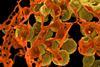
NewsBerberine could treat eczema-exacerbated staph infections
Eczema, a skin inflammatory disease that causes dry, itchy and inflamed skin, affects millions worldwide. Eczema is associated with an altered skin microbiome and higher colonization by Staphylococcus aureus. Source: NIAID/NIH Scanning electron micrograph of methicillin-resistant Staphylococcus aureus(MRSA, brown) surrounded by cellular debris. A new study, ...
-
 News
NewsUpper surface of coastal waters can accumulate bacteria and antibiotics
Antibiotics in the uppermost water surface, known as the sea surface microlayer, can significantly affect the number of bacteria present and contribute to the adaptation of marine bacteria against widely used antibiotics. In new research presented at ASM Microbe, scientists directly assessed the potential effects of antibiotics ...
-
 News
NewsAI enables faster, more effective antibiotic treatment of sepsis
Sepsis is a life-threatening infection complication and accounts for 1.7 million hospitalizations and 350,000 deaths annually in the U.S. Fast and accurate diagnosis is critical, as mortality risk increases up to 8% every hour without effective treatment. Source: Ilanaer42 However, the current diagnostic standard is reliant on ...
-
 News
NewsInnovative phage lysin HY-133 enters phase I clinical study
HYpharm’s innovative preventive agent HY-133 has reached the first clinical trial phase. HY-133 is specifically effective against Staphylococcus aureus including multi-resistant strains and is intended to combat its colonisation in the nose.
-
 News
NewsNovel lipopeptide produced by bacterium proves lethal against Staphylococcus aureus
A novel antibacterial lipopeptide produced by the bacterium Serratia marcescens has been shown to be highly effective in killing Staphylococcus aureus – one of the most important pathogens occurring in humans.
-
 News
NewsLiposomes can target antibiotics right to where they’re needed in wounds
The antibiotic gentamicin can be encapsulated into liposomes, allowing for more accurate use in situations such as wound treatment, according to new research presented at the recent Letters in Applied Microbiology ECS Research Symposium.
-
 News
NewsStudy finds antimicrobial resistance in soils across Scotland
Resistance to antibiotics has been found in the environment across Scotland, according to a new study.
-
 News
NewsBone loss drugs can help azoles fight fungal infections
A new study suggests that adding common bone loss drugs to azoles can improve efficacy. In lab tests, combinations of these drugs worked against dermatophyte species and prevented resistance.
-
 News
NewsNovel triple antibiotic combination offers breakthrough in combatting antibiotic resistance
A new study unveils a promising triple combination of antibiotics that significantly expands our arsenal against drug-resistant bacteria.
-
 News
NewsWorld famous Roman Baths could help scientists counter antibiotic resistance
The world-famous Roman Baths are home to a diverse range of microorganisms which could be critical in the global fight against antimicrobial resistance, a new study suggests.
-
 News
NewsThe world’s most powerful anti-fungal chemistries cause fungal pathogens to self-destruct
Scientists have discovered that the most widely-used class of antifungals in the world cause pathogens to self-destruct. The research could help improve ways to protect food security and human lives.
-
 News
NewsSqueaks the cat makes full recovery after personalized phage therapy heals resistant wounds
A new study highlights the potential of phage therapy as an effective solution for antibiotic-resistant infections in veterinary practice, resulting in the complete healing of a persistent surgical wound after fourteen weeks.