
All archaeology articles
-
 News
NewsNew study uncovers the complex history of the plague after the Black Death
A new study sheds fresh light on the long and complex history of the plague by analysing the DNA of the bacterium. Researchers reconstructed 26 genomes of Yersinia pestis from archaeological sites in Estonia, Russia, England, the Netherlands, and Switzerland.
-
 News
NewsWas Nîmes depopulated by the Plague of Cyprian?
Analyses of the carbonate deposits in the aqueduct featuring the famous Pont du Gard shed light on the water supply of the ancient city of Nîmes - and support the theory that the city was depopulated by the plague.
-
 News
NewsMicrobes frozen in ancient rubbish heaps help reconstruct ancient Greenlanders’ farms, seal hunts, and toilets
The microbiome of ancient middens in Greenland sheds new light on the daily life of Paleo-Inuit and old Norse communities. Researchers say the middens in the cold Arctic acted like long-term natural experiments, with human- and animal-associated bacterial signals remaining detectable many centuries later.
-
 News
NewsResearchers link specific microbiomes to archaeological bone degradation
Well-preserved archaeological bone samples have different microbial communities than heavily degraded bone samples, providing a new understanding of how microbes contribute to bone degradation, according to a study.
-
 News
NewsRich medieval Danes bought graves ‘closer to God’ despite leprosy stigma, archaeologists find
Researchers used gravesites to investigate social exclusion based on illness, by studying whether people with leprosy or tuberculosis were kept out of the higher-status areas. Unexpectedly, they found that people who were ill with stigmatized diseases were buried just as prominently as their peers.
-
 News
NewsPaper sheds light on human impact of first known ancient pandemic
A new paper examines the Plague of Justinian and its consequences for ancient Jordan. Focusing on the first-known outbreak of bubonic plague in the Mediterranean world, it adds to the historical record on what caused the devastating outbreak that killed millions within the Byzantine Empire.
-
 News
News1,000-year-old gut microbiome revealed for young man who lived in pre-Hispanic Mexico
Analysis of preserved feces and intestinal tissue has revealed specific types of bacteria that were present in the microbiome of a young adult man who lived in Mexico about 1,000 years ago, prior to Spanish colonization.
-
 News
NewsStudy reveals isolation, endogamy and pathogens in early medieval Spanish community
An archaeogenetic study sheds new light on the isolated medieval community Las Gobas in northern Spain. The researchers have identified the variola virus which can offer a new explanation on how smallpox entered Iberia.
-
 News
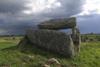
NewsThe plague may have caused the downfall of the Stone Age farmers
Ancient DNA from bones and teeth hints at a role of the plague in Stone Age population collapse. Contrary to previous beliefs, the plague may have diminished Europe’s populations long before the major plague outbreaks of the Middle Ages.
-
 News
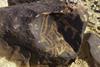
NewsDesert-loving fungi and lichens pose deadly threat to 5,000-year-old rock art
A study has revealed that the petroglyphs of the Negev desert are home to a community of uncommon specialist fungi and lichens. Unfortunately, these species may pose a serious threat to the rock art in the long term.