
All Asia & Oceania articles – Page 28
-
 News
NewsResearchers discover how tuberculosis bacteria use a “stealth” mechanism to evade the immune system
New research reveals that mycobacteria release tiny packages called extracellular vesicles that fuse with the membranes of immune cells. These vesicles contain specialized lipids—fatty molecules—that make the cell membrane more rigid.
-
 News
NewsScientists discover ‘bacterial constipation’, a new disease caused by gut-drying bacteria
Scientists have found two gut bacteria working together that contribute to chronic constipation. The duo, Akkermansia muciniphila and Bacteroides thetaiotaomicron, destroy the intestinal mucus coating essential for keeping the colon lubricated and feces hydrated.
-
 News
NewsHope for global banana farming in genetic discovery
Scientists have pinpointed crucial genetic resistance to fight a fungal disease which threatens the global banana supply in a wild subspecies of the fruit. The team have identified the genomic region that controls resistance to Fusarium wilt Sub Tropical Race 4 (STR4).
-
 News
NewsA break in a longstanding mystery about origin of complex life
One of our microbial ancestors was part of a group called the Asgard archaea, which today live primarily in the deep sea and other oxygen-free spaces. Now scientists have found that some Asgards use, or at least tolerate oxygen.
-
 News
NewsAncestral motif enables broad DNA binding by NIN, a master regulator of rhizobial symbiosis
Researchers investigated the molecular mechanisms whereby the transcription factor NODULE INCEPTION (NIN) - crucial for rhizobial symbiosis - can bind a broader spectrum of DNA sequences than its close homologs, using the legume Lotus japonicus (Miyakogusa) as a model system.
-
 News
NewsGlobal scientific paper establishes first consensus definition of gut health
A global group of 13 scientists and clinicians is helping establish clarity by publishing a consensus definition of gut health. They define gut health as “a state of normal gastrointestinal function without active gastrointestinal disease and gut-related symptoms that affect quality of life.”
-
 News
NewsNew antibody–drug conjugate strategy to block HIV infection
New antibody–drug conjugates (ADCs) combine a CD4 mimic with neutralizing antibodies for enhanced suppression of HIV infection. By targeting the gp120 on the viral envelope via a two-step mechanism, the ADCs effectively block viral entry.
-
 News
NewsNew clinical guidelines to reduce central line-associated bloodstream infection
Central line-associated bloodstream infections remain a major challenge in ICUs. A team of clinicians has proposed updated guidelines to standardize the clinical practices addressing CLABSI, aiming to reduce infection rates and improve outcomes for critically ill patients.
-
 News
NewsRhododendron-derived drugs now made by bacteria
Bioengineered E. coli bacteria can now produce a group of compounds with anticancer, anti-HIV, antidiabetic and anti-inflammatory activities. The compounds, orsellinic acid-derived meroterpenoids, are produced by Rhododendron species.
-
 News
NewsGut microbiome may be the link to gluten sensitivity without celiac disease
Researchers found that after antibiotic treatment, mice exposed to gluten had changes in the bacteria living in the gut. These shifts in bacteria types altered how they processed carbohydrates, fats and sugars which may influence how these nutrients are recognized by the immune system.
-
 News
NewsLactobacillus rhamnosus L34: Native probiotic that reduces inflammation in patients with chronic kidney disease
Researchers in Thailand have discovered a native probiotic strain, Lactobacillus rhamnosus L34, that helps reduce uremic toxins and inflammation-related cytokines in patients with chronic kidney disease (CKD) before dialysis.
-
 News
NewsMpox: recombinant virus with genomic elements of clades Ib and IIb
Recombination of monkeypox virus (MPXV) strains has been documented in recent months, with two cases of a recombinant strain comprising clade Ib and IIb MPXV reported, the World Health Organization says.
-
 News
NewsNewly discovered bacterium converts carbon dioxide into chemicals using electricity
A newly identified soil bacterium may help unlock cleaner ways to recycle carbon dioxide and produce valuable chemicals using electricity. The sulfate reducing bacterium Fundidesulfovibrio terrae possesses an unusual ability to both export and absorb electrical energy while converting carbon dioxide into acetate.
-
 Features
Yeast-plant interactions: nature’s silent partnership for ecosystems and agriculture
Plant–microbe interaction studies have increased greatly in recent years. This sharp increase in studies is attributed to the need to better understand these interactions, which in turn can be used to enhance crop productivity and stress tolerance, reduce fertilizer inputs, and improve plant health. This is vital to meet the ...
-
 News
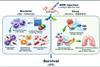
NewsOne strategy to block both drug-resistant bacteria and influenza: new broad-spectrum infection prevention approach validated
A new paper moves beyond traditional infection control strategies reliant on antibiotics and vaccines by introducing a new approach that primes the immune system before infection occurs.
-
 News
NewsProposals for exploring viruses and skin as the next experimental quantum frontiers share US$30,000 science award
Viruses exist at the boundary between living and non-living matter, while skin is a living interface between physics and biology, making them perfect—but until now overlooked—arenas for testing the interplay between quantum physics, biology and life.
-
 News
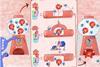
NewsWhat drives a mysterious sodium pump?
The enzyme Na⁺-NQR is a sodium pump that drives the respiration of many marine and pathogenic bacteria, powering the transportation of sodium ions across the membrane. A new study found that the sodium pump changes its structure in response to electron transfer inside the protein.
-
 News
NewsSeashells and coconut char: A coastal recipe for super-compost
Researchers have developed a calcium-modified biochar that speeds up waste recycling and creates nutrient-rich soil, boosting specialized microbial communities that break down tough materials like lignin and convert them into stable humus.
-
 News
NewsGenotype-specific response to 144-week entecavir therapy for HBeAg-positive chronic hepatitis B
HBV genotype B demonstrates superior histological responses to ETV therapy compared with genotype C, supporting the clinical value of HBV genotyping for personalized CHB management. These findings highlight the importance of considering viral genotype when evaluating treatment outcomes.
-
 News
NewsStudy reveals how chills develop and support the body’s defense against infection
Researchers in Japan have identified the neural mechanism behind chills and the instinct to increase body temperature during infection.