
All autophagy articles
-
 News
NewsHow Chinese cabbage fights downy mildew
Researchers focusing on the Brassica rapa–Hyaloperonospora parasitica pathosystem identifies DM459 as an Arg–x–Leu–Arg (RXLR) effector that interacts with BraATG8i, activates autophagy, stimulates salicylic acid (SA) signaling, and enhances resistance to downy mildew.
-
 News
NewsHow bacteria circumvent plants’ immune system
In order to defend themselves, plants have to quickly produce proteins that detect and combat infiltrating microbes. Researchers discovered that Pseudomonas syringae disrupts this process by triggering the formation of P-bodies – small, droplet-like structures in the cell that store and regulate RNA molecules.
-
 News
NewsTuberculosis vulnerability of people with HIV: a viral protein implicated
Tuberculosis accounts for one in three deaths among people living with HIV. A new study highlights the key role played by Tat 2 – a viral protein secreted by HIV-infected cells – in this hyper-vulnerability phenomenon.
-
 News
NewsZika virus uses cells’ ‘self-care’ system to turn against host
A new study reveals the biological secret to the Zika virus’s infectious success: Zika uses host cells’ own ‘self-care’ system of clearing away useless molecules to suppress the host proteins that the virus has employed to get into those cells in the first place.
-
 News
NewsResearchers undercover how macronucleophagy ensures survival in nitrogen-starved yeast
Scientists sought to shed light on how macronucleophagy ensures the survival of nitrogen-starved S. cerevisiae and revealed that uncontrolled micronucleophagy due to the lack of normal macronucleophagy causes cell death.
-
 News
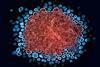
NewsResearchers are using RNA in a new approach to fight HIV
Scientists have developed a novel nanomedicine loaded with genetic material called small interfering RNAs (siRNA) to fight human immunodeficiency virus (HIV) using gene therapy.
-
 News
NewsAdvanced cryo-electron microscope reveals how poliovirus rearranges human cells
Researchers at Umeå University, Sweden, have shone a light on how poliovirus behaves when it takes over an infected cell and tricks the cell into producing new virus particles.