
AMI Food Security Advisory Group member Professor Marciane Magnani, a Full Professor of Food Science at the Federal University of Paraíba (UFPB), Brazil, reflects on her experiences of FOODMICRO 2026 in Slovenia.
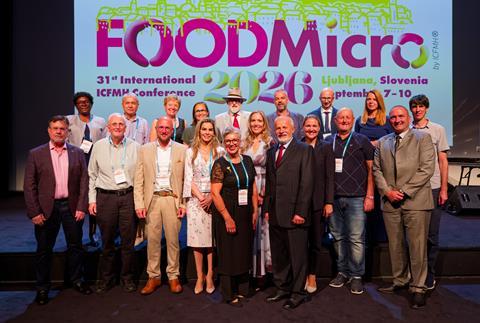
FOODMICRO 2026, held in Ljubljana, Slovenia, from 7–10 September is an international scientific conference of the International Committee on Food Microbiology and Hygiene (@ICFMH). It brought together more than 500 participants from countries across six continents.
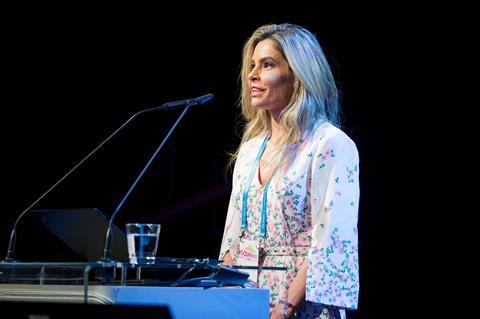
The conference provided an opportunity for researchers, industry representatives, and food safety professionals to exchange scientific perspectives, share recent advances, and discuss current and emerging challenges in food microbiology and hygiene.
I had the pleasure of delivering the Opening Lecture, entitled ’Safeguarding Food Safety in a Changing World: Understanding the Vital Role of Hygiene’. My central message was that, although food hygiene remains a fundamental pillar of food safety, we need to revisit its scientific foundations in light of the profound transformations taking place across food systems.
New ingredients, alternative proteins, emerging processing technologies, sustainability-driven production models, and increasingly interconnected supply chains are reshaping how food is produced and distributed. While these developments create opportunities for innovation, they also introduce microbiological challenges that cannot always be adequately addressed through conventional approaches alone.
Realistic conditions
One aspect I particularly wanted to emphasize was the importance of understanding microbial behaviour under realistic food-processing conditions. Microorganisms do not respond to environmental stresses in isolation. Their persistence, adaptation, and susceptibility to control measures are influenced by interactions with complex food matrices, microbial communities, processing environments, and multiple simultaneous stresses. Consequently, observations obtained under simplified laboratory conditions may not always reflect what happens in actual food systems.
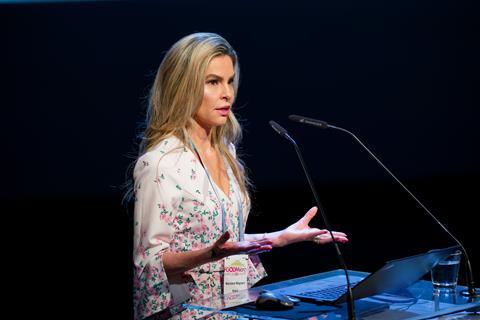
Despite considerable progress in detecting, characterizing, and controlling foodborne microorganisms, translating this knowledge into effective preventive strategies remains challenging. Food hygiene should therefore be understood not simply as a collection of established procedures, but as an evolving scientific discipline that connects microbial ecology, food processing, risk assessment, and public health.
This becomes particularly relevant as we move towards more sustainable food production. Microbiological safety must be integrated from the earliest stages of product and process development, rather than addressed only after innovation has taken place. Equally important is ensuring that scientific advances can be translated into practical solutions for different production contexts, including small-scale producers and food industries operating with limited technological resources.
Valuable opportunities
Beyond the Opening Lecture, FOODMICRO 2026 offered valuable opportunities to engage in scientific discussions and student activities. These interactions also reinforced something I consider increasingly important: food safety, sustainability, microbial ecology, emerging technologies, and public health are deeply interconnected. Addressing contemporary food safety challenges requires us to move beyond disciplinary boundaries and strengthen collaboration between researchers working across these areas.
Looking ahead, I believe several priorities deserve greater attention. We need to improve our understanding of microbial adaptation in real food environments, strengthen predictive approaches, and advance the integration of omics technologies into microbiological risk assessment. International cooperation, methodological harmonization, and capacity building are equally essential to ensure that scientific progress translates into effective food safety practices across different regions and production systems.
I am grateful to the FOODMICRO 2026 organizing committee for the invitation to deliver the Opening Lecture and for creating such a valuable environment for international scientific exchange. Thanks to and @Andreja Rajkovic the introduction of the lecture and the opportunity to reconnect with colleagues, meet new researchers, and engage with the next generation of food microbiologists was certainly one of the highlights of the conference.
Final thoughts
I would like to close with a thought that guided my lecture: “Food hygiene is sometimes perceived as an established field in which the fundamental questions have already been answered. As our food systems change, we need to revisit these foundations with new scientific perspectives.
”Innovation and sustainability cannot be separated from microbiological safety, and our responsibility as food microbiologists is to ensure that scientific progress translates into safer food for everyone.”
MICROBIOLOGY NEWS: Register with The Microbiologist for more free articles
As a member of the AMI Food Security Advisory Group (FSAG), I also see these discussions as directly connected to broader food security challenges. Access to safe food is inseparable from public health, consumer confidence, and the sustainability of food production. Scientific innovation can contribute significantly to these goals, provided that its benefits are accessible and that microbiological safety remains central to its development.





No comments yet