
All diatoms articles
-
 News
NewsFirst results published from major algal gene sequencing project
A new study reveals that different species of microscopic algae can behave in strikingly different ways because of their genetics.
-
 News
NewsInternational award honors microbiology researchers for diatom research
Two microbiology researchers from the University of Tennessee, Knoxville, are being honored with an international award that recognizes their insights into aquatic microbes that are vital to Earth’s ecosystems.
-
 News
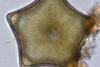
NewsRevealing the invisible: a new baseline for Salish sea diatoms answers a global call
Diatoms are powerful in driving roughly 20% of global photosynthesis and forming the very base of marine food webs. Scientists have published a new checklist of 924 diatom taxa alongside a curated dataset of 11,469 records, providing a long-needed foundation for environmental monitoring across the Salish Sea bioregion.
-
 News
NewsStudy provides detailed assessment of shifts in toxin producing phytoplankton abundance
Researchers in the UK have shown how the distributions of two phytoplankton groups – known to produce natural toxins that can halt shellfish harvesting – have changed in the North East Atlantic over the last six decades.
-
 News
NewsAndes volcanoes – the missing link between algae blooms, whales and climate millions of years ago
Record volcanic eruptions in the Andes could explain the mysterious death of dozens of whales about 5 to 8 million years ago, according to a study. A significant increase in volcanic activity in the Andes peaking between eight and four million years ago likely delivered a significant pulse of nutrients to the Southern Ocean.
-
 News
NewsWhen algae stop growing, bacteria start swarming
A new study describes how a recently identified species of marine bacteria targets diatoms based on growth phase and nutrient availability.
-
 News
NewsDeep-sea microbes get unexpected energy boost
A study shows that sinking organic particles—known as marine snow—begin to leak dissolved carbon and nitrogen when they reach depths of 2–6 kilometres, presenting microbes in the surrounding seawater with nutrients. The leakage is caused by the intense hydrostatic pressure in the deep ocean.
-
 News
NewsTiny diatoms, big climate impact: How microscopic skeletons rapidly shape ocean chemistry
Researchers have found that diatoms’ intricate, silica-based skeletons transform into clay minerals in as little as 40 days. Until the 1990s, scientists believed that this enigmatic process took hundreds to thousands of years.
-
 News
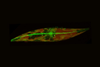
NewsExtreme diatoms inside the Arctic ice glide into the record books
Diatoms found in polar ice are active until temperatures drop to -15 C - the lowest ever recorded for movement by a eukaryotic cell.
-
 News
NewsTiny ocean partnership between algae and bacteria reveals secrets of evolution
The microscopic alliance between algae and bacteria offers rare, step-by-step snapshots of how bacteria lose genes and adapt to increasing host dependence, a new study shows.
-
 News
NewsStudy reveals the microbial battlegrounds within estuaries - and the part played by microplastics
Estuaries are known hotspots for biodiversity and are turbulent mixing zones where freshwater and seawater microbes confront one another. Source: Jeff Schmaltz, MODIS Land Rapid Response Team, NASA GSFC The Moderate Resolution Imaging Spectroradiometer (MODIS) aboard NASA’s Aqua satellite captured this true-color image of the Baltic Sea ...
-
 News
NewsNew study illuminates how diatoms thrive in — and light up — the Southern Ocean
An area of the remote Southern Ocean that’s long confused ocean color satellites by reflecting large amounts of turquoise-colored light appears to be full of silica-rich diatoms, according to a new study. There is also evidence in these polar waters of coccolithophores.
-
 News
NewsDiatoms could be key to creating farming systems on the Moon
Diatoms hold immense potential to revolutionize space agriculture, offering a transformative solution for sustainable extraterrestrial ecosystems and a key role in enabling humanity to establish sustainable living environments on the Moon and other planets, a new study argues.
-
 News
NewsStudy resolves diatom tree of life - and could offer clues to Earth’s puzzle
A new study finds that diatoms evolved slowly for the first 100 million years of their existence. Then, 170 million years ago, they reached an inflection point characterized by a burst of rapid speciation orders of magnitude faster than anything that had preceded it.
-
 News
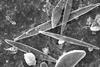
NewsA borrowed bacterial gene allowed some marine diatoms to live on a seaweed diet
A group of diatom species belonging to the Nitzschia genus gave up on photosynthesis and now get their carbon straight from their environment, thanks to a bacterial gene picked up by an ancestor, a new study shows.
-
 News
NewsPhytochromes: The ‘eyes’ that enable microalgae to find their way in the depths
By studying the light perception process of diatoms, a group of phytoplankton, scientists have discovered that these microalgae use light variation sensors which are codified in their genomes: phytochromes.
-
 News
NewsResearcher to study role of tiny diatoms in protecting endangered marine animals
A new study is aimed at understanding the essential role played by diatoms, tiny microalgae that can live in oceans or in symbiosis with endangered marine animal hosts and play a fundamental role in maintaining Earth’s delicate ecosystem.
-
 News
NewsStudy reveals environmental impact of artificial sweeteners on water microbes
A new study demonstrates how sucralose affects the behavior of cyanobacteria — an aquatic photosynthetic bacteria — and diatoms, microscopic algae that account for more than 30% of the primary food production in the marine food chain.
-
 News
NewsScientists unravel drivers of the global zinc cycle in our oceans
The important role of the Southern Ocean in global biological processes and the carbon cycle has been confirmed by a study that, for the first time based on field evidence, reveals the underappreciated role of inorganic zinc particles in these cycles.
-
 News
NewsNew Rhizobia-diatom symbiosis discovery solves long-standing marine mystery
Scientists solve a longstanding marine mystery by uncovering a partnership between a diatom and a bacterium that can account for a large share of nitrogen fixation in vast regions of the ocean, with exciting implications also for agriculture.