
All Disease Treatment & Prevention articles – Page 15
-
 News
NewsStudy shows links between Alzheimer’s and gut health can lead to prevention
Researchers analysed more than 120 everyday factors, including diet, medical history, gut bacteria, and lifestyle, to identify which of them are most strongly associated with Alzheimer’s risk. People who had their appendix removed showed substantially elevated Alzheimer’s risk.
-
 News
NewsEarly immune responses linked to protective HIV antibodies
In a new study of broadly neutralizing antibodies and their potential for an HIV vaccine, researchers analyzed fragments of cell-free RNA and DNA circulating in the blood. This makes it possible to track immune responses, viral genetic variation, and other microbes from the same blood sample.
-
 News
NewsHas life-saving HIV therapy contributed to increased rates of a sexually transmitted disease?
A study has uncovered an unintended consequence of a major medical breakthrough: while the availability of HIV treatments in the late 1990s dramatically improved survival, they also contributed to a resurgence in syphilis, a sexually transmitted infection.
-
 News
NewsGut microbiome changes may signal Parkinson’s disease risk
Scientists have found that people with Parkinson’s disease have a distinctive makeup of gut microbes, as do healthy individuals who are genetically at risk of Parkinson’s disease. This could help to develop tests to reveal a person’s risk of developing Parkinson’s disease.
-
 News
NewsSevere childhood malaria linked to cognitive impairment later in life
New findings suggest children who survive cases of cerebral malaria and severe malarial anemia experience cognitive and academic impairment that persists into adolescence.
-
 News
NewsOral-gut axis points to salivary biomarkers for early gastric cancer detection
A recent study has identified distinct microbial “signatures” within the oral cavity and gut that serve as robust biomarkers for the early detection of gastric cancer (GC). Research shows how specific lactic acid-producing bacteria (LAB) migrate from the mouth to colonize the gastrointestinal tract.
-
 News
NewsSleep deprivation disrupts gut microbiota, worsening colorectal cancer outcomes
Researchers have found that the gut microbiota drives changes to the immune system caused by chronic sleep loss. These changes promote cancer progression, disrupt circadian rhythm and weaken the effectiveness of chemotherapy.
-
 News
NewsImproving oral care more than halves hospital-acquired pneumonia risk, major trial finds
A landmark trial presented at ESCMID Global 2026 shows that improving oral hygiene for hospital patients can reduce the risk of non-ventilator-associated hospital-acquired pneumonia (NV-HAP) by 60%.
-
 News
NewsHIV treatment reduces accelerated biological ageing by nearly four years, landmark study shows
A major study presented at ESCMID Global 2026 has found that antiretroviral therapy (ART) reduces accelerated biological ageing in people with HIV (PWH) by nearly four years, a finding that could transform how clinicians monitor HIV treatment and long-term health outcomes.
-
 News
NewsAs syphilis cases rise, study links infection with higher risk of stroke, heart attack and other serious cardiovascular problems
Adults with later-stage syphilis are more likely to develop major cardiovascular problems – including stroke, heart attack or aortic aneurysm – than similar patients without the infection. The increased risk is primarily found in those whose infection progressed longer than a year.
-
 News
NewsStudy reveals genome-wide host–virus genetic interactions in cancer risk
Researchers report a major advance in understanding how interactions between human and viral genomes shape disease risk. They found that variations in the Epstein–Barr virus, together with a specific immune-related gene (HLA-A*11:01), strongly influence the risk of nasopharyngeal cancer.
-
 News
NewsGut microbiome serves as key driver for bacterial infection outcomes for fatty liver disease
Researchers found that metabolic dysfunction–associated steatotic liver disease dramatically worsens outcomes following infection with Vibrio vulnificus, a potentially life-threatening foodborne bacterium commonly associated with seafood consumption.
-
 News
NewsCat viruses offer window into human oncogenesis
Cats are not just beloved companions; they are emerging as key “research partners” in unravelling viral cancer mechanisms. A new review explores how feline tumour viruses offer vital insights into human oncology and viral carcinogenesis from a comparative oncology perspective.
-
 News
NewsResearchers uncover how obesity impairs vaccine response
New findings reveal that obesity significantly impaired the quality and longevity of antibody responses to a Pseudomonas aeruginosa vaccine in a mouse model. The impaired antibody production was due to defects in germinal centers.
-
 News
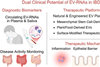
NewsExtracellular vesicle RNAs offer new hope for diagnosing and treating chronic inflammatory bowel disease
Extracellular vesicle-associated RNAs can serve as non-invasive biomarkers for early inflammatory bowel disease detection and disease monitoring, and also hold great potential as targets for next-generation targeted therapies, according to a new review.
-
 News
NewsResearchers explore potential link between COVID-19 and lung cancer risk
New findings have identified a potential association between COVID-19 and increased lung cancer risk, driven by underlying biological mechanisms in the lung. The study integrates human clinical data with mechanistic research in animal and cellular models.
-
 News
NewsLoss of microbiota alters the profile of cells that protect the intestinal wall
Experiments in mice and human tissue indicate that a reduction in bacteria living in the large intestine decreases mucus production and affects nutrient absorption, particularly in older adults.
-
 News
NewsInuit recommendations to address high rates of tuberculosis in Nunavik, Quebec
Tuberculosis rates for Inuit living in Nunavik, the Inuit lands in northern Quebec, are 1,000 times greater than among non-foreign-born Quebeckers, and underresourcing of local health care adds to hardship from the disease, found new research.
-
 News
NewsA new mouse model of virus-driven liver cancer may open the door to better diagnosis and treatments
Researchers have created the first mouse model in which chronic viral infection progresses to liver cancer, closely mirroring what happens in people with hepatitis C.
-
 News
NewsNovel treatment protocol targets the deadliest cases of C. difficile infection
A new study demonstrated that fecal microbiota transplantation (FMT) can rapidly reverse systemic inflammation and improve survival in patients with fulminant Clostridioides difficile infection.