
All dysbiosis articles
-
 News
NewsIndy gene reduction linked to healthier gut microbiota and longer lifespan in fruit flies
Scientists investigating aging have shown that Indy reduction is associated with lower bacterial load and higher bacterial diversity in aging Indy flies compared to controls.
-
 News
NewsAntifungal therapy shows potential for IBD patients with candida overgrowth
A commonly used systemic antifungal medication may help reduce symptoms in a subset of patients with inflammatory bowel disease (IBD) by restoring a healthier gut microbiome, according to a preliminary study.
-
 News
NewsEnvironmental fungi found to alter vaginal mycobiome and cervical disease progression during dysbiosis
Scientists have demonstrated for the first time that environmental fungi actively interact with the vaginal bacteriome and mycobiome with likely implications for cervical disease progression.
-
 News
NewsGut microbiome serves as key driver for bacterial infection outcomes for fatty liver disease
Researchers found that metabolic dysfunction–associated steatotic liver disease dramatically worsens outcomes following infection with Vibrio vulnificus, a potentially life-threatening foodborne bacterium commonly associated with seafood consumption.
-
 News
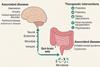
NewsGut microbiota and the gut–brain axis: Mechanisms and therapeutic hopes for brain diseases
A new study looks at the gut–brain axis (GBA), a sophisticated bidirectional communication network that integrates neural, immune, endocrine, and metabolic pathways to govern brain function and systemic homeostasis.
-
 News
NewsHow bacteria may promote breast cancer
Researchers have discovered how certain pathogenic bacteria in gut and breast tissue can promote breast cancer development and progression by hijacking a key metabolic enzyme known as spermine oxidase (SMOX).
-
 News
NewsNew research suggests gut bacteria may be linked to memory decline in mild cognitive impairment and Alzheimer’s disease
A new review is shedding light on the growing evidence that gut microbiome imbalances—known as dysbiosis—may play a key role in the development and progression of mild cognitive impairment (MCI) and Alzheimer’s disease.
-
 News
NewsLiquorice root could be effective against upper respiratory tract infections - while protecting ‘good’ microbes
Lozenges supplemented with liquorice root extract could be an effective remedy against upper respiratory tract infections while protecting microbes that are beneficial to the body, reveals a study presented at MLS Future Forum, which is supported by Applied Microbiology International.
-
 News
NewsStudy links multiple sclerosis with distinct oral microbiome
Researchers have produced the most comprehensive genetic and metabolic analysis to date of the oral microbiome associated with multiple sclerosis (MS). They found that people with MS have a distinct oral microbiome compared to healthy individuals.
-
 News
NewsTaking the sting out of ulcerative colitis
Researchers reveal that the intestinal flora works in combination with the mutated OTUD3 gene and STING signaling to aggravate ulcerative colitis.
-
 News
NewsCorrecting imbalance with the gut microbiota after stroke could reduce brain inflammation
An imbalance in ligands, which are molecules produced by the body and the gut microbiota, can affect a key receptor protein that plays a role in brain inflammation after stroke, according to researchers.
-
 News
NewsThe gut-brain connection in Alzheimer’s unveiled with X-rays
Scientists have discovered how X-ray micro- and nano- tomography can provide clues on the processes that link the gut neurons with those in the brain and may trigger Alzheimer’s.
-
 News
NewsPrecision medicine and inflammatory disease: Power of metabolic modelling to generate personalized probiotics
A research study has recently highlighted the application of large-scale computational modelling of metabolomics in the human gut microbiome to design personalised probiotics for treating gut inflammatory diseases.
-
 News
NewsGut microbiome has central role in human aging
The gut microbiome holds a central role in human aging, influencing everything from metabolic function to immune health, a new review shows.
-
 News
NewsNew study reveals metabolites key to faster intestinal recovery for cancer patients
A collaborative study has uncovered how metabolites drive communication between gut microbes and human cells to aid intestinal recovery after chemotherapy. This research offers new hope for enhancing cancer treatment outcomes.
-
 News
News‘Unhealthy’ gut microbiome patterns linked to heightened risk of death after organ transplant
‘Unhealthy’ gut microbiome patterns are linked to a heightened risk of death after a solid organ transplant, finds new research.
-
 News
NewsTwo types of polymicrobial infections in chronic lung diseases
Chronic lung diseases are often accelerated and exacerbated by polymicrobial infections. An international study team led by MedUni Vienna has identified two types of these so-called dysbioses in cystic fibrosis. They display distinct ecology and are also likely to respond differently to treatment. The study was published in the journal ...
-
 News
NewsViruses hidden in coral symbiont’s genetic material pose threat to reefs
Microscopic algae that corals need for survival harbour a common and possibly disease-causing virus in their genetic material, an international study has found.
-
 News
NewsStool transplants more effective than antibiotics for treating recurring, life-threatening gut infections
A new Cochrane Review has found that, compared with standard antibiotic treatment, stool transplantation can increase the number of people recovering from Clostridioides difficile infection from 40% to 77%.