
All Editorial articles – Page 132
-
 News
NewsUnderwater thermal vents may have given rise to the first molecular precursors of life
A new study shows that, without the presence of enzymes, natural gradients of pH, redox potential, and temperature present in underwater hydrothermal vents could have promoted the reduction of carbon dioxide to formic acid and the subsequent formation of acetic acid.
-
 News
NewsGut parasites identified from feces of ancient Mexican people
DNA within dried feces dating from more than 1,000 years ago provides valuable insights into the pathogens that plagued ancient Mexican peoples. A study identified genetic signatures of a diverse array of gut parasites, many of which have never before been detected in ancient feces.
-
 News
NewsDangerous E. coli strain blocks gut’s defense mechanism to spread infection
When harmful bacteria invade through the digestive tract, gut cells usually fight back by pushing infected cells out of the body to stop the infection from spreading. Scientists have discovered that a dangerous strain of E. coli can block gut this defense, allowing the bacteria to spread more easily.
-
 News
NewsHow a pyrite-oxidizing microbe helps preserve atmospheric oxygen in sulfate
Research shows that O₂ in sulfate deposits, coupled with geochemical clues, could help identify microbial activity in Earth’s rock record and even in Martian sediments.
-
 News
NewsRare virus transmitted by rats infects woman in Germany—link to private pet rat breeding facility
The Seoul virus, which has been rarely detected in Germany to date and can be transmitted by rats, caused a woman to become seriously ill. Given that rats are becoming increasingly popular as pets, health experts view this as a warning sign.
-
 News
NewsBacteria deliver synthetic, animal-free way to grow organoids in 3D
Researchers have developed a completely animal-free gel to grow organoids, miniature three dimensional versions of organs. By combining the bacterial protein invasin with a synthetic gel, they created an environment in which organoids can grow and expand long-term.
-
 News
NewsMarine algae use unique pigment to shield photosynthesis from excess light
Researchers have discovered that marine algae have evolved unique pigments not only to capture the green-blue light available underwater but also to enhance their resilience against excessive sunlight.
-
 News
NewsCommon source, common food vehicle: investigations of recurring Salmonella Strathcona outbreaks in Europe since 2011
Across 17 countries and over a time span of 14 years, 662 cases of the rare Salmonella type have been identified – and linked to small tomatoes from Sicily.
-
 News
NewsArtificial ocean carbon recycling system converts seawater CO2 into valuable chemicals
Researchers have developed an artificial ocean carbon recycling system that captures CO2 from seawater and uses microbes to directly convert it into succinic acid.
-
 News
NewsReport explores health, economic, and societal benefits of vaccination
A new report provides evidence on the advantages of immunization for individual and population health, economic outcomes, and societal well-being. Studies show that every $1 spent on childhood vaccines saves about $11 in avoided medical costs and preserved productivity.
-
 News
NewsBabies born eight to ten weeks early can be safely milk fed without risk of gut complications, finds a new study
A major study has found that babies born between eight to ten weeks early can be fed with milk through a tube in their stomach straight after birth rather than being given intravenous feeds through a drip.
-
 News
NewsGlobal platform for pandemic preparedness to be established at DTU National Food Institute
A new global online infrastructure aims to prevent disease outbreaks from developing into pandemics. DTU National Food Institute in Denmark will serve as the focal point for the new infrastructure. Work to build the platform will begin on 1 January 2026.
-
 News
NewsScientists develop a way to track donor bacteria after fecal microbiota transplants
Researchers have developed a new technology to track beneficial bacteria for up to 5 years after fecal microbiota transplants (FMT). The method allows scientists to distinguish even closely related bacterial strains and identify each one’s unique genetic “fingerprint.”
-
 News
NewsDoes floral scent affect insect visitors and bacterial strains on flowers?
A new study reveals that high floral scent chemodiversity is associated with increased pollinator richness but reduced bacterial richness on flowers. The findings led the scientists to propose the ’Filthy Pollinator Hypothesis’.
-
 News
NewsImportant algal phenomenon discovered in the Arctic – could boost marine life
The shrinking sea ice in the Arctic Ocean is, overall, a disaster. But paradoxically, the melting of the ice can also fuel the engine of the Arctic food chains: algae. A new study indicates there will probably be more of it in the future than previously thought.
-
 News
NewsNew hope for cats with eye infections: Study finds common cold sore cream safe and effective for feline use
A common human cold sore cream may soon help cats with painful eye infections: researchers found that 1% penciclovir cream (Fenlips®), when applied to cats’ eyes, was safe, well-tolerated, and maintained antiviral levels for over eight hours.
-
 News
NewsNew role of gut bacteria provides hope for a novel IBS treatment
Research clarifies the complex interaction between gut bacteria and IBS, identifying two bacteria that together can produce serotonin: Limosilactobacillus mucosae and Ligilactobacillus ruminis.
-
 News
NewsHydrothermal plumes - and microbes - revealed as invisible transport pathways for iron
A new review highlights how hydrothermal vents on the seafloor shape iron availability and influence the global oceanic element cycles.
-
 News
NewsHow to hack your microbiome for lifelong health
A new book, The Microbiome Master Key, dissects the latest microbiome research, dispels common myths and provides simple, science-backed tips on how to leverage your microbiome to promote healthy living and aging.
-
 News
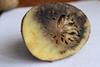
NewsCrop-killing pathogen found to disable plant ‘alarm system’
An international team has discovered that the pathogen Phytophthora infestans - which caused the Irish potato famine - employs special enzymes, called AA7 oxidases, to disable the plants’ early warning system, weakening their defenses before they can respond.