
All Extremophiles articles
-
 Careers
Trusting in science: Vito Latorre reports back on Parliamentary Links Day
University of East Anglia PhD student Vito Latorre shares his experiences of representing Applied Microbiology International at the Parliamentary Links Day in Westminster earlier this summer.
-
 Features
Earth’s “little Marses”: how extremophiles are shaping astrobiology
There are places on our planet where the environmental conditions closely resemble those on Mars. These terrestrial analogues have become natural laboratories where scientists study the possibility of extraterrestrial life.
-
 Careers
A day in the life: Discovering the hidden microbes of Britain’s historic waters
PhD student Wewerly Fernandes outlines her investigations into the microorganisms living in Britain’s historic wells and natural springs - once believed to hold healing properties and linked to legends of Merlin and renowned figures like Robert Burns.
-
 News
NewsWeather and human activity impact lake extremophiles
Researchers found that extreme changes, both due to weather and human activity, are reshaping microbial communities in the Great Salt Lake that form the base for a large food web.
-
 News
NewsMove over quokkas: Rottnest’s salt lake bacteria could be the island’s next big claim to fame
Scientists have read the full genetic code of bacteria from the salt lakes of Wadjemup (Rottnest Island), giving them their clearest picture yet of how these tiny organisms could be used to make biodegradable plastic.
-
 News
NewsDeep-sea extremophile yields protein that forms super stable biofilm
Scientists have discovered a protein secreted by a deep-sea extremophile — an organism adapted to extreme environmental conditions — that self-assembles into a biofilm and is highly stable, boosting its potential for biomedical applications.
-
 News
NewsThree interlinked factors are needed to sustainably grow microbes for MICP
A new review investigates cost-effective and greener ways to grow microorganisms for use in Microbially Induced Calcium Carbonate Precipitation (MICP), a microbial process that precipitates calcium carbonate, and identifies three interlinked factors that determine success or failure.
-
 News
NewsNew biobank decodes survival secrets of extreme acid mine drainage microbes
Over 97 percent of microorganisms in acid mine drainage have never been cultured, leaving their metabolism and adaptation strategies locked as “microbial dark matter.” Now, a new culturomics‑driven resource called the Microbial Biobank of AMD (mbAMD) changes that.
-
 News
NewsPathogens survive conditions on extraterrestrial locations
Microorganisms from our planet could survive on celestial bodies where water is present, such as Mars, reveals a study focusing on simulated space conditions. Our immune system reacts less effectively to pathogens that have undergone such a simulated space journey.
-
 News
NewsOrganized microbial ‘workforces’ keep Earth’s underground biosphere running
By studying life deep inside a former gold mine, scientists uncovered evidence that Earth’s hidden biosphere operates less like a random collection of microbes and more like an organized workforce. From site to site, the ecosystems were incredibly different from one another but largely stable through time.
-
 News
NewsÖtzi and his microbiome: a 5,300-year-old relationship
Researchers have obtained a detailed picture of the microbial community associated with the Iceman mummy Ötzi. The study provides insights into a complex microbiome, ranging from the gut flora of a Copper Age human to cold-adapted yeasts.
-
 News
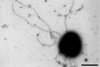
NewsExtreme adaptation helps Dead Sea single-celled organisms to swim
Researchers have described in detail a structural adaptation supporting one of the Dead Sea’s few hardy inhabitants — a single-celled archaea called Haloarcula marismortui (H. marismortui). They characterized the proteins that form the archaeal filament, a long tail-like structure essential for movement.
-
 Features
Bottling the extremes: culturing the hidden microbiomes of caves and deserts
Imagine an environment so extreme that most life cannot survive: a pitch-dark cave deep beneath the mountains of Northern Spain, or a hyper-arid desert in Chile where rainfall is virtually non-existent. These are not lifeless wastelands. Beneath cave walls and within the dusty top layer of desert soils, thriving communities of cyanobacteria, green algae, and fungi quietly engineer their ecosystems: fixing carbon, weathering rock, and cycling nutrients in conditions that would defeat most organisms on Earth.
-
 News
NewsResearchers investigate soil microbes from around the world for new antibacterial drugs
A team of researchers is looking to nature to find microbes that can be used to create new antibiotics to treat the growing threat of drug-resistant bacteria. They will screen soil microbes from around the world to hunt for sources of new antibacterial drugs.
-
 News
NewsLAMECS 2026 set to bring the next generation of microbiologists to Manchester
The future of applied microbiology takes centre stage in Manchester next month as the Letters in Applied Microbiology Early Career Scientist Research Symposium (LAMECS) returns for its fifteenth year.
-
 News
NewsStudy uncovers new kind of cold sensor
Investigators studying a bacterial protein have identified a new mechanism of sensing cold temperatures. The finding points to the possibility that this same type of mechanism exists in other organisms, including humans, and may have relevance for disorders involving faulty temperature regulation.
-
 News
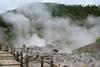
NewsSelf‑replicating circular RNA persists in extreme environments: Insights from hot spring microbiomes
Researchers who previously identified a highly unusual RNA virus in a high-temperature hot spring ecosystem searched for distinct types of self-replicating RNAs in a similar extreme environment, and a novel circular RNA replicon was identified within the microbial community inhabiting the hot spring.
-
 News
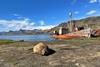
NewsViruses found in Antarctic air, including some new to science
It may seem stark and lifeless, but the air around the remote sub-Antarctic island of South Georgia contains viruses, including some that are new to science. Using metagenomics, researchers discovered that South Georgia harbours a diverse and dynamic airborne viral community.
-
 News
NewsSalty soils slow biochar aging but limit beneficial microbes, study finds
A new study reveals that increasing soil salinity can significantly slow the aging of biochar, a widely used soil amendment, while also suppressing the microbial communities that help drive its environmental benefits.
-
 News
NewsLife forms can planet hop on asteroid debris – and survive
The extremophile bacterium Deinococcus radiodurans can survive the pressures developed during ejection from Mars as a result of massive asteroid impact, a study shows. It means microorganisms can survive more extreme conditions than previously thought, including launch across space after major impacts.