
All Immunology articles – Page 49
-
 News
NewsScientists get to the bottom of COVID’s worst pediatric complication
Scientists investigating multisystem inflammatory syndrome in children (MIS-C) found their immune systems had latched onto a part of the coronavirus that closely resembles a protein found in their bodies, launching an attack on their own tissues.
-
 News
NewsStudy explains why virus causing cold sores does not spread to devastating brain infection
Researchers have discovered a previously unknown defence mechanism in the body that is the reason why herpes infection causes a serious and potentially fatal brain inflammation in only one out of 250,000 cases.
-
 News
NewsResearchers make breakthrough in bid to develop vaccines and drugs for neglected tropical disease
Scientists have developed a new, safe and effective way to infect volunteers with the parasite that causes leishmaniasis and measure the body’s immune response, bringing a vaccine for the neglected tropical disease a step closer.
-
 News
NewsMouse study reveals how fetal brain impacted when mother fights severe flu
A bad case of the flu during pregnancy can increase the risk for fetal neurodevelopmental disorders such as schizophrenia and autism spectrum disorder. But it’s not the virus itself doing the damage; it’s the mother’s immune response.
-
 News
NewsScientists uncover genes that contribute to severe COVID-19 susceptibility
Researchers confirmed the central and already known role of the TLR7 gene in severe courses of the disease in men, but were also able to find evidence for a contribution of the gene in women.
-
 News
NewsPrenatal Zika infection has long-term immune consequences in children, even without microcephaly
New findings challenge the current diagnostic criteria for congenital Zika syndrome, expanding the definition beyond skull or brain abnormalities.
-
 News
NewsStudy identifies unpredicted immune responses to adenoviral COVID vaccines
Researchers have identified unpredicted T-cell immune responses to the adenoviral (Oxford/AstraZeneca and Janssen) COVID-19 vaccines, but not to the mRNA vaccines.
-
 News
NewsStudy shows promise for a universal influenza vaccine
New research reveals a promising approach to developing a universal influenza vaccine — a so-called “one and done” vaccine that confers lifetime immunity against an evolving virus.
-
 News
NewsStudy identifies protein that helps COVID-19 virus evade immune system
Discovery of a new viral evasion mechanism, and of a monoclonal antibody that subverts it, is an advance in immunotherapy that offers the prospect of effective host-directed treatment to combat infections.
-
 News
NewsEarly life antibiotic increases risk of asthma: providing clues to a potential prevention adult asthma
Early exposure to antibiotics can trigger long term susceptibility to asthma, according to researchers who isolated a molecule produced by gut bacteria that in the future could potentially be trialed as a dietary supplement for children at risk of asthma.
-
 News
NewsRespiratory bacteria ‘turns off’ immune system to survive
Researchers have identified how a common bacterium is able to manipulate the human immune system during respiratory infections and cause persistent illness.
-
 News
NewsHepatitis C leaves ‘scars’ in immune cells even after successful treatment
Researchers have discovered that traces of ‘epigenetic scars’ remain in regulatory T cells and exhibit sustained inflammatory properties long after the Hepatitis C virus is cleared from the body.
-
 News
NewsScientists discover how to improve vaccine responses to potentially deadly bacterium
Researchers have shown in an animal model that targeting a key suppressive immune molecule (IL-10) during the delivery of a vaccine improves the ability of the vaccine to protect against infection.
-
 News
NewsStudy backs RSV vaccine safety during pregnancy
Vaccinating mothers against respiratory syncytial virus (RSV) during late pregnancy to protect their newborns is not associated with an increased risk of preterm birth or other poor outcomes, according to a new study.
-
 News
NewsUncovering ‘Blockbuster T cells’ in the gut wins major prize
Kazuki Nagashima developed a method with which to zero in on individual gut bacterium’s impacts on T cells. His work showed that – contrary to what has been thought – some T cells in the gut can interact with multiple bacteria.
-
 News
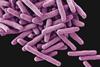
NewsResearchers reveals why recombinant BCG induces a stronger and longer-lasting response
Researchers are working on a more potent version of the BCG vaccine that protects against TB. While the conventional immunizer reduced infection by 90% in experiments with mice, the recombinant BCG increased protection rates to 99%.
-
 News
NewsCancer drug could be repurposed to fight Covid-19
Twelve years ago, cancer researchers identified a molecule that helps cancer cells survive by shuttling damaging inflammatory cells into tumor tissue. In new research, they show that the same molecule does the same thing in lung tissue infected with COVID-19.
-
 News
NewsFrom ‘hit to vial’: Discovery and optimization of a promising vaccine adjuvant
Scientists identified a new and promising adjuvant, dubbed PVP-037 - in principle, this compound can be added to any vaccine to enhance its action.
-
 News
NewsScientists unravel life-saving effect of dexamethasone in COVID-19
Researchers have discovered how the cortisone compound dexamethasone influences the impaired inflammatory response to Covid-19 and which patients benefit from it.
-
 News
NewsRevealed: new factor associated with the risk of severe COVID-19 in people with obesity
By analyzing samples from obese non-diabetics, researchers found that high blood levels of saturated fatty acids cause pre-activation of innate immune cells that, when infected with SARS-CoV-2, produce elevated levels of inflammatory molecules.