
All Industrial Microbiology articles – Page 3
-
 News
NewsAlgae show how to make two proteins from one messenger RNA
Scientists have uncovered a hidden feature of protein translation in green algae, offering a new perspective on the basic rules of gene expression.
-
 News
NewsMicroalgae could play key role in bio-based circular economy
With food systems under pressure from climate change, geopolitical instability, and supply chain vulnerabilities, the EU is driving innovation toward more sustainable, resilient, and local production models. Microalgae have emerged as a promising resource for producing ingredients across food, feed, and other consumer goods. Source: Hannah ...
-
 News
NewsUS- & Argentina startup Michroma wins €250k investment with The Future is Fungi Award 2025
A new frontier in biotechnology just crowned its next pioneer. Out of 187 groundbreaking startups from 59 countries, Michroma wins the The Future is Fungi Award 2025, taking home €250,000 / USD 289 000 in investment.
-
 News
NewsScientists reveal molecular cause behind “stuck” beer fermentation
Premature yeast flocculation (PYF) is a persistent issue in beer brewing, where yeast settles too early during fermentation. New research identifies multiple differential metabolites and confirmed galangin as a key factor that promotes early yeast aggregation.
-
 News
NewsDiphtheria toxin fragment harnessed to fuse lipid vesicles at neutral pH
Researchers have discovered a novel way to fuse lipid vesicles at neutral pH. By harnessing a fragment of the diphtheria toxin, the team achieved vesicle membrane fusion without the need for pre-treatment or harsh conditions, opening the door to new applications.
-
 News
NewsScientists develop world’s first modular co-culture platform for the one-pot production of rainbow-colored bacterial cellulose
The team engineered Komagataeibacter xylinus for bacterial cellulose synthesis and Escherichia coli for natural colorant overproduction. A co-culture of these engineered strains enabled the in situ coloration of bacterial cellulose.
-
 News
NewsResearchers boost biosynthetic capacity in yeast through extended lifespan
Scientists have demonstrated that combining lifespan engineering strategies with metabolic pathway optimization in Saccharomyces cerevisiae enables highly efficient sclareol biosynthesis, marking an advance in improving microbial production through lifespan engineering.
-
 News
NewsScientist who harnesses bacteria to deliver green solutions is winner in 2025 Tata Transformation Prize
A scientist who harnesses bacteria to deliver green solutions has been named as one of the winners of the 2025 Tata Transformation Prize. Balasubramanian Gopal, PhD, Indian Institute of Science, has been named Sustainability Winner in the awards.
-
 News
NewsBacterial spores offer promise of sustainable smart materials
By embedding Bacillus spores within engineered living materials, researchers have created living materials that not only endure harsh environments but can also be programmed to perform specific tasks. These materials may be a sustainable replacement for fossil-based materials.
-
 News
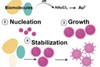
NewsScientists harness algae for a greener way to create functional gold nanoparticles
Researchers have pioneered a novel, sustainable method for synthesizing functionalized gold nanoparticles (AuNPs) using microalgae. This approach not only avoids the harsh chemicals used in conventional methods but also produces AuNPs that are more stable and less toxic to healthy cells.
-
 News
NewsHow are metabolism and cell growth connected? — A mystery over 180 years old
A research team has identified a novel principle in biology that mathematically explains why the growth of organisms slows as nutrients become more abundant—a phenomenon known as “the law of diminishing returns.”
-
 News
NewsCARBIOS and Wankai New Materials to build PET biorecycling plant in China
CARBIOS and Wankai New Materials, a subsidiary of Zhink Group, are committed to the large-scale deployment of CARBIOS’ PET biorecycling technology in Asia, with the first step being the construction of a PET biorecycling plant in China.
-
 News
NewsEngineered membraneless organelles boost bioproduction in Corynebacterium glutamicum
Scientists have successfully engineered liquid-liquid phase separation (LLPS)-driven membraneless organelles (MLOs) within the food-grade industrial strain Corynebacterium glutamicum.
-
 News
NewsScientists develop an efficient method of producing proteins from E. coli
Proteins sourced from microorganisms are attracting attention for their potential in biomanufacturing a variety of products, including pharmaceuticals, industrial enzymes, and diagnostic antibodies. These proteins can also be used for converting resources into biofuels and bioplastics, which could serve as viable alternatives to petroleum-based fuels and products. Therefore, efficiently producing ...
-
 News
NewsMaking yeast more efficient ‘cell factories’ for producing valuable plant compounds
Researchers have discovered a new way to make yeast cells more efficient “factories” for producing valuable plant compounds. By studying a plant membrane protein called AtMSBP1, they uncovered a mechanism that helps yeast cells better support plant cytochrome P450 enzymes.
-
 News
NewsNew platform for the production of versatile active ingredients
With the help of a newly developed chemo-enzymatic platform, researchers have succeeded in producing a large number of different furanolides in larger quantities and characterizing their biological activity.
-
 News
NewsCofactor engineering with phosphite dehydrogenase enables flexible regulation of lactate-based copolymer biosynthesis in E. coli
A new breakthrough enables higher yields of poly(3-hydroxybutyrate-co-lactate) [P(3HB-co-LA)] without disrupting bacterial growth, paving the way for more sustainable bioplastic manufacturing.
-
 News
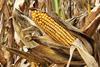
News1000-litre ‘corn-to-carrier’ demo turns stover into 10.6 g L⁻¹ microbial lipids
Researchers have shown that last autumn’s corn stalks can be transformed into a palm-oil-like fat suitable for aviation biofuel or cosmetics without the energy-guzzling steps that have kept lignocellulosic biorefineries on the drawing board.
-
 News
NewsCompound from Antarctic microorganism can be used to produce food, cosmetics, and medicine
A bioactive compound produced by the microorganism Bacillus licheniformis, found on Deception Island in Antarctica, has properties that qualify it for use in producing food, cosmetics, pharmaceuticals, and biodegradable materials.
-
 News
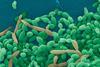
NewsRevolutionizing bioplastics: a microbial platform for fully bio-based long-chain polyesters
Researchers have developed a scalable, end-to-end microbial process transforming plant oils into sustainable polyesters comparable to petroleum-based plastics.