
All Industrial Microbiology articles – Page 4
-
 News
NewsExpanding the genetic toolkit: nitrogen-response promoters developed for Bacillus licheniformis
Promoters are crucial expression elements in synthetic biology, and Bacillus licheniformis serves as an excellent chassis cell for industrial production, but is restricted by a lack of nitrogen source-responsive promoters.
-
 News
NewsFrom glucose to gourmet: engineered bacteria churn out key food additive
Researchers used E. coli as the chassis to produce inosinic acid (IMP), a popular umami enhancer. By reprogramming the metabolic flux network of E. coli and introducing amino acid mutations in the key enzymes in the synthesis pathway, the yield was significantly increased.
-
 News
NewsChemobiological platform enables renewable conversion of sugars into core aromatic hydrocarbons of petroleum
Researchers have developed a chemobiological platform that converts renewable carbon sources such as glucose and glycerol into oxygenated precursors, which are deoxygenated in the same solvent system to yield benzene, toluene, ethylbenzene, and p-xylene (BTEX).
-
 News
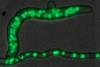
NewsIncrease in cell volume and nuclear number of the Koji fungus enhances enzyme production capacity
This study revealed cellular traits of the koji fungus Aspergillus oryzae linked to enzyme production through cell biological analysis. The authors found that, over time in culture, hyphae thicken, resulting in a tenfold increase in cell volume. Simultaneously, the number of nuclei per hyphal cell also rises tenfold, exceeding 200.
-
 News
NewsBalance is key: Strategies to boost protein production from engineered cells
New research demonstrates how to engineer ‘cell factories’ that last longer and produce more chemicals, without needing antibiotics or complex engineering methods, paving the way for sustainable biotech that lasts.
-
 News
NewsCaldic and AmphiStar join forces to transform personal care market in Europe with upcycled microbial biosurfactants
Global distributor Caldic and Belgian biotech innovator AmphiStar have announced an exclusive partnership to distribute and promote AmphiStar’s 100% upcycled microbial biosurfactants for personal care applications across Europe.
-
 News
NewsMagic mushrooms invent active compound twice
A study shows that fungi have developed the ability to produce psilocybin at least twice independently of each other. While Psilocybe species use a known enzyme toolkit for this purpose, fiber cap mushrooms employ a different biochemical arsenal – and yet arrive at the same molecule.
-
 News
NewsGiving food waste fermentation a ‘jolt’ increases chemical production
Adding an electrical jolt to fermentation of industrial food waste speeds up the process and increases the yield of platform chemicals that are valuable components in a wide range of products, new research shows.
-
 News
NewsBiodegradable PET alternative bioproduced at unprecedented levels
The PET-alternative PDCA is biodegradable and has superior physical properties. A team of bioengineers has engineered E. coli bacteria to produce the compound from glucose at unprecedented levels and without byproducts — and opened up a realm of possibilities for the future of bioengineering.
-
 News
NewsPretreatment methods deploying microbes bring second-gen biofuels from oilcane closer to commercialization
In collaboration with other Bioenergy Research Centers (BRCs), researchers at the Center for Advanced Bioenergy and Bioproducts Innovation (CABBI) are developing industrially feasible techniques for second-generation biofuel production from oilcane, an oil-rich variety of sugarcane, to help meet our growing societal demand for fuels. Source: April Wendling/CABBI CABBI ...
-
 News
NewsBroad-specificity enzyme targets glycans from across the kingdoms of life
Researchers have found a new enzyme that has a much broader specificity than the leading alternatives. This analysis resulted in the identification of the PNGaseL enzyme taken from Flavobacterium akiainvivens, which is a microbe isolated from decaying wood of a Hawai’ian plant.
-
 News
NewsMetabolic modeling unlocks diversity of yeast for industrial biotechnology
Scientists uncovered how yeast adapts to different environments at a systems level through strain-specific metabolic modeling.
-
 News
NewsCommon food bacterium could help make vitamins cheaper and greener
A new study reveals how Lactococcus lactis, a common food bacterium, regulates the production of a key precursor in vitamin K₂ (menaquinone) biosynthesis. The bacteria produce enough of this precursor to support their growth while preventing toxic buildup.
-
 News
NewsReady for market: Yeast process boosts clean, cost-efficient chemical production of succinic acid
A re-engineered yeast strain that efficiently produces succinic acid has been developed, which allows this valuable chemical to be produced at a lower cost.
-
 News
NewsDancing against the current: Microbial survival strategy
In scalding hot water rushing through narrow channels, some bacteria have evolved a surprising survival technique: they cling to surfaces, stand upright, and sway rhythmically—like tiny street dancers fighting the flow.
-
 News
NewsNew imaging approach transforms study of bacterial biofilms
Scientists have reimagined the capabilities of atomic force microscopy, transforming it into a tool that captures large-scale biological architecture. This advance offers an unprecedented view of biofilm organization.
-
 News
NewsBrewed chicken protein made by precision fermentation tested in pet food
In a groundbreaking new project, scientists used precision fermentation to produce brewed chicken protein and evaluated it for use in pet food. Dogs that consumed the protein in their kibble during a six-month study had beneficial digestive effects, they found.
-
 News
NewsEngineered yeast converts methanol into valuable compound α-farnesene at scale
Farnesene, a high-value chemical intermediate, has applications in fragrance and pharmaceutical synthesis as well as aviation fuel formulations.To reduce reliance on food-based feedstocks, researchers have engineered microbial cell factories capable of utilizing methanol.
-
 News
NewsBreakthrough engineered enzyme for recycling of PET bottle and blended fibers at moderate temperatures
Researchers engineered a novel PET hydrolase PET2-21M and established large-scale production in yeast. This enzyme dramatically boosted PET bottle-grade PET breakdown, offering a promising, energy-efficient path for a circular plastics economy.
-
 News
NewsMicrobially synthesized bioplastic may solve marine plastic pollution problem
Researchers have demonstrated a new eco-friendly plastic that decomposes in deep ocean conditions. In a deep-sea experiment, the microbially synthesized poly(d-lactate-co-3-hydroxybutyrate) (LAHB) biodegraded, while conventional plastics persisted.