
All Infectious Disease articles – Page 56
-
 News
NewsVaccine skepticism on social media can predict public health crises
Researchers have developed a new approach that could help public health officials predict where outbreaks might occur. By analyzing social media posts, the method identifies early signs of increasing vaccine skepticism — a warning signal that could emerge before any disease begins to spread.
-
 News
NewsMicropores pave the way for infection research
Organ-on-a-chip technology often contains gels that imitate the 3D environment of our tissues - however, many of these gels are too dense, hindering the passage of microbes and immune cells, and movement is essential to recreate how infections really develop. In this study, the research team developed a new type of porous gel that solves this problem.
-
 News
NewsTime to act and not react: how can the European Union turn the tide of antimicrobial resistance?
Despite determined efforts by countries and healthcare professionals, Europe is not on track to meet four of the five AMR targets set by the EU Council for 2030*, according to data released on EAAD.
-
 News
NewsApriori Bio and A*STAR Infectious Diseases Labs Announce strategic partnership to advance next generation influenza vaccines
Apriori Bio and the Agency for Science, Technology and Research Infectious Diseases Labs (A*STAR IDL) announced a strategic research partnership to co-develop and evaluate next generation self-amplifying RNA (saRNA) vaccines targeting seasonal and pandemic influenza.
-
 News
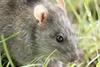
NewsHepatitis E virus from rats can also infect humans in individual cases – a new zoonotic pathogen?
It has only been known for a few years that humans can also be infected with a variant of the hepatitis E virus that is usually prevalent in rats. Following reports of individual cases, mainly from Hong Kong and Spain, the first infection with ratHEV has now also been described in a patient from Germany.
-
 News
NewsSugar transporter discovery offers promising avenue for improving antibiotic efficacy
Scientists have recently demonstrated that aminoglycosides enter bacteria by using sugar transporters. They have also successfully doubled the number of transporters, even in the most resistant Escherichia coli strains, thus improving antibiotics’ penetration rate and efficacy.
-
 News
NewsThe leading causes of mass mortality events in sea urchins are pathogens, storms, and extreme temperatures
Researchers have identified the primary drivers of sea urchin mass mortality events over recent decades: pathogens, storms, and extreme temperatures. The team have developed an innovative method for genetic sampling in marine environments - using a swab similar to a COVID-19 test, to enable rapid and non-invasive monitoring of marine animals and underwater disease outbreaks.
-
 News
NewsAMI warns that the threat of antimicrobial resistance in viruses and other pathogens cannot be underestimated
Applied Microbiology International (AMI) has urged global policymakers to strengthen the revised Global Action Plan on Antimicrobial Resistance (GAP-AMR), calling for a more inclusive, clear and equitable approach to tackling one of the world’s most urgent health challenges.
-
 Careers
Summer studentship: Megan investigates the mobile gene element that gives MRSA its clout
Megan Stenton reports back on her AMI-sponsored summer studentship which investigated the frequency of the SCCmec gene - a mobile gene element that houses the methicillin resistance gene - across members of the same species of Staphylococcus aureus.
-
 News
NewsStudy in Europe: monoclonal antibodies effectively prevent respiratory syncytial virus in infants
Data from Belgium, Portugal and Spain show that immunisation of children after birth reduced the risk of hospitalization due to RSV infection by almost 80%.
-
 News
NewsWild birds are driving the current U.S. bird flu outbreak
Researchers traced the introduction and spread of highly pathogenic H5N1 viruses during the first 18 months in North America using genomic sequencing and migratory flyway analysis, discovering that the viruses were spread primarily by wild migrating birds.
-
 News
NewsWomen are three times more likely than men to get severe long COVID: Here’s why
Researchers have identified a distinct immune signature in female long Covid patients versus male patients. They found evidence of ’gut leakiness’ in the women patients, including elevated blood levels of intestinal fatty acid binding protein, lipopolysaccharide, and the soluble protein CD14 — all signs of gut inflammation that can then trigger further systemic inflammation.
-
 News
NewsProtecting infants against respiratory syncytial virus this winter — ECDC issues advice
ECDC has issued rapid scientific advice for policymakers and public health authorities on ways to mitigate the impact of RSV disease among infants through immunisation and to support intensified efforts to protect them from RSV across Europe.
-
 News
NewsBiomedical Sciences researcher receives nearly $7 million in federal grants to fight STIs
Cynthia Nau Cornelissen, a Distinguished University Professor and associate director of the Institute for Biomedical Sciences at Georgia State University, has received nearly $7 million in two, five-year federal grants to develop vaccines and therapeutics to combat sexually transmitted infections (STIs).
-
 News
NewsExperts urge continued hepatitis B vaccine birth doses for newborns
In a new commentary, leading experts urge that all newborns in the United States continue to receive the first dose of hepatitis B vaccine within 24 hours of birth. Hepatitis B vaccines are safe and effective with over one billion doses administered worldwide.
-
 News
NewsKorea University College of Medicine’s Vaccine Innovation Center selected as lead institution for 2025 Korea-ARPA-H Health Security Project
The Vaccine Innovation Center at Korea University College of Medicine has been selected as the lead institution for a health security research initiative under the Ministry of Health and Welfare’s “2025 Korea-ARPA-H Project.”
-
 News
NewsNew test could allow for more accurate Lyme disease diagnosis
Researchers have developed a new way to detect the Lyme disease bacterium Borrelia burgdorferi, allowing for faster and more accurate diagnosis.
-
 News
NewsNew test could speed detection of three serious regional fungal infections
Researchers have developed a new molecular test capable of detecting three major pathogenic fungi at once — and with a much quicker turnaround than traditional methods.
-
 News
NewsAvian flu halves South Georgia’s breeding elephant seal population
South Georgia’s breeding population of female southern elephant seals (Mirounga leonina) may have been halved by highly pathogenic avian influenza virus (HPAIV), finds new research. These losses may threaten the security of the island’s breeding population.
-
 News
NewsTyphoid conjugate vaccine demonstrates strong safety and immunogenicity: Results from Phase 3 study
PATH and EuBiologics Co., LTD have announced Phase 3 results from a clinical trial of a typhoid conjugate vaccine (TCV), EuTYPH-C Inj.® Multi-dose. EuTYPH-C Inj.® Source: CDC/ Armed Forces Institute of Pathology, Charles N. Farmer This photomicrograph reveals some of the histopathology exhibited in a lymph node tissue ...