
All Infectious Disease articles – Page 62
-
 News
NewsStudy finds HEPA purifiers alone may not be enough to reduce viral exposure in schools
In a secondary analysis of a study of 200 classrooms, researchers found respiratory viral exposures were still high in those with HEPA purifiers, suggesting additional interventions are needed.
-
 News
NewsNew global burden of disease study: Mortality declines, youth deaths rise, widening health inequities
The world faces an emerging crisis of higher death rates in adolescents and young adults in North America and Latin America due to suicide and drug and alcohol consumption, and in sub-Saharan Africa due to infectious diseases and unintentional injuries.
-
 News
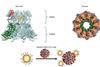
NewsProtein nanorings designed to detect and neutralize SARS-CoV2 virus
Scientists have generated a new ring-shaped protein nanomaterial capable of strongly binding to and neutralising the SARS-CoV2 virus. The new nanomaterial is formed by a scaffold based on recombinant ring-like proteins (RLPs), to which mini proteins were incorporated.
-
 News
NewsLittle-known strep bacteria behind growing number of severe infections
An under-recognised strep bacterium is causing a growing number of serious infections in Australia, with First Nations Australians disproportionately affected, according to new research.
-
 News
NewsResearchers’ call: Consider the risk of wildlife-spread diseases during ecosystem restoration
Researchers are urging adaptive ecosystem restoration, which implements key considerations for minimizing the zoonotic disease risk otherwise associated with restorations. A new study is providing practical guidance for restoration project stakeholders.
-
 News
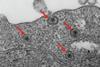
NewsResearchers find key to stopping deadly infection
New research has identified a key step that enables rotavirus to infect cells. The researchers found that disabling the process in tissue culture and in mice prevented infection.
-
 News
NewsNew vaccine shows promise against typhoid and invasive salmonella in first human trial
Researchers have completed a successful Phase 1 clinical trial of a novel vaccine designed to protect against both typhoid fever and invasive non-typhoidal Salmonella–two major causes of illness and death among children in sub-Saharan Africa.
-
 News
NewsProfessor awarded $3.9 million to fight deadly parasites that threaten children and immunocompromised adults
A multi-institutional team will develop effective drugs that are urgently needed to manage cryptosporidiosis in young children, immunocompromised adults and as a countermeasure to epidemic outbreaks.
-
 News
NewsDo imported cut flowers spread livestock viruses?
A study investigated whether Culicoides biting midges are being accidentally exported from Africa to Europe in shipments of cut flowers. Although researchers did detect small numbers of these insects near and inside greenhouses on a Kenyan flower farm, they found none in packaging or transport areas.
-
 News
NewsNew study reveals where HIV hides in different parts of the body
A new study reveals that HIV cloaks itself in the DNA of infected cells using unique DNA patterns in the brain, blood and parts of the digestive tract. For example, in the brain, the virus avoids genes and hides in less active parts of the DNA.
-
 News
NewsAntibody discovered that blocks almost all known HIV variants in neutralization assays
An international research team has discovered an antibody that could advance the fight against HIV. The newly identified antibody 04_A06 proved to be particularly effective in laboratory tests. It was able to neutralize 98.5 percent of more than 300 different HIV strains, making it one of the broadest antibodies against HIV identified.
-
 News
NewsResearch reveals fetuses exposed to Zika virus have long-term immune challenges
Researchers discovered that when a pregnant mother is infected with Zika virus, the resulting inflammatory response in the placenta permanently changes how the offspring’s immune system develops - even if the infection is mild or asymptomatic in the mother.
-
 News
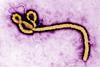
NewsLong Ebola: Sudan virus can persist in survivors for months, study shows
More than half of survivors of the Sudan Ebola virus still suffer serious health problems two years post-infection and the virus can persist in semen and breast milk for months after recovery, according to the first study examining the virus’s long-term effects.
-
 News
NewsScientists explore how viruses replicate and infect
Herpes viruses cultivated using one kind of host cell – known as a producer cell – exhibited differences from the same virus cultivated with a different producer cell.
-
 News
NewsResearchers deconstruct chikungunya outbreaks to improve prediction and vaccine development
Researchers analyzed more than 80 outbreaks of chikungunya virus to improve prediction of future outbreaks and inform vaccine trial development.
-
 News
NewsThe RESTART trial: a drug to block a toxic HIV molecule
What if the presence of a well-known but misunderstood viral protein explains why some people living with HIV (PLWH) never recover their health, even with antiretroviral treatment? Researchers will explore this in a groundbreaking clinical trial this fall.
-
 News
NewsAI can be valuable tool to strengthen pandemic preparedness
Artificial intelligence could be a valuable tool for detecting emerging diseases earlier, researchers from five European universities and research institutes argue.
-
 News
NewsSome human GII.4 norovirus are better than others at infecting cells; researchers have found out why
A study reveals that human GII.4 noroviruses have evolved a uniquely potent entry mechanism with clear strain-specific differences. The findings open new possibilities for identifying the elusive human norovirus receptor as well as developing vaccines and treatments.
-
 News
NewsHeart rhythm disorder POTS common in patients with long COVID
A new study shows that an unusual heart rhythm disorder, POTS, is particularly common in people with long COVID. The majority of those affected are middle-aged women.
-
 News
NewsNew antibiotic targets IBD — and AI predicted how it would work before scientists could prove it
The new antibiotic, enterololin, attacks and kills only a specific group of disease-causing bugs, which includes the type of E. coli that drives Crohn’s disease. It is a promising new treatment option for people affected by Crohn’s and other IBD-related conditions.