
All James Cook University articles
-
 News
Textile and food waste co-digestion boosts methane yields
Anaerobic co-digestion of textile waste with food waste (FW) could turn two stubborn waste streams into renewable methane while reducing landfilling and incineration. A study examined mono- and co-digestion of cotton, polycotton, and wool with FW under mesophilic conditions, testing substrate-to-inoculum (S/I) ratios of 0.5 and 1 and multiple feedstock mixing ratios.
-
 News
The Great Barrier Reef has a microbiome too
A study documents over 800,000 microbial genomes, identifying over 500 new bacterial species and over 300,000 distinct viruses in the waters of the Great Barrier Reef.
-
 News
Jeremy Horowitz selected for The Oceanography Society Early Career Award
The Oceanography Society (TOS) has selected Dr. Jeremy Horowitz as a recipient of the TOS Early Career Award, recognizing his outstanding early-career research contributions, impact, and promise for continued achievement in oceanography, along with his strong record of mentorship, outreach, and collaborative science.
-
 News
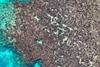
Drones reveal extreme coral mortality after bleaching
New research has revealed alarming coral mortality rates of 92 per cent after last year’s bleaching event at Lizard Island on Queensland’s Great Barrier Reef, marking one of the highest coral mortality rates ever documented globally.
-
 News
Transplanting healthy reef ecosystems to damaged reefs improves coral health
A pioneering study has revealed significant improvements in coral health through an innovative approach of transplanting healthy reef ecosystems to damaged reefs. The study offers new hope for coral reef restoration and the fight against widespread coral decline.
-
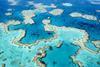 News
Scientists develop new coral disease forecasting system
Research has led to a new tool for forecasting coral disease that could help conservationists step in at the right times with key interventions. It can help end users detect early changes in the environment and better protect coral reef ecosystems.