
Latest news
-
 News
NewsKU secures $5.8 million NIH grant to advance infectious disease research
The National Institutes of Health recently awarded the University of Kansas $5.8 million for Phase 3 of KU’s Chemical Biology of Infectious Disease center, an NIH Center of Biomedical Research Excellence (COBRE) that was established in 2016. The center recruits, mentors and supports investigators across KU, KU Medical Center, Kansas State, Wichita State and other regional partners as they address urgent challenges in infectious disease and antibiotic resistance using chemical-biology approaches. A Phase 3 award is intended to help a research center along a sustainable path beyond COBRE support at the federal level.
-
 News
NewsNew type of human jumping gene found in a poxvirus
Until now, no one has observed a human gene that is both mobile and required for bodily functions. Scientists have found a human genetic element in a poxvirus and discovered it was both an important gene for brain function and a jumping gene capable of moving and inserting itself in genomes.
-
 News
NewsA natural defence against skin-infecting fungi: Mediterranean rockrose extract
A polyphenol-rich extract from Cistus salviifolius demonstrated fungicidal activity against several dermatophytes and decreased fungal infection in a laboratory model of human epidermis.
-
 News
NewsNew tool closes gap on untapped potential of phages
A new tool to mutate bacteriophages – viruses that infect bacteria – provides a big leap forward in both our understanding of how they function, and our ability to harness their full potential. The new method allows for genome-wide mutagenesis of bacteriophages using CRISPR-Cas technology.
-
 News
NewsCellular break-in: Parasite strategies for host invasion
Before the parasite Toxoplasma gondii can invade a cell, it has to know it has reached the right place. New research from the Whitehead Institute reveals that the parasite doesn’t simply recognize a ready-made doorway into the cell. Instead, it helps create the conditions for its own entry.
-
 News
NewsPortable device delivers rapid testing for mosquito-borne viruses
Researchers have created an inexpensive, quick and accurate handheld device that can detect seven mosquito-borne illnesses. Their design could help clinicians in low-resource or remote settings — from clinics in rural Haiti to farm animal veterinarians — diagnose patients without the need for a power supply, bulky equipment or extensive training.
-
 News
NewsResearch illuminates the bustling molecular communities inside bacterial cells
Scientists have often thought of cells as small bustling cities with parts that resemble factories, power grids, and shipping systems. Past research hasn’t had the tools to probe more deeply into how those different components interact, but researchers have now deployed cryo-electron tomography to visualise how different cellular processes are connected.
-
 News
NewsResearch advances understanding of tick-borne Powassan virus
Researchers characterized changes in brain microRNAs during Powassan virus infection. MicroRNAs are tiny, natural molecules that help regulate how cells function by controlling protein production. The researchers found that these important regulators were widely disrupted as the infection progressed.
-
 News
NewsResearchers develop AI tool that reveals hidden clues in the gut microbiome
Researchers are using artificial intelligence to uncover hidden clues among the trillions of bacteria living in the human gut, including changes that could one day help scientists detect diseases earlier.
-
 News
NewsHigh-altitude wetland reveals a distinctive genetic signature in DNA polymerase genes
Metagenomic analysis shows that DNA polymerase genes from China’s Napahai plateau wetland form distinctive evolutionary clusters, highlighting how geography and local environmental conditions may shape microbial genetic diversity.
-
 News
NewsResearchers identify new vaccine target in malaria parasite
Researchers identified a previously uncharacterized site on the parasite’s major surface protein that antibodies can target to block liver infection, potentially preventing the dormant forms responsible for malaria relapses.
-
 News
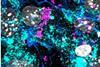
NewsDrug helps bladder cells to clear urinary infections
Researchers have identified a way to strengthen the bladder cells’ ability to eliminate urinary tract infection bacteria sheltered in the cells of the epiithelium. The drug OM-89, marketed as Uro-Vaxom®, activates cellular degradation pathways in bladder epithelial cells while also increasing the amount of antibiotic that enters them.
-
 News
NewsBlood test shows whether newborns with fever have bacterial or viral infection
A new study suggests a test that compares the levels of two molecules in the blood is able to accurately distinguish between bacterial and viral infections in newborn babies with fever.
-
 News
NewsSafer water: From single-target tests to real-time multipathogen surveillance
A new perspective outlines how integrated biosensing systems could move aquatic pathogen surveillance from periodic single-target testing toward rapid, online monitoring of multiple pathogens at once.
-
 News
NewsHow straw is returned to soil can make a major difference in nitrous oxide emissions
Returning crop straw to farmland is widely used to recycle nutrients and improve soil quality. But new research shows that the way straw is returned to soil can strongly influence how effectively it limits emissions of nitrous oxide, a potent greenhouse gas.
-
 News
NewsFAO renews university’s designation as Reference Centre on Antimicrobial Resistance and Aquaculture Biosecurity
The Food and Agriculture Organization of the United Nations is redesignating Mississippi State University as an FAO Reference Centre on Antimicrobial Resistance and Aquaculture Biosecurity.
-
 News
NewsChina’s microecology journey points to a one health future
Microbes are often associated with disease, but the trillions of microorganisms living in and around us also help support health, food production and environmental balance. A new review in Microbiome and One Health examines the development of China’s microecology field across more than 70 years and its contribution to the ...
-
 News
NewsGut microbiome can reveal risk of type 2 diabetes
Changes in the composition of bacteria in the gut could provide early warning of type 2 diabetes (T2D), new research has found. The analysis of data from hundreds of thousands of individuals identified hundreds of changes in the composition of the gut microbiome that can be detected before the onset of any changes in blood glucose measures.
-
 News
NewsNew dynamic vision of the rhizosphere moves beyond the drive to just add more inputs
A new Perspective argues the case for an expanded view of the rhizosphere as a dynamic system, paving the way for a vision of sustainable soil management that moves beyond simply adding more fertilizers, microbial products, or other inputs.
-
 News
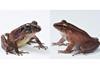
NewsFrog’s coat of bacterial armor helps protect it from fungal disease
The bacteria living on frogs’ skin could serve a vital role in protecting the animal from a deadly fungal disease. A team of researchers found that frogs’ natural skin bacteria can help them fight disease and improve their chances of survival.