
Latest news – Page 96
-
 News
NewsResearchers develop new DNA test for personalized treatment of bacterial vaginosis
Researchers have developed a simple DNA PCR-based lab test — built on a more detailed genetic analysis of the main group of bacterial organisms that cause bacterial vaginosis — to help clinicians prescribe the right medicine for each patient.
-
 News
NewsSoil carbon-degrading enzyme activities more sensitive to warming in alpine meadow than swamp meadow
A new study demonstrates that the activities of soil extracellular enzymes are significantly altered in the alpine meadow, but not significantly in the swamp meadow, which coincided with the soil organic carbon content of these grasslands.
-
 News
NewsYellow pigment from Streptomyces coelicolor offers potential weapon against breast cancer
A new study aims to explore the effect of a yellow pigment (OR3), from a new isolate of Streptomyces coelicolor JUACT03 on metastatic breast cancer.
-
 News
News‘She loves me, she loves me not’: physical forces encouraged evolution of multicellular life, scientists propose
A new study presents a striking example of cooperative organization among cells as a potential force in the evolution of multicellular life. The paper is based on the fluid dynamics of cooperative feeding by Stentor, a relatively giant unicellular organism.
-
 News
NewsPartnering diet and intestinal microbes to protect against GI disease
New research suggests that we could get more out of our diets by harnessing intestinal microbes to break down plant compounds collectively known as phenolic glycosides. These compounds pair sugar molecules with a host of small molecules beneficial to human health.
-
 News
NewsMicrobiologists must seize the day - and make their mark on policy
Microbiologists need to seize opportunities to engage with policymaking in order to move towards better, more scientifically informed policy that serves the common good, a new paper published in Sustainable Microbiology urges.
-
 News
NewsCompelling data point to a single, unknown respiratory virus as cause of Kawasaki disease
New research strongly suggests that Kawasaki disease is caused by a single respiratory virus that is yet to be identified. Findings contradict the theory that many different pathogens or toxins could cause this disease that can lead to serious cardiac complications in young children.
-
 News
NewsOnly few disinfectants are capable of inactivating hepatitis A virus
Researchers tested nine different surface disinfectants against Hepatitis A virus. According to their findings, only two aldehyde-based products proved effective at inactivating HAV.
-
 News
NewsNew approach could treat anthrax beyond the ‘point of no return’
Once a case of anthrax has progressed beyond the “point of no return” after just a few days, patients are almost certainly doomed. But a new study shows that a cocktail of growth factors reverses would-be lethal cell damage in mice with anthrax.
-
 News
NewsAMI members show the way on how microbes are already solving environmental disasters
Applied Microbiology International members are among a team of high level microbiologists who have teamed up to highlight how the world’s tiniest creatures are delivering solutions to climate change and pollution.
-
 News
NewsmRNA-based COVID-19 vaccines train the ‘long-term memory’ of the innate immune system
A study showed that vaccination of multiple mRNA-based COVID-19 vaccines could induce persistent epigenetic changes in innate immune cells, leading to long-term immune responses for SARS-CoV-2 and other pathogens.
-
 News
NewsResearchers design genetic tools to develop vaccines more efficiently for African swine fever virus (ASFV)
A synthetic genomic-based reverse genetics tool has been developed for African swine fever virus (ASFV) that helps vaccine development to reduce the economic losses. The system may also be adapted to other emerging viral threats.
-
 News
NewsDistinct patterns of soil bacterial and fungal communities in the treeline ecotone
A study was carried out to understand the biodiversity of the microbial communities in the treeline ecotone that might affect alpine ecosystems and other potential ecological effects in response to climate change.
-
 News
NewsCoral diseases and water quality play a key role for coral restoration and survival efforts
A recent study which examined threatened Staghorn coral species found that while some coral genotypes displayed resistance to either high nutrient levels from run-off or disease, none were resistant to both stressors simultaneously.
-
 News
NewsBiochar and microbe synergy: a path to climate-smart farming
Researchers conducted a global analysis to obtain a full picture of the environmental and agricultural benefits of biochar, which is shown to be beneficial to soil health and microbes.
-
 News
NewsWere our blue oceans once green?
Scientists find evidence that our oceans used to be green, suggesting that this may be a sign of primitive life, including that on alien worlds. The study suggests that cyanobacteria once flourished in green seas.
-
 News
NewsProbiotic may improve sleep quality: new research findings
A recent study has identified a potential new approach to managing sleep disorders. The research focuses on the role of S-adenosylmethionine (SAM)-producing probiotics in regulating sleep and circadian rhythms.
-
 News
News‘It’s a shot, not a vaccine like MMR’: New skepticism prompts call for action
This ‘vaccine is not a vaccine’ is a new, previously unreported type of vaccine-specific scepticism, and it arose only during the COVID-19 pandemic. However, it might, according to the researchers, also apply to the flu vaccine.
-
 News
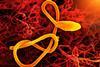
NewsScientists zoom in on structure of still lethal Ebola virus
The first high-resolution visualisation of the Ebola virus nucleocapsid provides detailed insights into the interactions within the nucleocapsid complex, unveiling the relationship between molecular interactions and functional regulation.
-
 News
NewsSecurity-relevant research in times of geopolitical polarisation: report
A new report on security-relevant research - including research into pathogens - notes a change within the scientific system due to increased national security interests.