
All articles by Linda Stewart – Page 124
-
 News
NewsHydrothermal plumes - and microbes - revealed as invisible transport pathways for iron
A new review highlights how hydrothermal vents on the seafloor shape iron availability and influence the global oceanic element cycles.
-
 News
NewsHow to hack your microbiome for lifelong health
A new book, The Microbiome Master Key, dissects the latest microbiome research, dispels common myths and provides simple, science-backed tips on how to leverage your microbiome to promote healthy living and aging.
-
 News
NewsNew insights into malaria could reshape treatment
A sodium pump essential to the malaria parasite’s survival, PfATP4, has emerged as one of the most attractive drug targets. A new study presents the first high-resolution 3D structure of PfATP4 and identifies a previously unknown but essential binding partner.
-
 News
NewsUS funding cuts could result in nearly 9 million child tuberculosis cases, 1.5 million child deaths
A new study projects that US funding cuts to global health aid will have a catastrophic effect on pediatric TB, with children in Sub-Saharan Africa and Southeast Asia likely to experience a spike in preventable cases and deaths over the next decade.
-
 News
NewsNew platform for the production of versatile active ingredients
With the help of a newly developed chemo-enzymatic platform, researchers have succeeded in producing a large number of different furanolides in larger quantities and characterizing their biological activity.
-
 News
NewsMosquito saliva may hold clues to fighting chikungunya inflammation
Scientists have uncovered a surprising mechanism showing how mosquito saliva can alter the human body’s immune response during chikungunya virus (CHIKV) infection - it not only transmits the virus but also influences how the body’s immune system responds.
-
 News
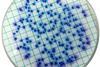
NewsCofactor engineering with phosphite dehydrogenase enables flexible regulation of lactate-based copolymer biosynthesis in E. coli
A new breakthrough enables higher yields of poly(3-hydroxybutyrate-co-lactate) [P(3HB-co-LA)] without disrupting bacterial growth, paving the way for more sustainable bioplastic manufacturing.
-
 News
NewsNovel fungal phyla and classes revealed by eDNA long reads
Via a thorough analysis of the EUKARYOME long-read database, an international team has discovered that a large proportion of unknown eukaryotes uncovered with long-read sequencing belong to deep, hitherto undescribed fungal lineages.
-
 News
NewsScientists turn algae and crop waste into valuable fuels and nanomaterials
Researchers have developed a clean and efficient process to transform microalgae and agricultural residues into a range of high-value products, including biofuels, bio-adsorbents, and fluorescent carbon nanodots.
-
 News
NewsExercise counteracts junk food’s depression-like effects through gut-brain metabolic signaling
New research into metabolic pathways demonstrates that voluntary running exercise can mitigate depression-like behaviors induced by high-fat, high-sugar diets associated with both circulating hormones and gut-derived metabolites.
-
 News
NewsWinners of Applied Microbiology International Horizon Awards 2025 announced
The winners of the Applied Microbiology International Horizon Awards 2025 have been announced. The prizes celebrate the brightest minds in the field and promote the research, group, projects, products and individuals who continue to help shape the future of applied microbiology.
-
 News
NewsBruker announces FDA Clearance of Claims 7 and 8 for the MALDI Biotyper® CA System
Bruker has announced FDA clearance of Claim 7 and Claim 8 for its MALDI Biotyper® CA System, marking a significant advancement in clinical microbial identification capabilities.
-
 News
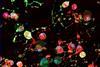
News’Footprint of Death’ gives new clues to cell life, spread of disease
Scientists at La Trobe University have discovered a previously unknown way viruses could spread around the body, potentially paving the way for more effective drug development. Source: La Trobe University Dead cells after the self-destruction and fragmentation process. The large green areas are the “eat me” signals ...
-
 News
NewsAre there living microbes on Mars? Check the ice, researchers say
By recreating Mars-like conditions in the lab, researchers demonstrated that fragments of the molecules that make up proteins in E. coli bacteria, if present in Mars’ permafrost and ice caps, could remain intact for over 50 million years.
-
 News
NewsSurprising bacteria discovery links Hawaiʻi’s groundwater to the ocean
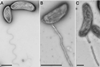
A new species of bacteria has been discovered off the coast of Oʻahu, shedding light on how unseen microbial life connects Hawaiʻi’s land and sea ecosystems.
-
 News
NewsDual feeding strategy helps Mediterranean coral thrive in rising sea temperatures
An exceptional “dual feeding” strategy underlies a Mediterranean coral’s resilience to rising sea temperatures, according to a study. The stony coral Oculina patagonica is known to feed itself with or without algae.
-
 News
NewsMiniature noses to help prevent infections and promote nasal health
To better understand how different bacteria interact with the lining of the human nose, researchers used a miniature model of the human nose to study how bacteria can live in nasal passages.
-
 News
NewsEngineers solve the sticky-cell problem in bioreactors and other industries
Their system uses electrochemically generated bubbles to detach cells from surfaces, which could accelerate the growth of carbon-absorbing algae and lifesaving cell therapies.
-
 News
NewsSulfated yeast could help recover rare earth metals from waste liquids
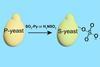
Electronics, optical fibers, and superconducting materials heavily rely on rare earth metals, but innovative recycling solutions are lacking. Now researchers in Japan have successfully achieved selective recovery of metals with S-yeast, a sulfated yeast.
-
 News
NewsIn the midst of a global dengue epidemic, Wolbachia kept a Brazilian city safe
In the middle of the world’s worst global dengue epidemic, a city in Brazil was effectively protected by an innovative program that introduced the bacterium Wolbachia into the local mosquito population, lowering the rate of dengue by almost 90 per cent.