
All articles by Linda Stewart – Page 150
-
 News
NewsGeorgia and Ukraine launch national Reproducibility Networks with support from the TIER2 project
Two new national Reproducibility Networks have been launched in Georgia and Ukraine with support from the TIER2 project – a step towards strengthening open, transparent, and high-quality research practices in Horizon Europe Widening participation countries.
-
 News
NewsChemical trick could turn losing malaria drug into a winner
A new generation of malaria drugs failed clinical trials, in part because they were hard to swallow. Chemists have remodeled their structures to make them more soluble, while maintaining their effectiveness against drug-resistant parasites.
-
 News
News4,000-year-old sheep reveals that livestock played a role in prehistoric plague infections
An ancient Yersinia pestis genome recovered from sheep sheds new light on a mysterious infectious disease that plagued prehistoric Eurasia for over 2000 years.
-
 News
NewsNatural shield: Licorice extract keeps ready-to-eat chicken safer and longer
Scientists who combined microbiological assays with mathematical growth models revealed that licorice extract demonstrates strong antimicrobial properties against one of the most resilient spoilage organisms in meat.
-
 News
NewsStudy finds fungus metabolites may help ghost shrimp survive
Researchers have found that chemical byproducts produced by the amphibian-killing fungus Batrachochytrium dendrobatidis—commonly known as Bd—may actually help ghost shrimp survive.
-
 News
NewsFrom east to west: How microbes orchestrate sausage flavor
A new review compares the microbial communities and fermentation strategies in Eastern and Western sausage styles, revealing how microbial succession—from lactic acid bacteria to yeasts and molds—plays a pivotal role in shaping characteristic flavors and textures.
-
 News
NewsNew hydrogel-based treatment accelerates infected wound healing and balances skin microbiota
A novel ε-poly-L-lysine-loaded sodium-alginate/gelatin hydrogel (PSG15) has shown exceptional promise in accelerating the healing of infected wounds. The injectable hydrogel delivers antibacterial properties while regulating macrophage polarization and stabilizing the skin microbiota.
-
 News
NewsFighting infections with the power of the microbiome
Scientists have discovered that bacteria of the species Klebsiella oxytoca can displace pathogenic bacteria from the gut and want to develop a living biotherapeutic based on this finding. The DZIF is now providing 2.2 million euros in funding for product development.
-
 News
NewsEarly challenges to the immune system disrupt oral health
Researchers identified changes over time in the oral microbiome of children living with HIV, offering insights into how early immune challenges shape not only oral health but also systemic health.
-
 News
NewsBioscientist wins NSF CAREER Award to investigate bacterial toxins, expand inclusion in STEM
Marcos de Moraes has received support to study the molecular mechanisms and evolutionary roles of bacterial toxins known as deaminases, as well as an educational outreach effort aimed at making biosciences open to all, including differently abled persons.
-
 News
NewsKenya achieves elimination of human African trypanosomiasis as a public health problem
The World Health Organization (WHO) has validated Kenya as having eliminated human African trypanosomiasis (HAT) or sleeping sickness as a public health problem, making it the tenth country to reach this important milestone.
-
 News
NewsNew network to address malaria among school-aged children in sub-Saharan Africa
A new network aims to improve malaria prevention among school-aged children in sub-Saharan Africa. The new partnership will unite researchers, policymakers, healthcare practitioners and other stakeholders across multiple countries to better understand and address the burden of malaria in children.
-
 News
NewsScientists develop new approach to fighting many viruses at once
Scientists have developed a research pipeline to fuel the development of “universal vaccines,” that would address broad viral families and mutated viral variants.
-
 News
NewsEnvironmental antibiotic resistance unevenly addressed despite growing global risk, study finds
Antibiotic resistance in the environment is a growing and largely overlooked crisis receiving inconsistent attention, according to a new study. Worryingly few studies have explored how antibiotic resistance spreads in the air, oceans or green spaces.
-
 News
NewsGeobiologist Dr. Ilya Bobrovskiy moves to MARUM with his ERC Starting Grant
Geobiologist Dr. Ilya Bobrovskiy, previously employed at the GFZ Helmholtz Centre for Geosciences, is moving to the University of Bremen to establish a research group at MARUM as part of his ERC Starting Grant.
-
 News
NewsNovel immunologic surveillance study provides new insights into post-pandemic return of respiratory viruses
Non-pharmaceutical interventions such as masking and distancing targeted towards SARS-CoV-2 during the pandemic also decreased circulation rates of and population immunity to common respiratory pathogens in children, a new study shows.
-
 News
NewsCopper antimicrobials can drive antibiotic resistance in bacteria, but there’s a fix, scientists say
Microbiologists have found that heavy use of copper antimicrobials can drive antibiotic resistance in bacteria. However, resistance quickly diminishes without copper exposure, suggesting that copper could help reduce antibiotic resistance if alternated with other measures.
-
 News
NewsInvestigating regional-specific gut microbial distribution: an uncharted territory in disease therapeutics
A new perspective highlights the critical role of region-specific gut microbial distribution across intestinal segments (e.g., duodenum, colon) in regulating host metabolism and immunity, challenging traditional fecal-centric approaches.
-
 News
NewsNational study urges expanded vaccine screening in emergency departments
About 49% of people are unaware of one or more vaccines recommended for them. Further, 86% have not received one or more of these vaccines, according to the first national comprehensive vaccine surveillance study conducted in emergency departments.
-
 News
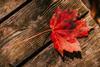
NewsMaple compound offers new way to fight tooth decay
A new study highlights the potential of using a natural compound from maple to combat the bacteria responsible for tooth decay: Streptococcus mutans. Epicatechin gallate is a powerful and safe alternative to traditional plaque-fighting agents.