
All Ludwig Maximilian University of Munich articles
-
 News
NewsToxoplasmosis: how the pathogen exploits its own envelope
Researchers have developed a novel imaging technique that allows reliable visualization of the process of endocytosis in Toxoplasma for the first time. The material enters the pathogen through a micropore in its cell membrane.
-
 News
NewsNasal microbiome: friendly pirates deprive multi-resistant bugs of iron
A new study reveals that whether dangerous staphylococci survive in the nose depends on what other bacteria are present – and how they obtain iron.
-
 News
NewsMicroscopic fungi enhance soil carbon storage in new landscapes created by shrinking Arctic glaciers
Melting Arctic glaciers are in rapid recession, and microscopic organisms colonise the newly exposed landscapes. A new study reveals that yeasts play an important role in soil formation in the Arctic after glaciers have melted away.
-
 News
NewsYoung scientists spearhead breakthrough COVID-19 research
A molecular biophysics study investigates how coronavirus variants of concern attachment strength to human cells influences COVID-19’s spread and transmissibility.
-
 News
NewsBacteria can switch from rare earth metals to radioactive elements
Scientists have demonstrated for the first time that bacteria can use certain radioactive elements to sustain their metabolism.
-
 News
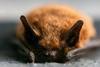
NewsBats disturbed by humans are more frequently infected with coronaviruses
Bats in human-dominated ecosystems have a higher prevalence of coronaviruses, increasing the possibility that these could be transmitted to humans.
-
 News
NewsAmoebae inspire model describing self-organisation in robots
Researchers at Ludwig Maximilian University of Munich (LMU) have developed a new model to describe how biological or technical systems form complex structures without external guidance.