
More News – Page 43
-
 News
NewsShorter antibiotic courses show similar outcomes to longer use for some pneumonia patients
A multicenter target trial emulation found that for eligible patients hospitalized with community-acquired pneumonia (CAP), health outcomes were similar whether they received a three- to four-day course of antibiotics or a course lasting five days or more.
-
 News
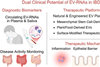
NewsExtracellular vesicle RNAs offer new hope for diagnosing and treating chronic inflammatory bowel disease
Extracellular vesicle-associated RNAs can serve as non-invasive biomarkers for early inflammatory bowel disease detection and disease monitoring, and also hold great potential as targets for next-generation targeted therapies, according to a new review.
-
 News
NewsAutism and ADHD: Epigenetic changes at birth associated with an infant’s microbiome and neurodevelopment
Epigenetic changes present at birth can impact how an infant’s gut microbiome develops during their first year. Researchers also identified specific epigenetic changes and gut microbes that were associated with signs of autism spectrum disorder (ASD) and ADHD when the children were three years old.
-
 News
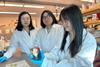
NewsNew biodegradable wash removes pesticides and extends produce shelf life
Researchers have developed a natural, biodegradable wash that removed up to 96 per cent of pesticide residue from fruit and slowed browning and moisture loss.
-
 News
NewsTwo research projects to study immune responses to dengue and Zika viruses
Dr. James Earnest, an assistant professor at the Burnett School of Biomedical Sciences, is leading two new research projects to examine how humans build an immune response to dengue and the Zika virus over time, in pursuit of creating better preventative measures.
-
 News
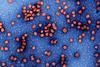
NewsBetween 2.4 and 4.1 million people estimated to be living with chronic hepatitis B infection in Europe
Chronic hepatitis B is substantially prevalent across the European Union and European Economic Area (EU/EEA), affecting an estimated 0.7% of the population in the region in 2022, according to a new study.
-
 News
NewsScientists discover the antibacterial potential of ‘hero’ Korean skincare ingredient
Fans of Korean skincare may be familiar with ‘hero ingredient’ Madecassic acid for its skin-soothing properties, but researchers have revealed its greater potential for use in the battle against antibiotic resistance.
-
 News
NewsSibling stem cell transplant linked to long-term HIV remission
Long-term HIV remission has been achieved in a patient following a stem cell transplant from a sibling carrying a certain genetic mutation, according to new research.
-
 News
NewsTiny plankton have big impact on harmful algal bloom predictions
While some computer models can forecast potential algal blooms, their accuracy is limited.. A new study shows that coupling three models and accounting for how different algae species interact can significantly improve predictions.
-
 News
NewsWildlife trade increases pathogen transmission
A study combining forty years of legal and illegal wildlife import-export data with compilations of host–pathogen relationships found that wild mammals that are traded are 1.5 times more likely to share infectious agents with humans than those that are not involved in trade.
-
 News
NewsFrom Asgard to Earth: tiny discoveries hold clues to life’s greatest leap
Stromatolites may hold insights into how complex life began. Researchers have identified a previously unknown microbe living in close partnership with another organism inside these ‘living fossils’.
-
 News
NewsResearchers explore potential link between COVID-19 and lung cancer risk
New findings have identified a potential association between COVID-19 and increased lung cancer risk, driven by underlying biological mechanisms in the lung. The study integrates human clinical data with mechanistic research in animal and cellular models.
-
 News
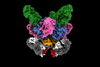
NewsNanodisc platform improves vaccine design for Ebola, HIV and more
Scientists have created a platform that allows viral surface proteins to be studied in a form that more closely resembles how they appear naturally, utilizing nanodisc technology where these proteins are embedded into particles made of lipid molecules, preserving them in a membrane-like structure.
-
 News
NewsNative bacteria may break down dioxins without genetic modification
Researchers have demonstrated that native soil bacteria, when treated with decoy molecules, can degrade non-native compounds, including persistent pollutants such as dioxins, without genetic modification.
-
 News
NewsTrial assesses safety and effectiveness of two new TB vaccines
Two new vaccines to prevent tuberculosis (TB) are safe for use in adults and children, but they do not offer protection against all forms of TB, finds a large trial from India.
-
 News
NewsNon-producing oil and gas wells emit microbial methane at rates 1,000 times higher than previously estimated
Microbial methane leaking from non-producing oil and gas wells is being emitted at rates about 1,000 times higher than previously estimated, according to a new study.
-
 News
NewsHow cholera bacteria swap defenses against viruses
To survive viral attack, bacteria equip themselves with antiviral immune systems. Vibrio cholerae carries a large genetic element called a sedentary chromosomal integron (SCI). A new study investigates whether the SCI might capture gene cassettes from genetic material entering the cell from the outside.
-
 News
NewsCould your housemates be changing your gut bacteria?
Living with friends may quietly be altering your gut bacteria - according to a new study. Research on a colony of tiny island birds reveals they share more of their gut bacteria with the birds they spend the most time with.
-
 News
NewsMethod for amplifying the full genome of human papillomavirus 16 uses overlapping extension polymerase chain reaction
Human papillomavirus (HPV) is a double-stranded circular DNA virus with a genome of approximately 7–8 kb. A new study aims to establish an overlapping extension polymerase chain reaction method for the amplification of the entire genome of HPV16.
-
 News
NewsHidden ocean feedback loop could accelerate climate change
Scientists have uncovered a key mechanism behind methane production in the open ocean. Their research indicates that this mechanism could intensify as the planet warms, providing an alarming feedback loop for global warming.