
More News – Page 54
-
 News
NewsClimate change is fueling disease outbreaks
Researchers analyzed the connection between a cyclone in Peru and a massive outbreak of dengue fever, a mosquito-borne viral disease that can cause fever, rash, and life-threatening symptoms like hemorrhage and shock. Their findings reveal that warmer, wetter weather linked to climate change is making disease epidemics more likely.
-
 News
NewsWhen waste becomes fertilizer: Can sludge-derived liquids reshape aquatic life in farmlands?
Hydrothermal carbonization has been proposed as a soil amendment to reduce synthetic fertilizer inputs and enhance crop productivity. Research finds it reshapes community assembly, trophic interactions, and functional expression in periphyton, with network integrity emerging as the primary driver of ecosystem functioning.
-
 News
NewsLemongrass essential oil may target bacteria even more effectively than conventional antibiotics, research suggests
Lemongrass essential oil can be even more effective than traditional antibiotics against some Streptococcus bacteria under certain conditions, new research to be presented at MLSFF26 has found.
-
 News
NewsPlastic bottles transformed into Parkinson’s drug using bacteria
A drug to treat Parkinson’s disease can be made from waste plastic bottles using a pioneering method. The approach harnesses the power of bacteria to transform post-consumer plastic into L-DOPA, a frontline medication for the neurological disorder.
-
 News
NewsHigh-fat diets cause gut bacteria to enter brain, study finds
A new study, performed using mouse models, establishes that live bacteria from an imbalanced gut microbiome can enter the brain via the vagus nerve. The vagus nerve connects the brainstem to the heart, lungs, and major abdominal organs, including the stomach, intestines, liver and more.
-
 News
NewsShell game: How oysters enlist help from microbes
Researchers have discovered that oyster microbes might help with the “heavy lifting” of calcification that forms oyster shells. These microbes and the oysters co-express – or coordinate – the expression of certain genes that hint at a chemical “dialogue” between the host and these microbes.
-
 News
NewsNew gel-based system allows bacteria to act as bioelectrical sensors
Researchers have developed a safe bioelectronic sensor that allows for effective electronic communication even in liquid environments. The system uses the naturally occurring polymer chitosan, acting as a kind of shell to keep the bacteria from escaping.
-
 News
NewsMicrobial clues uncover how wild songbirds respond to stress
A study of free-living Northern cardinals revealed that even relatively mild challenges can leave a clear mark on the gut microbiome. Birds exposed to social or environmental stressors showed changes in the composition of their gut bacteria, while the total number of microbial types remained stable.
-
 News
NewsWhat factors influence likelihood and severity of Ebola outbreaks?
Two new papers looked at factors that contribute to how Ebola outbreaks begin and how severe they become. This Q&A looks at how the results could inform public health interventions to prevent pathogen emergence or slow the spread of Ebola and other infectious diseases.
-
 News
NewsSurface treatment of wood may keep harmful bacteria at bay
A recent study suggests that bacteria thrive more readily on untreated than treated wood surfaces. The finding has implications for hygiene in both homes and public spaces.
-
 News
NewsTargeting two flu proteins sharply reduces airborne spread
A study in ferrets — which have remarkably similar respiratory systems to humans — suggests that immunity to two proteins in the H1N1 influenza virus sharply reduces transmission.
-
 News
NewsFreshwater alga captures far-red light for photosynthesis by rearranging ordinary chlorophyll
To survive in areas where it is difficult to photosynthesize, some organisms adopt unique strategies. Researchers have found that a freshwater alga captures far-red light as an additional energy source by arranging ordinary chlorophyll in an extraordinary way.
-
 News
NewsPenicillin–streptomycin influences macrophage mechanical properties and microenvironment mechano-sensation
A foundational finding in mechanobiology reveals that penicillin-streptomycin (pen-strep), the antibiotic mixture universally added to mammalian cell culture media, is not a biologically inert antimicrobial agent.
-
 News
NewsCorpses leave microbial fingerprints behind in the soil long after they’re gone
Researchers have found that trace elements of a cadaver linger at an original dump site even after an extensive amount of time. These elements can provide insights into postmortem processes, helping forensic investigators uncover clandestine burials and relocate the remains of murder victims.
-
 News
NewsTrial finds vitamin D supplements don’t reduce Covid severity but could reduce long COVID risk
In a large, randomized trial, researchers have found that high-dose vitamin D3 did not reduce COVID-19 infection severity, but may impact long COVID outcomes.
-
 News
NewsMothers' exposure to microbes protect their newborn babies against infection
A study dives into new depths to explore why only some babies develop severe infection to common bacteria. The research revealed that the babies that became most severely ill from E. coli infections also had markedly lower levels of germ-fighting antibodies transferred from their mothers.
-
 News
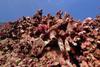
NewsStill standing but mostly dead: Recovery of dying coral reef in Moorea stalls
In 2019, a marine heat wave struck a coral reef on the island of Moorea in French Polynesia, killing much of the coral and the beneficial algae that colonized it. A long-term study of the area is challenging scientists’ understanding of the cycles of destruction and repair that can occur on a coral reef.
-
 News
NewsMedicinal plants with anti-entamoeba histolytica activity: phytochemistry, efficacy, and clinical potential
Reported adverse effects associated with the current first-line treatment for amoebiasis, coupled with the evolution of resistance to it, call for the need to search for plant-based alternatives. This study systematically reviews medicinal plants with activity against Entamoeba histolytica.
-
 News
NewsScientists reveal how deadly Marburg virus enters human cells, identify therapeutic vulnerability
Researchers found that the Marburg virus, one of the world’s deadliest pathogens, is unusually efficient at getting inside human cells. They also showed that the virus’s entry protein contains structural features that explain this efficiency and point to a strategy for blocking infection.
-
 News
NewsEveryday foods could hide fungal risks for mothers and children
A collaborative, multi-institutional project will examine how exposure to zearalenone – a mycoestrogen produced by mold with estrogen-like activity – may affect pregnancy outcomes and children’s growth.