
More Ocean Sustainability – Page 16
-
 News
NewsBuckling point reveals secrets of cyanobacteria locomotion
Scientists investigating cyanobacteria locomotion have found that the filamentous threads start to kink and buckle at a length of around 150 micrometres.
-
 News
NewsMarine heatwaves devastate red gorgonians in the Medes Islands
The increase in the frequency and intensity of marine heatwaves in recent decades is one of the effects of global climate change. Source: University of Barcelona The UB researcher Graciel·la Rovira is the first author of this publication. A study by the University of Barcelona, published in ...
-
 News
NewsUpper surface of coastal waters can accumulate bacteria and antibiotics
Antibiotics in the uppermost water surface, known as the sea surface microlayer, can significantly affect the number of bacteria present and contribute to the adaptation of marine bacteria against widely used antibiotics. In new research presented at ASM Microbe, scientists directly assessed the potential effects of antibiotics ...
-
 News
NewsScientists unravel drivers of the global zinc cycle in our oceans
The important role of the Southern Ocean in global biological processes and the carbon cycle has been confirmed by a study that, for the first time based on field evidence, reveals the underappreciated role of inorganic zinc particles in these cycles.
-
 News
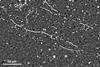
NewsDiscovery of ancient microfossil sheds light on adaptive evolution of sulfate-reducing bacteria
A 518-million-year-old microbial fossil from China identified as an ancient sulfate-reducing bacterium sheds light on the adaptive evolution of sulfate-reducing bacteria in response to Earth’s oxygenation events.
-
 Features
Under the microscope: ocean degradation and climate change
Central to addressing these issues is the understanding and management of marine microbiomes – the complex microbial communities that connect, interact with, and affect all other organisms and the ecosystem, playing pivotal roles in marine health and resilience.
-
 News
NewsScientists unlock secrets of how the third form of life makes energy
An international scientific team has redefined our understanding of archaea, a microbial ancestor to humans from two billion years ago, by showing how they use hydrogen gas.
-
 News
NewsNew discovery reveals unexpected ocean algae help cool the Earth
A common type of ocean algae plays a significant role in producing a massively abundant compound that helps cool the Earth’s climate, new research has discovered.
-
 News
NewsNew study reveals that marine cyanobacteria can communicate using membrane nanotubes
Transfer of substances via membrane nanotubes not only occurs in cyanobacteria of the same lineage, but also between those of different genders, something that has been verified not only at the laboratory level, but also in natural ocean samples.
-
 Careers
The Rahlff lab
The Aero-Aquatic Virus Research Group led by Dr. Janina Rahlff conducts basic research on microbial viruses from the surface microlayer, which is the 1-mm thick ‘skin’ of a water body’s surface, and in atmospheric ecosystems.
-
 News
News2,000-year-old shipworm mystery solved - its destructive skills are down to bacterial symbionts
Scientists have discovered that a population of symbiotic microbes, living in an overlooked sub-organ of the shipworm gut called the ’typhlosole’, have the ability to secrete the enzymes needed to digest lignin—the toughest part of wood.
-
 News
NewsGiant viruses found on Greenland ice sheet
New research suggests that giant viruses found on the Greenland ice sheet probably regulate the growth of snow algae on the ice by infecting them. Knowing how to control these viruses could help reduce some of the ice from melting.
-
 News
NewsResearchers reveal how symbiotic bacteria adapt to big environmental changes
Faced with a drastically changing environment following the closure of the Isthmus of Panama, symbiotic bacteria in lucinid clams acquired new metabolic skills to enable their own survival, new research has revealed.
-
 News
NewsSea fungus breaks down ocean plastic that has basked in sun’s UV rays
A fungus living in the sea can break down the plastic polyethylene, provided it has first been exposed to UV radiation from sunlight. Researchers from, among others, Royal Netherlands Institute for Sea Research (NIOZ) published their results in the scientific journal Science of the Total Environment. They expect that many ...
-
 News
NewsFive projects to advance understanding of ocean systems in a changing climate
Five global science and technology projects are to join a program to address gaps in ocean data and modeling efforts by improving the breadth of research in the field and expanding capacity to understand ocean resources.
-
 News
NewsScientists develop new coral disease forecasting system
Research has led to a new tool for forecasting coral disease that could help conservationists step in at the right times with key interventions. It can help end users detect early changes in the environment and better protect coral reef ecosystems.
-
 News
NewsA big step for fish herpesvirus diagnostics and treatment
Researchers have established a highly permissive cell line GiCS derived from the skin tissue of gibel carp - along with a novel diagnostic method, this offers robust tools for the early detection and study of Carassius auratus herpesvirus (CaHV),
-
 News
NewsScientists uncover the secret synchronised sex life of coral
For the first time, researchers have produced a model for coral spawning, based on various environmental factors. They achieved this by tapping an often overlooked source of aquatic knowledge - an aquarium.
-
 News
NewsSea urchin epidemic spreads to Indian Ocean, threatening coral reefs
Researchers have identified the pathogen responsible for the epidemic which is killing sea urchins in the Red Sea, and now threatens entire populations of sea urchins across the Red Sea and Indo-Pacific.
-
 News
NewsVirocells: How the ‘home’ environment influences microbial interactions
Research into ocean virocells - bacteria infected by viruses, thus forming a new organism - has yielded fascinating new insights about how this merger of microbes affects, and is affected by, real-world surroundings.