
Antimalarial drugs are designed to protect people from malaria, but they may also affect the mosquitoes exposed to them during blood meals. A new Yale study, published in The Journal of Infectious Diseases, investigates the impact of these medications on mosquitoes, laying the groundwork for future research into how the drugs may influence the malaria parasites developing within them.
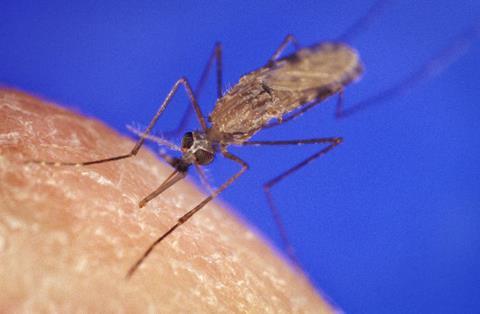
“I was really interested in trying to understand more about drug resistance transmission dynamics in sub-Saharan Africa,” says Morgan Goheen, MD, PhD, instructor (infectious diseases) at Yale School of Medicine and first author of the study. “The more we thought about it, the more it was obvious that mosquitoes must be ingesting these drugs when they feed on people who have taken them.”
Malaria parasites require both humans and mosquitoes to complete their life cycle. After a mosquito feeds on an infected person, the parasites spend about 10–14 days developing inside the mosquito before they can be transmitted to another person. During that time, mosquitoes continue taking blood meals from other people. Because antimalarial drug use is widespread in malaria-endemic regions, some of those blood meals are likely to come from people taking the medications.
“We thought there was a high likelihood that infected mosquitoes are ingesting antimalarials during the time period that parasites are developing within them,” Goheen says. “So we wondered, what effect do drugs have on parasites within the mosquitoes?”
Long-acting antimalarial drugs
Before answering that question, the researchers first needed to establish two things: whether commonly used long-acting antimalarial drugs affected mosquitoes and whether the drugs could move beyond the mosquito’s gut after a blood meal.
The team found that the drugs did not affect mosquito survival, feeding behavior, or reproduction. More notably, the findings showed that desethylamodiaquine—the active form of one of the world’s most widely used antimalarial drugs—was absorbed into the mosquito’s circulatory fluid and remained detectable for several days.
“To our knowledge, it’s the first time that someone has demonstrated that in mosquitoes ingesting long-acting antimalarials via blood meal, the drugs can be absorbed into their circulatory fluid and be present for long periods,” Goheen says. “That means that parasites developing in the mosquito are certainly being exposed to these drugs.”
“It’s not like the drugs are kept in their gut and then excreted by the mosquito,” she adds.
Holistic view
Working at Yale and in Burkina Faso, West Africa, Goheen and her team are currently investigating whether that exposure affects parasite development or contributes to drug resistance.
Although the research is still in its early stages, Goheen hopes it encourages scientists to view malaria transmission more holistically.
MICROBIOLOGY NEWS: Register with The Microbiologist for more free articles
“The antimalarial prevention measures that we use may have other impacts on the parasite that we haven’t been thinking about,” she says. “Gaining a better understanding of how drugs interact with parasites inside mosquitoes could inform future efforts to slow the spread of drug-resistant malaria and help identify new ways to interrupt transmission.”
Other Yale authors of the study include Alessandra Orfanó, PhD; Douglas Brackney, PhD; Fangyong Li, MPH; Jean-Bosco Ouédraogo, MD; Amy Bei, PhD; and Sunil Parikh, MD.






No comments yet