
A new study reveals the presence of a nitrogen cycling pathway in barley that could prove valuable in cutting fertilizer requirements as the cost to farmers rises.
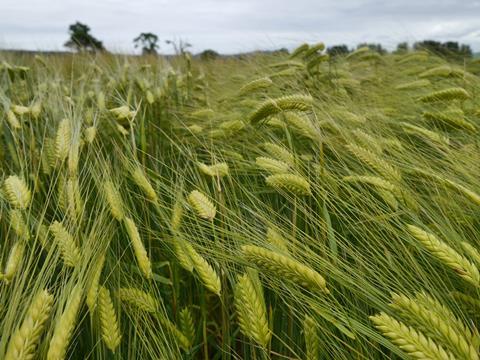
The paper by scientists at the University of Aberdeen firmly establishes the existence of biological nitrification inhibition (BNI) in the cereal crop, providing a promising nature-based solution to the nitrogen loss crisis in agriculture. In recent weeks, that crisis has been starkly underlined by events in the Strait of Hormuz that have set nitrogen fertiliser prices soaring.
‘Evidence of Biological Nitrification Inhibition in barley to support sustainable nitrogen management’ is published in Sustainable Microbiology, an Applied Microbiology International publication.
Lead author, PhD student Jack Henderson, a member of AMI’s Food Security Advisory Group, said global agriculture is in a nitrogen crisis, with rising populations requiring the application of excessive and growing quantities of nitrogen fertilisers. Current use exceeds 112 million tonnes per year and is projected to rise by a further 50% by 2050 (FAO, 2025) LINK.
“This is necessitated by low nitrogen use efficiency (NUE); approximately 50% of applied nitrogen is lost to the environment. This loss is driven by the microbial processes of nitrification and denitrification, through emissions of the potent greenhouse gas nitrous oxide (N2O) and leaching of nitrate,” he explained.
“In addition to being a climate catastrophe, it is also a serious economic and food security issue. Nitrogen fertiliser prices are subject to significant fluctuations, influenced by geopolitics.
“In early 2026, closure of the Strait of Hormuz, a route that normally carries around a third of the world’s seaborne fertiliser trade, resulted in nitrogen fertiliser prices soaring by approximately 80%. Fertilisers underpin modern food security, therefore improving NUE protects food security while improving the climate and economic sustainability of agriculture.”
Promising strategy
However, hope is offered by biological nitrification inhibition (BNI), the plant-mediated inhibition of nitrification via the exudation of bioactive metabolites and a promising emerging strategy for reducing nitrification-driven N loss in agriculture by suppressing ammonia-oxidising microbes, thus reducing the amount of nitrogen lost to nitrification.
“Although BNI is well documented in several major cereal grasses, evidence of BNI in barley (Hordeum vulgare) is lacking,” Mr Henderson said.
“Our study aimed to demonstrate barley BNI activity in soil by quantifying the inhibition of rhizosphere ammonia oxidisers. In addition, we examined the influence of BNI on the diversity and composition of ammonia oxidisers in the rhizosphere to further our understanding of how microbial ecology influences BNI.”
Lines of barley
The team grew 10 different lines of barley, including elite commercial varieties and an ancient landrace from Shetland, in pots of soil for four weeks under controlled conditions. They measured the BNI capacity of each line by quantifying the inhibition of rhizosphere ammonia oxidisers by qPCR.
They then examined the influence of BNI on the diversity and composition of ammonia oxidisers in the rhizosphere by amplicon sequencing, to gain a deeper understanding of how BNI influences microbial community dynamics.
“This study demonstrates barley BNI activity through suppression of rhizosphere ammonia oxidiser abundance, without a corresponding inhibition of the total prokaryotic community, indicating true and targeted inhibition of nitrifying microbes,” Mr Henderson said.
“Several barley lines exhibited strong inhibition of rhizosphere ammonia oxidisers, consistent with high-BNI efficiency, establishing a foundational germplasm of high-BNI barley lines. We also found that inhibition was selective: not all ammonia oxidisers were inhibited equally, and that BNI has a profound effect of rhizosphere ammonia oxidiser diversity.”
Ammonia oxidising taxa
One surprising finding was the identification of several ammonia oxidising taxa which seem to be tolerant to BNI, and even appear to be significantly proportionally enriched with BNI efficiency. This suggests that the potential for BNI resistance exists.
“These findings have important implications for the long-term efficacy of BNI-enabled agriculture, as long-term enrichments of resistant clusters could ultimately diminish the effectiveness of high-BNI cultivars. It also suggests that there could be opportunities to tailor breeding towards the inhibition of certain taxa,” Mr Henderson said.
“From pure culture studies, we already knew there is variation in BNI susceptibility between strains when exposed to individual compounds, but this is the first time this effect has been observed in soil and correlated with BNI activity.”
Cereal crop and culture
Barley is the fourth highest yielding cereal crop globally and plays a vital economic role, underpinning multi-billion-dollar malting, brewing and distilling industries. Beyond their economic importance, these industries are also culturally significant, shaping regional identities and traditions through products such as beer and whisky, which are deeply embedded in social customs and national identity.
This study represents an important step towards the development of future high-BNI barley cultivars, capable of increasing NUE and ultimately reducing the climate impact of barley cultivation.
The findings indicate that BNI efficiency is shaped by microbial ecology: differential modulation of ammonia oxidiser taxa, and evidence of reservoirs of resistance, suggest that shifts in community structure may influence the apparent BNI performance of cultivars, a novel finding in the field.
Next steps
“Many questions remain open. Some of the next steps are to further our understanding of how BNI is influenced by microbial ecology, and understanding how the development of resistance may influence BNI performance in the field,” Mr Henderson said.
“In addition, from a policy and implementation perspective, we need to clearly demonstrate that high BNI performance translates into meaningful increases in nitrogen use efficiency, lowering of N input requirements, and reductions in N2O emissions.”
Study background
This study was led by Jack Henderson, a PhD student at the University of Aberdeen and a member of the Aberdeen Microbial Ecology & Evolution lab, led by his primary supervisor Professor Cécile Gubry-Rangin (University of Aberdeen).
Jack was also supervised by Professor Timothy S. George (International Barley Hub, James Hutton Institute) and Professor Marcel Jaspars (University of Aberdeen Marine Biodiscovery Centre). The study was supported by Dr Xiaoping Fan (University of Aberdeen) and Ellen Elizabeth Smith (University of Aberdeen).
The work was mainly funded by the EastBio Doctoral Training Partnership (UK Research and Innovation), with additional support from a Royal Society University Research Fellowship held by Cécile Gubry-Rangin, NovoNordisk Foundation and CIMMYT supporting Xiaoping Fan’s contribution and Scottish Government funding supporting Timothy George ’s contribution.
‘Evidence of Biological Nitrification Inhibition in barley to support sustainable nitrogen management’ is published in Sustainable Microbiology.
Topics
- Agriculture
- Applied Microbiology International
- barley
- biological nitrification inhibition
- Cécile Gubry-Rangin
- Climate Action
- Community
- Economic Equality
- Ellen Elizabeth Smith
- fertiliser
- Food Security
- Healthy Land
- Hordeum vulgare
- International Barley Hub
- Jack Henderson
- James Hutton Institute
- Marcel Jaspars
- nitrogen cycling
- Research News
- rhizosphere
- Soil & Plant Science
- Timothy S. George
- UK & Rest of Europe
- University of Aberdeen
- Xiaoping Fan




No comments yet