
Microbes are often associated with disease, but the trillions of microorganisms living in and around us also help support health, food production and environmental balance. A new review in Microbiome and One Health examines the development of China’s microecology field across more than 70 years and its contribution to the global One Health approach, which links the health of people, animals and ecosystems.
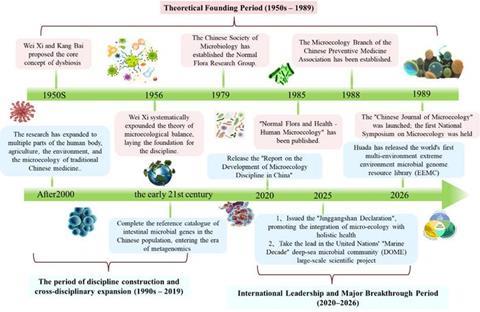
The review traces the field back to the 1950s, when Chinese researchers proposed that disruptions to the body’s normal microbial communities could contribute to illness. Since then, advances in DNA sequencing and other technologies have helped scientists move beyond simply listing microbes toward studying how they interact with hosts and environments.
Today, Chinese microecology research spans human health, agriculture, environmental restoration and traditional Chinese medicine. The review highlights emerging tools, including artificial intelligence, multi-omics and synthetic biology, which may help researchers predict microbial behavior and develop more precise interventions.
The authors highlight some barriers: many studies still show associations rather than clear causes, while inconsistent data standards, limited clinical evidence and uneven regulation can slow the translation of findings into useful products and treatments.
MICROBIOLOGY NEWS: Register with The Microbiologist for more free articles
The review concludes that stronger interdisciplinary collaboration and international data-sharing frameworks will be essential. By linking research across humans, animals and the environment, microecology could support more personalized health care, lower-chemical agriculture and new approaches to pollution remediation.



No comments yet