
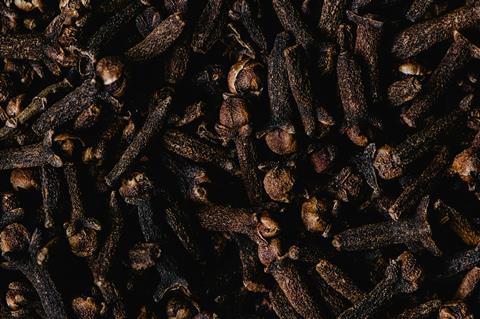
Clove essential oil (CEO) derived from Syzygium aromaticum and miswak (Salvadora persica) contains bioactive compounds with antimicrobial properties. Due to the growing interest in alternatives to conventional antibiotics, this study aimed to evaluate the in vitro antimicrobial efficacy of CEO, miswak, and their combination against key peri-implantitis pathogens.
The antimicrobial activities of CEO, miswak, and their combinations were tested against Fusobacterium nucleatum, Aggregatibacter actinomycetemcomitans, Porphyromonas gingivalis, and Prevotella intermedia. Disc diffusion and serial dilution methods were used to measure the inhibition zones and minimum inhibitory concentrations, respectively.
Doxycycline served as a standard antibiotic for comparison, while ethanol was used as a negative control. Data were analyzed using one-way analysis of variance and Tukey’s honestly significant difference test, with significance set at α = 0.05.
CEO exhibited inhibition zones of 10–16 mm, comparable to that of doxycycline (13–16 mm), whereas miswak (6–13 mm vs. 1–14 mm) and the CEO–miswak combination (8–14 mm vs. 0–14 mm) showed lower activity. Mean minimum inhibitory concentration values were lowest for doxycycline (1.73 ± 0.46 µg/mL), followed by CEO (2.37 ± 0.24 µg/mL) and CEO–miswak combination (2.92 ± 0.12 µg/mL). Statistical analysis showed that the CEO–miswak combination was less effective than CEO (p = 0.0326) and doxycycline (p = 0.0001), but not different from miswak (p = 0.9836). CEO showed slightly greater activity than miswak (p = 0.0605).
Clove essential oil
Although less potent than doxycycline, CEO exhibited promising antimicrobial activity, indicating its potential as a complementary treatment in situations where antibiotics are not preferred. Miswak has demonstrated selective efficacy, particularly against F. nucleatum; however, its effectiveness against other pathogens is limited.
READ MORE: Clove oil yields new Pickering emulsion formulation with enhanced antibacterial properties
Given the significant individual effects of the combination of CEO and miswak, we hypothesized that combining them would enhance their antimicrobial efficacy. However, these results did not demonstrate a synergistic effect, indicating that the combination did not exceed the benefits observed when used alone. This lack of synergy underscores the complexity of interactions between natural compounds.
This study, published in Journal of Exploratory Research in Pharmacology, provides preliminary evidence to support the use of CEO and miswak in peri-implantitis management. Optimization of natural antimicrobial treatments could offer safer and more effective alternatives for managing peri-implantitis and combating antimicrobial resistance.
Topics
- Aggregatibacter actinomycetemcomitans
- Antimicrobials
- Bacteria
- clove essential oil
- doxycycline
- Fusobacterium nucleatum
- Infection Prevention & Control
- Middle East & Africa
- miswak
- One Health
- Oral Microbiome
- peri-implantitis
- Pharmaceutical Microbiology
- Porphyromonas gingivalis
- Prevotella intermedia
- Research News
- Salvadora persica
- Syzygium aromaticum





No comments yet