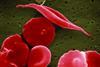
A daily 20 milligram dose of zinc reduced infections by nearly 40% among Ugandan children younger than 5 with sickle cell anemia, according to new research led by scientists at the Indiana University School of Medicine and their study partners in Uganda.

The findings, recently published in the Journal of the American Medical Association, point to an affordable, well-tolerated strategy to decrease hospitalizations and save more lives of children living with the genetic blood disorder.
Sickle cell anemia
Sickle cell anemia causes misshapen red blood cells that block oxygen from smoothly traveling through the body, which can lead to serious health complications. Zinc deficiency is common in affected children, and because zinc supports the body’s immune response, this deficiency leaves children with the disease especially vulnerable to infections that can cause illness, hospitalization and even death.
“At large volume prices, it can cost less than $3 a year to give a child daily zinc supplementation,” said Chandy John, MD, the Ryan White Professor of Pediatrics at the IU School of Medicine and co-lead investigator on the study. “If further studies confirm our latest research, this could be an important new intervention for children with sickle cell anemia that is so low-cost and safe that it’s rapidly implementable in almost all health settings.”
MICROBIOLOGY NEWS: Register with The Microbiologist for more free articles
In a randomized, double-blind, placebo-controlled pilot study, the team evaluated 100 children between 1 and 5 years old with sickle cell anemia who received care at Jinja Regional Referral Hospital in Uganda. This clinical trial followed an earlier report that tested a 10 mg daily dose of zinc and found no reduction in infections, indicating the lower dose was insufficient.
Over six months of follow-up, children treated with 20 mg of daily zinc experienced a 38% reduction in all-cause infections — like upper respiratory tract infections, diarrhea and bacterial infections — compared to those who received a placebo.
Larger multi-site studies
“Zinc given at 20 mg daily provides a readily available and safe medication with the potential to reduce the suffering and deaths of thousands of children in Africa,” said Ruth Namazzi, MMEd, lecturer in the Department of Pediatrics and Child Health at Makerere University in Uganda, research director at Global Health Uganda and co-lead investigator on the study. “However, while our study shows a 38% reduction in all-cause infections, we are not yet recommending this as standard of care for children with sickle cell anemia as our results need to be validated in larger multi-site studies.”
Moving forward, the researchers expect to confirm their findings in a larger population across multiple sites. Future trials will also include older children with sickle cell anemia and test the most effective zinc dosage with the fewest side effects. If validated, researchers believe incorporating low-cost zinc into standard clinical care could be rapidly implemented in health settings globally.
No comments yet