
Every year, millions of people are diagnosed with cancer globally; however, current treatments are limited by disease complexity.
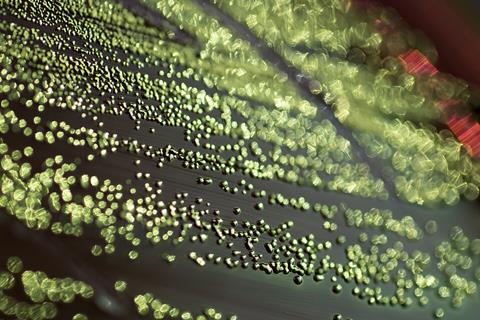
A study published March 17th in the open-access journal in PLOS Biology by Tianyu Jiang at Shandong University, Qingdao, China and colleagues suggests that Escherichia coli Nissle 1917 (EcN) may be engineered with anticancer agents to treat cancerous tumors in mice.
Bacteria inhabit and interact with the human body, playing a major role in both health and disease. However, the therapeutic efficacy of engineered bacteria-based cancer therapies has not yet been established.
In order to test the interactions of engineered probiotic strain Escherichia coli Nissle 1917 (EcN) with cancer cells, researchers used EcN as a base for synthesizing Romidepsin (FK228), an FDA-approved drug with anti-tumor agents. Using genetic and genomic engineering techniques, researchers created a bacteria strain that produced anticancer agent Romidepsin. They then created a mouse model using tumor-producing breast cancer cells and injected the mice with EcN.
The researchers found that EcN colonized tumors and released Romidepsin FK228 both in vitro and in vivo under varying conditions, effectively acting as tumor-targeted therapy. Future studies are needed, however, as the treatment has yet to be tested in human subjects. Further studies identifying potential adverse outcomes and methods for eliminating the bacteria after treatment may limit the therapeutic potential of engineered EcN.
Cancer treatment
According to the authors, “The probiotic strain Escherichia coli Nissle 1917 (EcN), a potential member of tumor-targeting bacteria, shows great promise for cancer treatment. By leveraging engineered EcN, we can design a bacteria-assisted, tumor-targeted therapy for the biosynthesis and targeted delivery of small-molecule anticancer agents.
”Our mouse-model study establishes a solid foundation for engineering bacteria which are capable of producing small-molecule anticancer drugs and engaged in bacteria-assisted tumor-targeted therapy, paving the way for future advancements in this field”.
The authors add, “Escherichia coli Nissle 1917’s tumor colonization synergizes with Romidepsin’s anticancer activity to form a dual-action cancer therapy.”




No comments yet