
The U.S. National Science Foundation (NSF) has awarded DRI’s Alison Murray, molecular microbial ecologist and biological oceanographer, $18.4 million to lead a project that will pave the way for the next generation of Antarctic research. Titled “Genome Infrastructure catalyzing next Generation Antarctic Data, Access, Tools, and Analytics” (GIGA DATA), the work will produce an extensive database of genetic information.
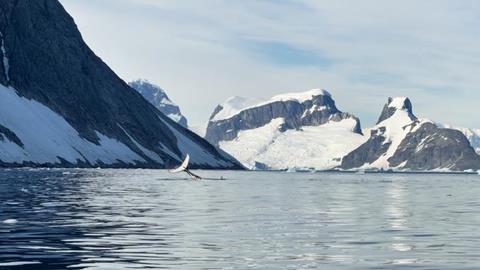
More than 250 Antarctic species’ genomes will be sequenced (including algae and mosses, terrestrial and marine invertebrates, birds, fish and marine mammals) alongside 600 ecosystem samples representing tens of thousands of microbial and viral genomic datasets. This project will unite these new data together with existing Antarctic sequencing efforts under a new, artificial intelligence-enabled cyberinfrastructure. The resulting digital platform will serve as an open, accessible data science gateway to Antarctic life.
“This research infrastructure initiative will redefine evolutionary and Antarctic ecosystem science by uncovering the fundamental rules that shape life,” Murray said. “By providing a novel gateway to Antarctic genomic data at scale—spanning the diversity of Antarctic life—this initiative will fuel discovery, innovation, and cross-disciplinary application.”
The mission
Antarctic organisms evolved to persist under extreme conditions lethal to most life on Earth: months of continuous light followed by darkness, subzero desiccating winds, and the isolation of subglacial lakes sealed for millennia. Their genomes represent an extraordinary frontier for discovery, containing the signatures of adaptations that have enabled life to persist in some of the planet’s most challenging environments.
MICROBIOLOGY NEWS: Register with The Microbiologist for more free articles
Exploring this genomic diversity will allow researchers to identify the genetic basis of resilience to extreme and rapidly changing conditions and reveal fundamental principles governing how organisms adapt to environmental change across daily, seasonal and evolutionary timescales. With high-quality genome maps currently unavailable for most Antarctic species, most taxonomic lineages are poorly understood at the genome level.
Likewise, the vast diversity of Antarctic microorganisms—a reservoir of immense potential for biodiscovery, biotechnology and the bioeconomy— remains largely undescribed. The Antarctic GIGA DATA Mid-scale Research Infrastructure project addresses these gaps by positioning reference genomes and assembled metagenomes as foundational scientific infrastructure—enduring data resources that will catalyze new discoveries and stimulate research for generations to come.
The team
Under Dr. Murray’s leadership, the research team, comprised with expertise in the latest developments in genome sequencing, bioinformatic cyberinfrastructure, Antarctic physiology, evolution, and ecosystem function, includes:
Rachel O’Neill and Jill Wegrzyn at the University of Connecticut
Patrick Chain and Bin Hu at New Mexico Consortium
Allyson Hindle at the University of Nevada, Las Vegas
Rauri Bowie at the University of California, Berkeley
Arvind Varsani at Arizona State University
Emily McDonald-Williams at DRI
The project will train a next-generation workforce with vital skills in genomic data management, bioinformatics, machine learning, and computational engineering with broad relevance to science, medicine and industry. By utilizing a novel early-career project rotator program and two undergraduate training initiatives, the project will establish an extensive workforce training pipeline for 69 participants across early-career, graduate, and undergraduate tracks.
More than three decades of Antarctic expertise
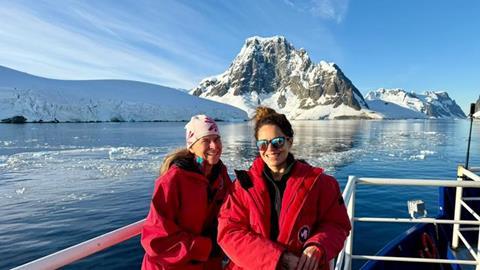
The project expands on Dr. Murray’s extensive experience researching Antarctic life, including a 2026 journey to the Antarctic Peninsula focused on polar ecology and a promising cancer-fighting agent. The expedition marked her 16th Antarctic field season. She and her team sent live updates along their expedition, including photos and videos from the field, that can be viewed in an engaging Storymap: Journey to Antarctica (https://www.dri.edu/journey-to-antarctica/).
To learn more about Dr. Murray’s work, visit her lab’s website at https://www.dri.edu/alison-murray-research/.




No comments yet