
The last time you had a cold sore, you might have fretted about how long it would hang around. It’s unlikely you worried about dying from it. But when it comes to herpesviruses, certain primates are less fortunate.
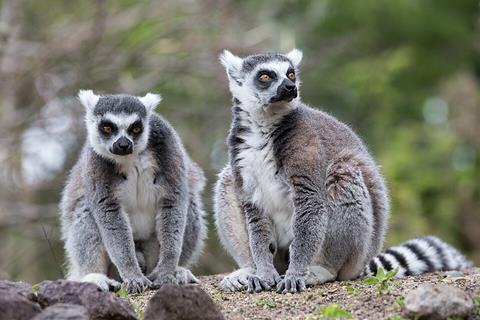
A new study marks the first time researchers have been able to confirm human herpesvirus in lemurs via a molecular analysis, outlining the cases of four privately owned animals who died from the illness.
Human alphaherpesvirus (HuAHV1) infections are rarely, if ever, reported in lemurs, which is a good thing — the disease tends to cause fatal encephalitis in the wet-nosed and bushy-tailed mammals.
The study is published in the Journal of Zoo and Wildlife Medicine.
Host fidelity
“Herpes, as viruses, have amazing host fidelity,” said Jim Wellehan, D.V.M., M.S., Ph.D., senior author of the study and a professor in the College of Veterinary Medicine at the University of Florida.
“They don’t do big host jumps very often. Typically, you have to be a pretty close cousin to pick up somebody else’s herpesvirus.”
Host fidelity refers to how likely a virus is to “step out” on its home. Some of them, Wellehan explained, are better at jumping than others. In the last 300 million years, alphaherpesviruses have jumped from something “dinosaurian” in lineage, like lizards, to mammals, Wellehan said.
Lemur yoga
When humans interact with animals, the jump is a little easier to make.
“I got to put the words ‘lemur yoga’ into print for the first time because one of the lemurs came to us from a yoga class,” Wellehan said. “People are doing yoga, and there’s lemurs wandering around, and it’s not good for the lemurs.”
By contrast, there have been no cases of this herpesvirus in a lemur treated at an accredited zoo in the last 20 years. Part of this is because of the stringent precautions taken around how people in accredited locations interact with the creatures in question.
“Whenever we have students working with us on cases involving primates, I always make it clear to the students that the reason they wear a mask most of the time is to protect the primate from them and the viruses our bodies are more capable of handling,” Wellehan said.
Social animals
Species like dogs and cats come into contact with people often enough that humans have developed vaccines for diseases we might contract (and vice versa). Lemurs, by contrast, have no such protection.
MICROBIOLOGY NEWS: Register with The Microbiologist for more free articles
Occasionally, despite its negative attributes, a herpesvirus gives its hosts certain evolutionary benefits — in the case of the rock pigeon, their associated herpesvirus species is largely fatal to some birds of prey that would otherwise hunt them. Now, perhaps in part due to and despite their virus, pigeons can be found on every continent but Antarctica.
“Infectious diseases are one of the most significant selective forces acting upon animal evolution,” Wellehan said. “When a disease is introduced, survival becomes dependent on having the right immune response to pathogens, rather than on being stronger, faster or smarter.”





No comments yet