
Acidic soils can make it difficult for crops to obtain nutrients and thrive. Now, researchers have developed a small, carefully selected community of native soil bacteria that can reduce acid stress while helping plants access essential nutrients.
“Instead of introducing microorganisms that may struggle to survive in a new environment, we wanted to use native bacteria that are already adapted to the challenging conditions of acidic, nutrient-poor soils,” said Xiaofeng Li, corresponding author of the study, published in Agricultural Ecology and Environment. “Our results show that these microorganisms can work together to improve the soil environment and promote plant growth through several complementary biological processes.”
Synthetic microbial communities
Soil acidification is a major challenge for agriculture. Low soil pH can reduce nutrient availability, disrupt microbial communities, and interfere with the biological processes that support healthy crops. Conventional approaches can improve acidic soils, but the researchers investigated whether naturally adapted microorganisms could provide another sustainable tool.
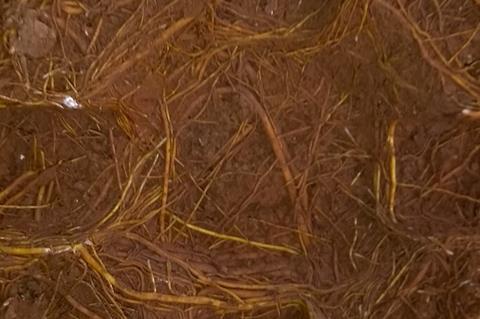
The team collected microorganisms from the rhizosphere, the narrow zone of soil surrounding plant roots, in strongly acidic red soil in Guangxi, China. By gradually reducing the amount of available carbon during laboratory enrichment, they selected microorganisms capable of surviving under both acidic and carbon-limited conditions.
Two promising strains, Paracoccus communis C4 and C5, were combined to form a synthetic microbial community, or SynCom. The community showed strong acid tolerance and produced alkaline substances as well as indole-3-acetic acid, or IAA, a plant hormone associated with root development. In laboratory cultures, the SynCom reached a pH of 8.3 and produced 35.53 mg/L of IAA.
Colonization of the rhizosphere
To help the bacteria survive after application to soil, the researchers used filter mud, an organic byproduct of sugarcane processing, as a microbial carrier. They then tested the resulting microbial amendment in greenhouse pots planted with lettuce.
After treatment, the SynCom successfully colonized the rhizosphere and increased rhizosphere soil pH from 4.73 to 5.50. Lettuce plants also showed marked improvements. Compared with untreated plants, those receiving the SynCom treatment had 120.60% greater height, 527.83% higher fresh weight, and 33.80% higher chlorophyll content.
MICROBIOLOGY NEWS: Register with The Microbiologist for more free articles
The benefits extended below ground. The treatment promoted lateral root development, increased root length and surface area, and improved the availability of nutrients, including nitrogen.
Reshaping microbial functions
Metagenomic analysis revealed another important effect. The SynCom reshaped microbial functions involved in carbon, nitrogen, and phosphorus cycling. The abundance of cbbL, a gene associated with microbial carbon fixation, increased approximately 25-fold compared with the untreated control. Genes linked to nitrogen fixation, ammonium production, phosphorus solubilization, and phosphorus transport were also enhanced.
Together, these changes suggest that the microbial community does more than simply neutralize acidity. It can help create a more biologically active rhizosphere where carbon sequestration, nutrient cycling, and plant growth reinforce one another.
The findings offer a potential framework for developing microbial biofertilizers tailored to acidic and nutrient-deficient farmland. Because the approach uses native microorganisms and an agricultural byproduct as a carrier, it may also support more resource-efficient soil management.
The researchers note that the current results come from controlled pot experiments. Future studies will evaluate how well the SynCom performs under real field conditions and determine its broader potential for sustainable agricultural production.
Topics
- Agriculture
- Asia & Oceania
- Bacteria
- Ecology
- Environmental Microbiology
- Food Microbiology
- Food Safety & Security
- Food Science & Technology
- Food Security
- Healthy Land
- Paracoccus communis
- Research News
- rhizosphere
- Soil & Plant Science
- soil acidification
- soil acidity
- soil microbes
- soil microbial communities
- sustainable agriculture
- synthetic microbial community
- Xiaofeng Li






No comments yet