
As part of its ‘Versorgungsforschung einstufig’ programme (single-stage healthcare research), the Federal Joint Committee is funding a new Germany-wide research project aimed at improving care for patients with invasive fungal infections.
The project entitled “Management of invasive mycoses in Germany – analysis of the current situation and the need to implement a new care model (MYK-IMPAKT)” is being carried out under the leadership of Dr Jannik Stemler, Clinic (Department) I of Internal Medicine at University Hospital Cologne, and Professor Dr Oliver A. Cornely, Director of the Institute for Translational Research at the CECAD Cluster of Excellence at the University of Cologne. Ingo Meyer, head of the PMV research group at University Hospital Cologne, is also involved.
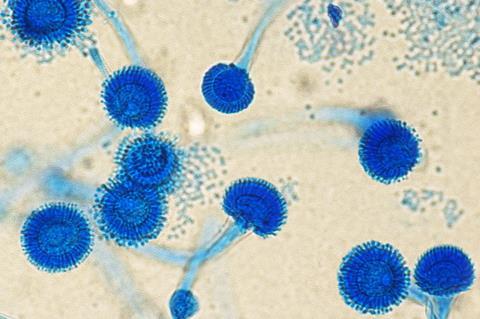
Fungal infections
The G-BA is providing over one million euros in funding for the project, which is scheduled to run for thirty months. The aim of the project is to develop a new care model for people with invasive mycoses, which are rare but often life-threatening fungal infections.
“Congratulations to Oliver Cornely and his colleagues on receiving funding. The MYK-IMPAKT research project evaluates the treatment of invasive fungal infections. This is a medical problem that is often underestimated. Cologne’s expertise in the field of fungal diseases can help ensure that people with fungal infections receive better care in the future,” says Joybrato Mukherjee, Rector of the University of Cologne.
Invasive fungal infections particularly affect patients with severely compromised immune systems, for example patients who have just undergone an organ transplant, in cases of cancer or during intensive care treatment. These conditions are considered particularly challenging from a medical perspective, as diagnosis and treatment are often complex and require rapid, multidisciplinary decisions.
“In clinical practice, we see every day just how difficult it can be to treat patients with invasive fungal infections,” explains Dr Stemler. “With MYK-IMPAKT, we hope to initiate systematic research into how these patients are actually cared for in Germany, and to identify where gaps in care exist, in order to determine how a new, structured care model may improve their treatment.”
Project objectives
The project has two main objectives: firstly, the situation regarding the treatment of invasive fungal infections in Germany is being analysed in detail. To this end, the study examines, amongst other things, disease prevalence, morbidity, mortality, treatment pathways, and the use of outpatient and inpatient services. Secondly, a new care model will be developed in collaboration with doctors, patients, and other stakeholders in the healthcare sector.
The researchers are drawing on extensive routine data from statutory health insurance funds, including data from BARMER, DAK-Gesundheit and the Research Data Centre for Health, potentially covering a total of more than 74 million insured persons. Around 8,000 patients with invasive fungal infections are being analysed each year in Germany. “These data give us a very comprehensive picture of how invasive fungal infections are currently treated. And it also helps us understand how to improve treatment in future,” says Ingo Meyer, head of the research unit conducting these analyses.
Register with The Microbiologist for more free articles
Get full access to all The Microbiologist articles from just £2.17 a month
“Our goal is to improve healthcare in line with the so-called Quadruple Aim – that is, to create better treatment outcomes, higher quality of care, more efficient use of resources and, at the same time, a reduction in the workload on healthcare professionals,” says Professor Cornely. “The funding from the G-BA highlights the significant impact of invasive fungal infections on the healthcare system.”
New care model
The development of the new care model is based on the long-standing experience of the European Excellence Center for Invasive Fungal Infections at University Hospital Cologne, which has been recognized by the European Confederation of Medical Mycology (ECMM). In recent years, the ECMM Expert Council established there has become the central point of contact for evidence-based and experience-based advice for doctors engaged in medical care.
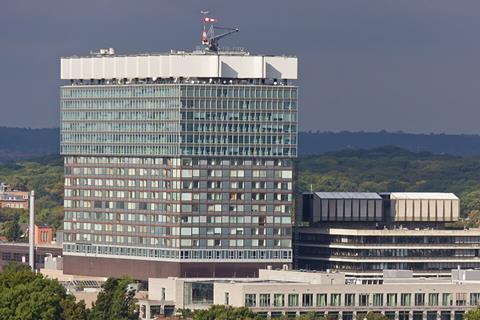
Between August 2021 and July 2025, the ECMM Excellence Center in Cologne received 543 national and international enquiries requesting advice, predominantly concerning severe infections caused by Aspergillus, Candida or Mucorales species. In response to rising demand, an additional interdisciplinary case conference – known as the Mycosis Board – was established in 2024, where complex cases are discussed with experts from the fields of infectious diseases, radiology, microbiology, surgery and pathology.
For the first time, the findings from these clinical consultation discussions will be systematically incorporated into plans to develop a new form of healthcare provision for Germany. The project is funded by the Innovation Committee of the Federal Joint Committee under grant reference number 01VSF26040.
Topics
- Care models
- Disease Treatment & Prevention
- Epidemiology
- European Excellence Center for Invasive Fungal Infections
- Federal Joint Committee
- fungal infections
- Fungi
- Infection Prevention & Control
- Infectious Disease
- Ingo Meyer
- Jannik Stemler
- Joybrato Mukherjee
- Medical Microbiology
- Mycology
- Oliver A. Cornely
- One Health
- Public Health
- Research News
- UK & Rest of Europe


No comments yet