
A research team led by the University of Waterloo is developing a novel tool to treat cancer by engineering hungry bacteria to literally eat tumours from the inside out.
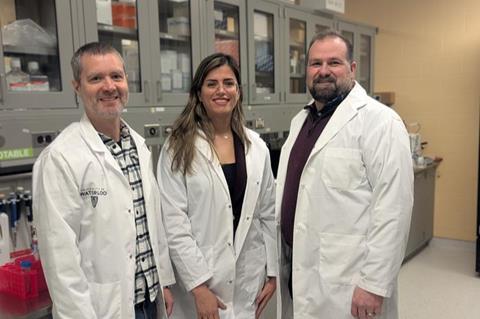
“Bacteria spores enter the tumour, finding an environment where there are lots of nutrients and no oxygen, which this organism prefers, and so it starts eating those nutrients and growing in size,” said Dr. Marc Aucoin, a chemical engineering professor at Waterloo. “So, we are now colonizing that central space, and the bacterium is essentially ridding the body of the tumour.”
Key to the approach is a bacterium called Clostridium sporogenes, which is commonly found in soil and can only grow in environments with absolutely no oxygen.
The core of a solid, cancerous tumour is comprised of dead cells and is oxygen-free, making it an ideal breeding ground for the bacterium to multiply.
But there is a biological catch: when the cancer-eating organisms reach the outer edges of tumours, they are exposed to low levels of oxygen and die without completing their mission to fully destroy them.
Related bacterium
To solve that problem, the researchers first added a gene to the organism from a related bacterium that can better tolerate oxygen, enabling it to live longer near the outside of a targeted tumour.
They then found a way to activate the oxygen-resistant gene at just the right time – critical to preventing bacteria from inadvertently growing in oxygen-rich places such as the bloodstream – by leveraging a phenomenon known as quorum sensing.
In simple terms, quorum sensing involves chemical signals released by bacteria. Only when many bacteria have grown in a tumour is the signal strong enough to turn on the oxygen-resistant gene, ensuring it doesn’t happen too soon.
Modifying the bacterium
In one study, researchers demonstrated that Clostridium sporogenes can be modified to tolerate oxygen. In a follow-up study, they tested their quorum sensing system by making bacteria produce a green fluorescent protein.
“Using synthetic biology, we built something like an electrical circuit, but instead of wires we used pieces of DNA,” said Dr. Brian Ingalls, a professor of applied mathematics at Waterloo. “Each piece has its job. When assembled correctly, they form a system that works in a predictable way.”
Researchers now plan to combine the oxygen-resistant gene and the quorum-sensing timing mechanism in one bacterium and test it on a tumour in pre-clinical trials.
Interdisciplinary innovation
The promising project grew out of work by PhD student Bahram Zargar, who was supervised by Ingalls and Dr. Pu Chen, a retired professor of chemical engineering at Waterloo. The work reflects Waterloo’s broader emphasis on interdisciplinary health innovation. Our engineers, mathematicians and life scientists are collaborating to design technology-enabled solutions that translate discovery into practical care.
READ MORE: Microbial allies: Bacteria help fight against cancer
READ MORE: Engineered gut bacteria improves survival outcomes in colorectal cancer tumors
Waterloo researchers partnered with the Center for Research on Environmental Microbiology (CREM Co Labs), a Toronto company co-founded by Dr. Zargar, on the project. The group includes Dr. Sara Sadr, a former Waterloo doctoral student who had a leading role in the research.
Topics
- Bacteria
- Bahram Zargar
- Brian Ingalls
- Cancer Microbiology
- Center for Research on Environmental Microbiology
- Clostridium sporogenes
- Disease Treatment & Prevention
- Innovation News
- Marc Aucoin
- Medical Microbiology
- One Health
- oxygen-resistant genes
- Pu Chen
- quorum sensing
- Sara Sadr
- Synthetic Biology
- University of Waterloo
- USA & Canada




No comments yet