
Changing the carbon source used during bacterial fermentation—essentially, what bacteria are fed—can significantly influence the properties of the sugar polymers they produce, known as bacterial exopolysaccharides (EPSs). These EPSs are secreted by bacteria into their surroundings, where they form protective layers or biofilms and serve as valuable materials for a wide range of medical and industrial applications.
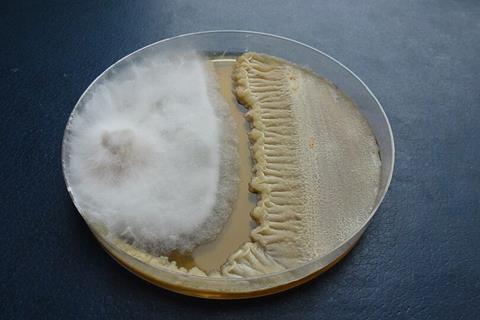
“A simple change in the carbon source dramatically altered the composition, structure, and biological activity of the bacterial exopolysaccharides,” said Mohamed Ibrahim, a specially appointed associate professor at Hiroshima University’s Research Institute for Synchrotron Radiation Science (HiSOR) and lead author of the study, published in the Chemical Engineering Journal.
Carbon substrates
Researchers at Hiroshima University compared the effects of two distinct carbon substrates—refined sucrose and sugarcane molasses, an inexpensive agricultural by-product—on the EPSs produced by the bacterium Bacillus velezensis AZU-A3. Using vacuum-ultraviolet circular dichroism spectroscopy at Hiroshima University’s HiSOR, together with chromatographic tools, the team mapped the structural variations among the resulting polymers.
The results, showed that refined sucrose yielded a biopolymer (EPS-S) characterized by an ordered, helical-like molecular conformation. Conversely, sugarcane molasses produced a glucose-rich biopolymer (EPS-M) with a more flexible molecular conformation.
This greater structural flexibility allowed the low-cost molasses derivative to outperform its refined counterpart in biological tests. The EPS-M demonstrated superior antioxidant capabilities, achieving 94.23% free-radical scavenging activity, compared with 76.43% for EPS-S. It also exhibited significantly stronger antibacterial activity against common pathogenic strains, including Escherichia coli, Salmonella enterica, and Staphylococcus aureus.
Pharmaceuticals
Bacterial EPSs are widely used in pharmaceuticals, medical coatings, surgical sealants, and drug delivery systems because of their biocompatibility, biodegradability, and low toxicity. However, understanding the complex relationship between polysaccharide structure and biological function has remained a persistent challenge. “Understanding this relationship enables researchers to tailor EPS properties, improve their antioxidant and antibacterial activities, and develop cost-effective production methods using inexpensive substrates such as sugarcane molasses,” Ibrahim said.
MICROBIOLOGY NEWS: Register with The Microbiologist for more free articles
These findings offer a sustainable and economically viable approach to customize biopolymers used in the biomedical, pharmaceutical, and food industries.
“Our next step is to investigate the molecular mechanisms by which different carbon sources regulate EPS biosynthesis, including the metabolic pathways and genes responsible for changes in monosaccharide composition, molecular conformation, and biological activity,” said Ibrahim.
“We also plan to evaluate these EPSs in more advanced biological models and optimize production using sustainable substrates.”






No comments yet