
In a major step towards a precision therapy for Clostridioides difficile (C. diff) infection, researchers at The Hospital for Sick Children (SickKids) have uncovered how the body’s bile acids bind to block C. diff’s most dangerous toxin.
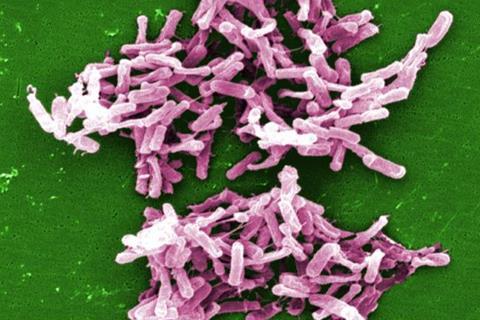
C. diff is a toxin-producing bacterium and the leading cause of health care-associated infections, causing serious infections in the gut and persistent diarrhea, abdominal pain, fever and inflammation of the colon. Current treatments for C. diff infection rely on antibiotics, which can disrupt healthy gut bacteria and leave patients vulnerable to repeated infections.
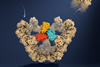
The discovery, published in Nature Microbiology, reveals the first detailed view of how C. diff’s main toxin, Toxin B (TcdB), binds to bile acids in the gut.
Working with partners at the University of Minnesota, North Carolina State University, and Scripps Research Institute, the SickKids research has informed the development of a new compound that can protect against C. diff in preclinical models, offering hope for safer, more effective treatments that could finally stop the cycle of recurrent infections.
Mechanisms behind C. diff’s key toxin
Recognizing the limitations of antibiotics as a front-line treatment for C. diff, SickKids investigators focused on TcdB, the toxin responsible for most of the cellular damage and gut inflammation associated with infection.
READ MORE: Clostridioides difficile: the unseen passenger from farm to fork
READ MORE: Disarming a hidden killer: Predicting – and preventing – C. diff before it strikes
Earlier research led by Dr. Roman Melnyk, study lead, Senior Scientist and Program Head in Molecular Medicine and Co-Director of the SPARC Drug Discovery Facility, demonstrated that some naturally occurring bile acids, best known for their role in digestion, can also inhibit TcdB. Building on this work, postdoctoral fellow Dr. Sean Miletic set out to investigate how these bile acids interact with the toxin in the gut; in collaboration with Dr. John Rubenstein, a cryo-electron microscopy expert in the Molecular Medicine program, the team captured the first detailed view of TcdB bound to bile acids.
Their findings revealed that the toxin’s structure must be in an “open” formation to cause damage – and certain bile acids can latch on and hold it shut. “It’s like jamming a door at the hinge,” explains Miletic, first author on the study. “If the toxin can’t open into its active form, then it can’t harm cells.”
Synthetic bile acids
This structural insight guided the development of bile acids that could act as targeted therapies for C. diff infection. Leveraging the structural data generated at SickKids, the team collaborated with Dr. Peter Dosa from the University of Minnesota to design new versions of bile acids that were engineered to stay in the intestine, where they are needed most. Dr. Casey Theriot at North Carolina State University led testing of these compounds in preclinical models.
Together, the team created and tested sBA-2, a synthetic bile acid that was capable of neutralizing TcdB directly in the gut. In preclinical models of C. diff infection, sBA-2 significantly reduced disease symptoms such as weight loss and intestinal damage. Importantly, it did this without affecting bacteria as whole, preserving gut health and targeting the toxin with precision.
By focusing on the toxin rather than the bacterium itself, sBA-2 represents a promising new strategy to prevent recurrent infections while protecting the gut’s delicate microbiome.
“We are very excited about the potential of sBA-2 as a first-in-class oral therapy for this devastating disease,” says Melnyk. “For patients, this approach could mean safer treatment and a real chance to break the cycle of repeated illness.”
This work was supported by the Canadian Institutes of Health Research (CIHR), SickKids Breakthrough Fund, SickKids Proof of Principle Grant, and SickKids Technology Advancement Program.
Topics
- Bacteria
- bile acids
- Clostridioides difficile
- Disease Treatment & Prevention
- Early Career Research
- Infection Prevention & Control
- Infectious Disease
- John Rubenstein
- North Carolina State University
- One Health
- Peter Dosa
- Research News
- Roman Melnyk
- sBA-2
- Scripps Research Institute
- Sean Miletic
- The Hospital for Sick Children
- Toxin B
- University of Minnesota
- USA & Canada

No comments yet