
Viruses that jump from wild animals to humans have caused pandemics and deadly disease outbreaks for thousands of years. Virginia Tech scientists in the College of Natural Resources and Environment are working to figure out how that happens.
Understanding these processes could be a first step in creating a defense system to prevent or reduce the effects of future pandemics.
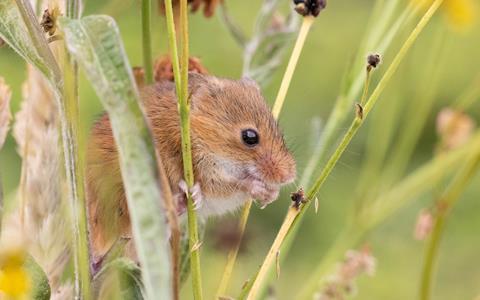
Luis Escobar, associate professor in the Department of Fish and Wildlife Conservation, has received a $400,000 award from the National Science Foundation to lead a nationwide investigation into how environmental shifts and virus evolution cause hantaviruses to leap from wildlife to humans in a process termed “spillover transmission.” Escobar is also a member of the Pandemic Prediction and Prevention Destination Area that funded pilot work for this NSF project.
How spillover happens
The two-year study will combine molecular laboratory analysis, advanced computational modeling, and long-term ecological data into to identify how and where hantaviruses pose the greatest threats to people.
Virginia Tech is well positioned to conduct this innovative study of spillover transmission because of its computational infrastructure and its proximity to the Mountain Lake Biological Station in nearby Giles County, where researchers have found the highest rate of hantavirus infection among wild rodents.
Tracking hantavirus globally
Going beyond a basic a present/absent test for hantavirus, the team will sequence rodent samples globally to map viral strains and their geographic variations.
“We want to look at the global picture across sequences, so this project will study hantavirus from the micro scale in Virginia rodents to the macro scale from hantavirus reports globally,” Escobar said. “We are sequencing the virus, assessing climate and temperature fluctuations, and examining many different rodent species. That’s what makes this project unique. Rodents live across wide conditions, but spillover to humans only occurs under specific environmental conditions. We want to understand why.”
Investigating a high-consequence virus
In North and South America, human exposure has caused severe pulminary disease carrying a fatality rate as high as 60 percent. In Europe and Asia, different strains target the kidneys, with lower mortality rates.
Inhaling microscopic airborne particles from dried rodent droppings, urine, or saliva causes most human exposure. While person-to-person spread is extremely rare globally, it has been seen with specific strains in South America.
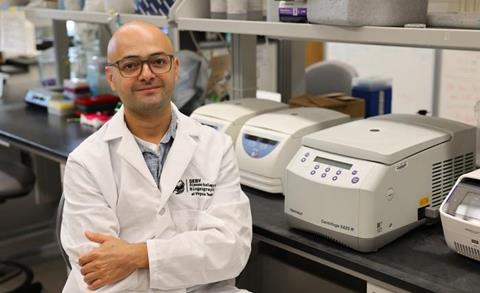
“Generally, we understand that the rodent infects the human, and most research is conducted at this interface,” Escobar said. “But we believe it is more complicated. We are in the infancy of understanding how pathogens behave in the wild.”
By examining how entire animal communities, weather patterns, and viral genetics interact, researchers will analyze global genetic databases alongside samples from across North America to trace how the virus adapts.
“Many steps occur before a person is infected,” Escobar said. “It could be that the virus is changing and becoming more aggressive in transmission. That does not mean it becomes more deadly; on the contrary, it may cause milder symptoms, giving infected animals or people more opportunities to spread it.”
The team is focusing on four major areas:
- Genetic tracking: Mapping viral evolution through genetic sequencing.
- Wildlife networks: Examining transmission across co-occurring animal species.
- Environment and climate: Measuring how differences in temperature, rainfall, and air humidity affect transission.
- Severity mapping: Comparing genetic samples from fatal and mild human cases worldwide to pinpoint specific genetic flags linked to severe illness.
The East Coast paradox: Virginia and the Southwest
There is a baffling public health puzzle within the United States: Wild mice in Virginia have the highest virus rates in the nation at nearly 8 percent. Yet, human illnesses in Virginia are practically non-existent, with only one recorded case in the past 20 years. Nearly all severe human cases in the U.S. are in the arid Southwest, where a smaller percentage of wild rodents carry the virus.
Researchers propose three main theories to explain the difference:
- Air moisture: Arid desert air allows dust-borne viral particles to circulate freely, whereas East Coast humidity keeps particles grounded.
- Milder strains: Virginia rodents may harbor genetic strains that are inherently less virulent to humans.
- Human habits: Variations in building design and outdoor activity reduce human contact with rodent waste in the East.
The team will analyze tissue samples from 99 infected rodents collected at Virginia field sites, including Mountain Lake Biological Station and Blandy Experimental Farm. Using high-performance computing, researchers will sequence local strains and build regional risk maps predicting human exposure window.
In collaboration with the Centers for Disease Control and Prevention and the Virginia Department of Health, the team will translate these risk maps into public health guidelines.
MICROBIOLOGY NEWS: Register with The Microbiologist for more free articles
“Ultimately, we want to show how data from the small Mountain Lake Biological Station can inform global regions facing Hantavirus cases,” Escobar said. “This two-way interaction benefits both research and application.”
The grant also offers hands-on research opportunities for Virginia Tech students, who will gain experience in laboratory analysis, data management, and field sampling. Students in Escobar’s new course, Biogeography of Emerging Infectious Diseases in Chile, also will be part of the research team.
Topics
- award
- Clinical & Diagnostics
- Early Career Research
- Environmental Microbiology
- grants
- hantavirus
- Infection Prevention & Control
- Infectious Disease
- infectious disease outbreaks
- Luis Escobar
- National Science Foundation
- One Health
- pandemic
- People News
- Public Health
- rodent
- The Americas
- USA & Canada
- viral genetics
- virus
- Viruses
- wild animals
- wild mice
- wildlife



No comments yet