
The winners of the Applied Microbiology International Horizon Awards 2026 have been announced.

The prizes, awarded by the learned society Applied Microbiology International (AMI), celebrate the brightest minds in the field and promote the research, group, projects, products and individuals who continue to help shape the future of applied microbiology.
The Horizon Awards recognise excellence across various domains of applied microbiology. Each award reflects a unique aspect of the field and its relevance to global challenges.
Global impact
Professor Chris Greening has been named as the winner of the WH Pierce Global Impact in Microbiology Prize, which acknowledges and celebrates individuals, teams, or organisations that have made groundbreaking contributions to global challenges through applied microbiology.

A Professor of Microbiology at Monash University in Australia, Professor Greening leads the CLIMB: Climate and Microbiology Research Unit and serves as Director of the Global Change Program.
His research focuses on understanding, harnessing, and communicating microorganisms to help society respond to climate change and other global challenges.
Working from atomic to ecosystem scales, he has pioneered discoveries on how microbes regulate greenhouse gases, sustain terrestrial and marine ecosystems, and influence One Health. Through major industry and programmatic partnerships, his research is been translated into agricultural methane reduction programs, pathogen surveillance systems, Antarctic stewardship, and microbial conservation efforts.
Professor Greening has published more than 180 peer-reviewed articles and received major honours, including the 2023 Australian Prime Minister’s Prize for Life Scientist of the Year, election to three microbiology academies, and recognition as a Young Global Leader of the World Economic Forum. He is also a strong advocate for diverse, empowering environments in science and has mentored many researchers to establish independent careers and research groups.
Food safety and security
Professor Marciane Magnani, Professor of Food Science at the Federal University of Paraíba (UFPB), Brazil, has been named as the winner of the Basil Jarvis Food Security and Innovation Award, which recognises outstanding achievements in applied microbiology that advance global food security and sustainable innovation.

She is a researcher in Food Microbiology, with a strong focus on food safety, predictive microbiology, fermented and functional foods, and microbiome-related approaches. Her research integrates microbial ecology, fermentation, and One Health perspectives, with particular emphasis on the valorization of native biodiversity and sustainable food systems.
Professor Magnani has authored more than 300 peer-reviewed publications and serves as Associate or Executive Editor for several high-impact journals, including Food Research International and Comprehensive Reviews in Food Science and Food Safety, and as Deputy Editor-in-Chief of Letters in Applied Microbiology, an AMI publication.
She is currently the Coordinator in Food Science at CAPES/Ministry of Education in Brazil and is a CNPq/Ministry of Science and Technology Research Productivity Fellow.
Professor Magnani is also a FAO/WHO roster expert in Microbiological Risk Assessment (JEMRA) and a member of the FAO/WHO Joint Expert Meetings on the use of omics-based technologies, actively contributing to international scientific committees and collaborative networks across Europe, the Americas, and Asia.
Public health
Environmental microbiologist Professor James Ebdon, from the University of Brighton, UK, has been named as the winner of the John Snow Public Health Innovation Prize, which recognises outstanding achievements in applied microbiology that deliver measurable improvements in public health and environmental health outcomes.

Professor Ebdon’s applied research endeavours seek to understand the role of water and sanitation in the spread and control of water-related diseases. His international research at the One Health interface often involves the use of bacteriophages (phages) and other microbial indicators to address pressing global water and health challenges.
This has included projects in India (Gates Foundation), Malawi (UNICEF), Nepal (GCRF), and Bangladesh (Elrha and MSF) and has helped to shed light on potential typhoid transmission routes within densely populated slum communities; identify human faecal pollution pathways within surface waters; determine problems with the construction and location of shallow wells; and improve the efficacy of emergency sanitation interventions for treating faecal sludge during humanitarian emergencies.
Closer to home, Professor Ebdon’s interest in phages led to an invite to pitch to the UK Government’s Science, Innovation & Technology Committee on behalf of AMI and resulted in the launch of governmental inquiry into ‘The antimicrobial potential of bacteriophages’ in November 2022. Prof Ebdon is currently based at the University of Brighton (UK) where he co-directs research across the Centre for Environment and Society.
Policy to practice
Professor Stephen Obaro, Professor of Pediatrics and Senior Scientist at the University of Alabama at Birmingham, USA, has been named as the winner of the Christiana Figueres Policy to Practice Award which recognises outstanding individuals who bridge the gap between applied microbiology, policy, and real-world implementation.
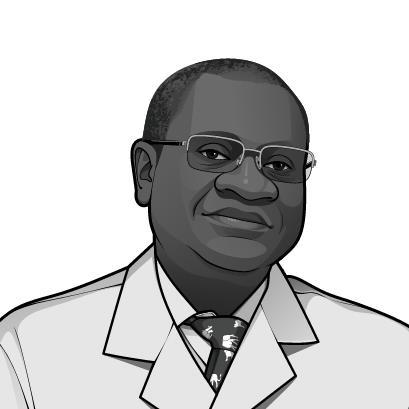
A global health researcher, and founder of the International Foundation Against Infectious Diseases in Nigeria (IFAIN), Professor Obaro’s work is driven by a simple mission: to reduce preventable childhood deaths from infectious diseases and strengthen health systems where the burden is highest.
For more than two decades, his research has focused on pneumonia, typhoid fever, antimicrobial resistance, sickle cell disease, and emerging infectious threats affecting children particularly in Africa. Evidence generated from his studies in West Africa has helped to inform global vaccine development, disease surveillance strategies, and clinical guidelines.
A central feature of his work has been building sustainable African research capacity. As Founder and Trustee of IFAIN, a nonprofit organization, he has helped establish a multidisciplinary platform for infectious disease research, laboratory strengthening, surveillance, and graduate training.
The IFAIN laboratory network has supported collaborative research in Nigeria, Liberia, and Ghana, including work through the Joint West Africa Research Group (JWARG), while providing training and research opportunities for basic and clinical microbiologists through partnerships in Africa, the United States, and the United Kingdom.
Global biodiversity
Jack Gilbert, Professor in the Department of Pediatrics and the Scripps Institution of Oceanography at UC San Diego, has been named as this year’s winner of the Rachel Carson Environmental Conservation Award, which recognises outstanding achievements in applied microbiology that deliver meaningful impact in environmental conservation.

Professor Gilbert is a microbiologist at UC San Diego, where he is also Associate Vice Chancellor for Marine Science.
He earned his Ph.D. from Nottingham University, UK in 2002, and has held positions at for example, Plymouth Marine Laboratory, Argonne National Laboratory, and University of Chicago.
A pioneer in microbial ecology, he cofounded the Earth Microbiome Project and American Gut Project, founded mSystems journal, and has authored more than 450 peer-reviewed publications, including the popular science book “Dirt is Good.”
He is UC San Diego’s principal investigator for the NIH’s $175M Nutrition for Precision Medicine program, co-founded BiomeSense Inc in 2018, is chief scientific advisor for Oath Biome, and faculty director of the UC San Diego Soil Health Center.
His honors include Popular Science’s Brilliant Ten, the IFF Microbiome Science Prize, and election to the American Academy of Microbiology. He recently ended his term as President of Applied Microbiology International and is currently co-chair of the IUCN Microbial Conservation Specialist Group.
Diversity and inclusion
Equality, Diversity and Inclusion leader Afua Acheampong has been named as the winner of the Dorothy Jones Diversity & Inclusion Achievement Award, which recognises outstanding contributions to advancing diversity, equity, and inclusion within STEM.

Afua Acheampong is a senior Equality, Diversity and Inclusion leader, strategist and speaker with more than eight years’ experience advancing racial equity across higher education and research institutions.
In her most recent role as Head of the Black Internship Programme at Health Data Research UK (HDR UK), she led the strategic design, delivery and expansion of a national programme focused on improving access, equity and career development for Black students and graduates in health data science.
Afua is the creator of the Nottingham Trent University Black Leadership Programme, a nationally recognised initiative she designed whilst Vice President of Education at Nottingham Trent Students’ Union. Created in 2019, the programme has supported and graduated over 800 Black students, and continues to support students in building confidence, leadership capability and a strong sense of belonging. Today, the programme remains a leading model for inclusive practice in Higher Education.
Previously, Afua led race equality at Queen Mary University of London, where she secured the institution’s first Race Equality Charter award. Her practice focuses on institutional culture change, increasing representation of minoritised staff, and embedding race equity across policy and leadership.
At a national level, Afua is Deputy Chair of the Black in Biomedical Research Advisory Group (BBRAG), a national Medical Research Council board overseeing investment into racial equity in biomedical research. She also serves as Finance Chair of the Minoritised Life Scientists Future Forum (MLSFF), where she leads financial oversight and governance for the conference. Afua previously served on the Office for Students Teaching Excellence Framework Advisory Board.
Next steps
For 2027, the Horizon Awards portfolio is expanding with four new Early Career Excellence Awards, recognising emerging researchers making an impact in environmental conservation, food security and innovation, public health innovation, and global impact. The established Policy to Practice and Diversity and Inclusion awards remain open to researchers across career stages, with criteria that allow early career researchers to compete on an equal footing.
MICROBIOLOGY NEWS: Register with The Microbiologist for more free articles
The winners of all ten awards will be announced and celebrated at the LAM ECR Symposium at Queen Mary University of London in June 2027, bringing together established leaders and the next generation of applied microbiologists for a celebration of achievement across our community.
Know someone whose work deserves recognition? Nominate them for a 2027 Horizon Award.




No comments yet