
All omicron articles
-
 News
NewsStudy finds that cognitive decline after omicron infection is largely reversible
Cognitive problems, often described as “brain fog,” are a recognized feature of long COVID, affecting attention, memory, and executive function. Earlier SARS-CoV-2 variants, including the original strain, Alpha and Delta, were associated with persistent cognitive deficits. However, the Omicron variant caused less severe disease, leaving uncertainty about whether cognitive decline ...
-
 News
NewsCOVID’s lingering shadow faded after Omicron — but not for everyone
A long-term study of long Covid has found that whilst lingering symptoms became far less common after the Omicron variant arrived, some people have continued to experience health problems years after infection.
-
 Article
COVID-19 vaccine boosters may help protect against future animal coronaviruses
COVID-19 vaccine boosters not only protect against SARS‑CoV‑2 but may also help protect against some future coronaviruses that risk spreading from animals to humans, researchers have shown.
-
 News
NewsCOVID-19 viral fragments shown to target and kill specific immune cells
New research shows that after the body’s defenses kill the virus behind COVID-19, leftover digested chunks of SARS-CoV-2 spike protein can target specific immune cells based on their shape. It could explain why certain populations of cells that detect and fight infection are depleted in patients with severe COVID-19.
-
 News
NewsScientists uncover how COVID-19 variants outsmart the immune system
Researchers have created the most comprehensive map to date showing how antibodies attach to the SARS-CoV-2 virus, which causes COVID-19, and how viral mutations weaken that attachment.
-
 News
NewsNew 2025 data shows COVID-19 vaccines provide effective, durable protection
Updated COVID-19 vaccines are still providing effective protection against infection, emergency department visits, hospitalization and death, according to new research.
-
 News
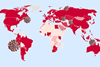
NewsData-driven detection of concerning SARS-CoV-2 variants months in advance
The CoVerage web platform for genomic surveillance of the SARS-CoV-2 virus enables a rapid, computational identification and characterization of potential Variants of Interest (pVOIs), with a lead time of almost three months before their WHO designation as a VOC.
-
 News
NewsCOVID-19 caused by the Omicron variant in lung transplant recipients: a single center case series
A new study investigates the risk factors for developing severe disease in lung transplant patients as a result of the Omicron variant of Covid-19.
-
 News
NewsPredictive AI model can help build vaccines for future versions of a virus
Researchers have created an AI tool called EVE-Vax that can predict and design viral proteins likely to emerge in the future. For SARS-CoV-2, panels of these “designer” proteins triggered similar immune responses as real-life viral proteins that emerged during the pandemic.
-
 News
NewsNew study reveals how COVID-19 variants hijack human cells
A research team has successfully mapped what they call the “hijackome”, detailing how SARS-CoV-2 variants exploit specific cellular pathways.
-
 News
NewsScientists assess efficacy of clinical drugs targeting SARS-CoV-2 main protease
A critical player in the virus’s life cycle is the main protease (Mpro), also known as NSP5 or 3CL protease, which plays a crucial role in the cleavage and maturation of SARS-CoV-2 proteins within the host cells.
-
 News
NewsNovel antibody platform tackles viral mutations
Scientists have developed an innovative antibody platform aimed at tackling one of the greatest challenges in treating rapidly evolving viruses like SARS-CoV-2: their ability to mutate and evade existing vaccines and therapies.
-
 News
NewsAmid Covid-19 summer wave, new WHO/Europe study confirms the lifesaving impact of vaccines
From the time of their introduction in December 2020 through to March 2023, COVID-19 vaccines reduced deaths due to the pandemic by at least 59%, saving more than 1.6 million lives in the WHO European Region.
-
 News
NewsResearchers create new treatment and vaccine for flu and various coronaviruses
A team of researchers has discovered two new ways of preventing and treating respiratory viruses using nasal sprays.
-
 News
NewsInter-variant recombination, genomic perspectives and pathogenicity of emerging sub-variants of Omicron
A review highlights recent updates on newly identified Omicron sub-variants, focusing on their genomic alterations, infectivity patterns, and pathogenic manifestations.
-
 News
NewsMini lungs make major COVID-19 discoveries possible
Scientists infect miniature lung organoids with the virus responsible for COVID-19, revealing new ways in which the infection spreads and suggesting potential treatments.
-
 News
NewsMutations of the spike gene do not predict the severity of variants of SARS-CoV-2
The two recent and prevalent strains of the virus that cause COVID-19 are not significantly better than their predecessor Omicron at evading immune responses and causing infections despite having a higher number of mutations.
-
 News
NewsScientists uncover risk factors for long Covid
A study has found that people with a milder Covid-19 infection—including those who were vaccinated against SARS-CoV-2 and those who were infected with an Omicron variant—were more likely to recover quickly.
-
 News
NewsPathway into cell influences the outcome of SARS-CoV-2 infection
The protein TMPRSS2 acts as a helper to bring the virus into the cell via the receptor ACE2. This TMPRSS2-mediated uptake significantly alters the immune response of the host cells and drives the evolution of the virus, a new study shows.
-
 News
NewsEffectiveness of updated COVID-19 vaccines wanes moderately over time, is lower against currently circulating variants
New research shows boosters targeting omicron subvariants of SARS-CoV-2 are still providing reasonably durable protection against infection, hospitalization and death from COVID-19, but are less protective against the JN.1 strain.