
All Peer Bork articles
-
 News
NewsEMBL pays tribute to Peer Bork (1963—2026)
The European Molecular Biology Laboratory has paid tribute to its Interim Director General, Professor Peer Bork who passed away in January. The institution reflects on the extraordinary impact Peer had on the world of science.
-
 News
NewsMicrobiomes interconnect on a planetary-scale, new study finds
Scientists reveal that microbes living in similar habitats are more alike than those simply inhabiting the same geographical region. By analysing tens of thousands of metagenomes, they found that while most microbes adapt to a specific ecosystem, generalists can thrive across very different habitats.
-
 News
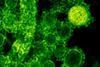
NewsVIRE: a global data platform to better understand viruses
Researchers have released a comprehensive viral genome database covering diverse ecosystems to advance the understanding of viral evolution and ecosystem functions.
-
 News
NewsWe may be overestimating the association between gut bacteria and disease, study finds
Many bacterial-linked illnesses, such as inflammatory bowel disease or colorectal cancer, are associated with an overgrowth of gut bacteria thought to be bad actors. But when researchers used a machine learning algorithm to predict the density of microbes—called microbial load, from their gut microbiomes, they found that changes in microbial ...
-
 News
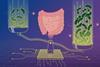
NewsMicrobial load can influence disease associations, new model reveals
Scientists have developed a new machine-learning model to predict microbial load — the density of microbes in our guts — and used it to demonstrate how microbial load plays an important role in disease-microbiome associations.
-
 News
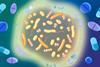
NewsBetter together: Gut microbiome communities’ resilience to drugs
Many human medications can directly inhibit the growth and alter the function of the bacteria that constitute our gut microbiome. EMBL Heidelberg researchers have now discovered that this effect is reduced when bacteria form communities.
-
 News
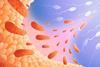
NewsFather’s gut microbes affect the next generation
A study shows that disrupting the gut microbiome of male mice increases the risk of disease in their future offspring.