
All Research News articles – Page 114
-
 News
NewsIn pregnant mice with severe flu, harmful molecules can breach fetal barriers
A new study shows, for the first time, that severe flu infection in pregnant mice leads to a breakdown in placental and brain barriers, leading to the accumulation of potentially harmful molecules in the fetal brain. Fibrinogen can pass into developing fetal brains.
-
 News
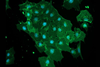
NewsHeadspace invaders: How mosquito-borne viruses breach the brain’s defenses
Using a stem cell-based model of the human blood-brain barrier, researchers compared two closely related Sindbis virus strains — one brain-invading and one not — and found that small changes in viral surface proteins called glycoproteins dictate whether the virus can cross.
-
 News
NewsReview shows around one in three hospital infections involve antimicrobial resistance
With an estimated 1.14 million deaths worldwide annually caused by bacteria becoming resistant to antibiotics, a study shows that in hospital settings antimicrobial resistance is common and independently associated with a higher risk of death.
-
 News
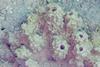
NewsOkinawan marine sponges yield promising treatment for leishmaniasis
A family of compounds called onnamides shows remarkable potential against the parasite that causes a neglected tropical disease.
-
 News
NewsRivers’ hidden helpers: microbes that clean up nitrogen pollution across China
A new study has revealed how tiny microbes in rivers and wetlands across China help clean up excess nitrogen pollution, offering fresh insights into the health of freshwater ecosystems and the global nitrogen cycle.
-
 News
NewsKey to the riddle of sleep may be linked to bacteria
New research suggests a new paradigm in understanding sleep, demonstrating that a substance in the mesh-like walls of bacteria, known as peptidoglycan, is naturally present in the brains of mice and closely aligned with the sleep cycle.
-
 News
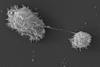
NewsTrojan horse: Amoebae as carriers for human Norovirus and Adenovirus
A new study reveals that common waterborne amoebae can ingest and protect human viruses, extending their environmental persistence. Human norovirus and human adenovirus can enter and persist within FLA.
-
 News
NewsStudy models how human behavior, lockdowns and restrictions shaped COVID’s spread
Researchers employed computer modeling and large datasets to better understand how COVID-19 was transmitted in one community in South Africa during the course of the worldwide pandemic.
-
 News
NewsFatty acids feed cancer-promoting bacteria: How chronic cellular stress alters the gut microbiome
Researchers have identified a cellular mechanism that alters the gut microbiome in a way that promotes cancer. An analysis of patient data shows that the findings also apply to humans.
-
 News
NewsNew study finds dried blood spot test reliably detects congenital CMV at birth
New research confirms that testing for congenital cytomegalovirus (cCMV) at birth using the routinely collected dried blood spot (DBS) is a reliable and effective method to identify newborns at risk for long-term developmental challenges.
-
 News
NewsStudy reveals how tick-borne encephalitis virus enters cells
The protein on human cells that tick-borne encephalitis virus (TBEV) uses for infection has now been identified—a major step toward understanding how TBEV causes neurological disease and for developing antiviral drugs.
-
 News
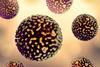
NewsHow viruses build perfectly symmetrical protective shells
Researchers used a new simulation framework to capture key biological factors like protein diffusion, genome flexibility, and shape-shifting behavior to model how viral proteins self-assemble into symmetric shells.
-
 News
NewsScientists show how to grow more nutritious rice that uses less fertilizer
Scientists have shown that nanoscale applications of selenium can decrease the amount of fertilizer necessary for rice cultivation while sustaining yields, boosting nutrition, enhancing the soil’s microbial diversity and cutting greenhouse gas emissions.
-
 News
NewsGut bacteria linked to how our genes switch on and off, research finds
The trillions of microbes that live in the human gut may play a bigger role in health than previously thought, according to a review highlighting how the gut microbiome can affect epigenetics, the process that turns genes on or off without changing the DNA itself.
-
 News
NewsFungal genome secrets unlocked in breakthrough for crop disease research
Scientists have developed a new method to improve the accuracy of gene mapping in complex organisms. Using an advanced bioinformatics tool, they re-annotated the genome of Zymoseptoria tritici, a major fungal pathogen responsible for septoria leaf blotch.
-
 News
NewsTea plant defense: new insights into anthracnose resistance mechanisms
In a recent study, researchers identified key genetic factors that enhance tea plant resistance to Colletotrichum gloeosporioides, the pathogen responsible for anthracnose, a devastating disease in tea cultivation.
-
 News
NewsBiohybrids: Pioneering sustainable chemical synthesis at the energy-environment frontier
A review highlights ‘biohybrid’ synthesis systems—an innovative technology integrating living cells with advanced materials—to unlock clean production of chemicals for a greener future.
-
 News
News'Know-do gap' drives inappropriate antibiotic overprescribing for child diarrhea in India
Researchers report that the persistent “know-do gap” — where clinicians know guidelines but practice differently — is the primary driver of antibiotic overprescribing for pediatric diarrhea in India’s private sector.
-
 News
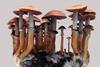
NewsMagic mushrooms invent active compound twice
A study shows that fungi have developed the ability to produce psilocybin at least twice independently of each other. While Psilocybe species use a known enzyme toolkit for this purpose, fiber cap mushrooms employ a different biochemical arsenal – and yet arrive at the same molecule.
-
 News
NewsStudy links chronic sickle cell pain to gut microbial imbalance
Researchers have found a clear connection between chronic sickle cell disease pain and the bacteria present in the gastrointestinal tract. The team alleviated chronic pain by transplanting bacteria from the feces of healthy mice into the digestive tract of sickle cell animals.