
All Research News articles – Page 222
-
 News
NewsBartonella and babesia co-infection detected in patients with chronic illness
A small pilot study has found evidence of human co-infections from Bartonella and Babesia odocoilei, a protozoal tick-borne infection primarily found in deer, moose and other cervids.
-
 News
NewsHarnessing big data helps scientists hone in on new antimicrobials
Scientists have detailed a new method of identifying antimicrobial enzymes from large datasets of bacterial proteins, which could provide a solution to antibiotic resistance.
-
 News
NewsIntensive farming could raise risk of new pandemics
Intensive livestock farming could raise the risk of new pandemics, researchers have warned. A study examines the effect of social and economic factors – which are often overlooked in traditional assessments.
-
 News
NewsThe geometry of life: Physicists determine what controls biofilm growth
The fitness of a biofilm is largely impacted by the contact angle that the biofilm’s edge makes with the substrate - and this geometry has a bigger influence on fitness than anything else, including the rate at which the cells can reproduce.
-
 News
NewsE. coli variant may cause antimicrobial resistance in dogs and humans
Researchers studying antimicrobial-resistant E. coli – the leading cause of human death due to antimicrobial resistance worldwide – have identified a mechanism in dogs that may render multiple antibiotic classes ineffective.
-
 News
NewsEarly life antibiotic increases risk of asthma: providing clues to a potential prevention adult asthma
Early exposure to antibiotics can trigger long term susceptibility to asthma, according to researchers who isolated a molecule produced by gut bacteria that in the future could potentially be trialed as a dietary supplement for children at risk of asthma.
-
 News
NewsStudy unveils complexity of zoonotic transmission chains
Researchers have dissected the complex interactions involved in zoonoses, introducing the concept of a “zoonotic web,” a detailed network representation of the relationships between zoonotic agents, their hosts, vectors, food sources, and the environment.
-
 News
NewsKenyan crop contamination outbreak inspires grad student to improve rice storage
A new study shows that proper rice storage conditions to reduce aflatoxin risk after harvest include a temperature below 20 degrees Celsius, or 68 degrees Fahrenheit, and relative humidity below 75 per cent.
-
 News
NewsScientists ID ‘unconventional’ new pathway for TB vaccines
Marginal zone B (MZB) cells are a natural response to TB infection which has been long overlooked - and which might be a welcome new target.
-
 News
NewsMost Salmonella illnesses from chicken caused by few products with high levels of virulent strains
A new study shows that few products with high levels of very virulent Salmonella strains are responsible for most of the illnesses from raw chicken parts, suggesting regulation efforts should focus on detecting and preventing high-risk contamination.
-
 News
NewsScientists build roadmap to bioengineer plants that produce their own nitrogen fertilizer
Nitrogen fertilizers make it possible to feed the world’s growing population, but they are also costly, harm ecosystems and require a lot of energy to manufacture. However, a few plants have evolved the ability to make their own nitrogen with the help of bacteria. A new study helps explain how ...
-
 News
NewsReceptors make dairy cows a prime target for influenza
Researchers who examined mammary gland samples from two cows infected with highly pathogenic avian influenza found a rich supply of sialic acid, which could shed light on how the virus attaches to hosts and help develop measures to slow the spread.
-
 News
NewsResearchers map the world’s fungi from air samples
DNA sequencing was used to identify fungi from air samples collected around the world, resulting in insights into the climatic and evolutionary factors influencing the occurrence and seasonal variation of both previously known and unknown fungi.
-
 News
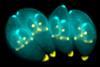
NewsAdvanced imaging reveals how a parasitic ‘kiss’ alters cell metabolism
Researchers have described how Toxoplasma infection changes host cell metabolism over the course of infection using the power of optical metabolic imaging (OMI) for the first time.
-
 News
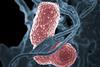
NewsDischarge of untreated hospital effluent is a key driver of multidrug resistance, study finds
A new study has highlighted the discharge of untreated hospital effluent to the environment as a major driver of multidrug resistance among the microbial community.
-
 News
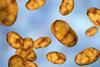
NewsRespiratory bacteria ‘turns off’ immune system to survive
Researchers have identified how a common bacterium is able to manipulate the human immune system during respiratory infections and cause persistent illness.
-
 News
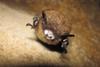
NewsHibernation status matters when white-nose syndrome pathogen infects bats
The fungal pathogen that causes white-nose syndrome (WNS) in bats uses different cell entry strategies depending on the host’s hibernation status – cold and inactive, or warm and active.
-
 News
NewsScientists prioritize 6 key pathogens for wastewater surveillance ahead of the Paris 2024 Olympic and Paralympic Games
French health authority researchers have identified priority pathogens that could be suitable for wastewater surveillance (WWS) during the Paris 2024 Olympic and Paralympic Games taking place from 26 July to 11 August and 28 August to 8 September.
-
 News
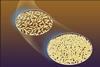
NewsDensely packed E.coli bacteria form immobile material similar to colloidal glass
Dense E.coli bacteria have several similar qualities to colloidal glass. When they become higher in density and more packed together, they form a ’glassy state’ but also show some other unique properties not typically found in glass-state materials.
-
 News
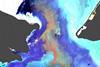
NewsMassive harmful algal bloom in the Arctic prompts real-time advisories to western Alaskan communities
A summer 2022 research cruise that detected a massive and highly toxic harmful algal bloom (HAB) in the Bering Strait has provided an example of science that utilized new technology to track a neurotoxic HAB and protect remote communities in Alaska.