
Research – Page 19
-
 News
NewsAlgae and water fleas in lakes: Light color influences food webs
Phytoplankton are the basic food source for many aquatic organisms. A new study shows that the light spectrum is more important for these microalgae and for lake ecosystems than previously assumed.
-
 News
NewsWetland plant-fungus combo cleans up ‘forever chemicals’ in a pilot study
From a greenhouse study, researchers report that moisture-loving yellow flag irises and fungi on their roots are a promising combination for PFAS removal. As part of a constructed wetland, this pair could effectively treat contaminated wastewater.
-
 News
NewsFertilizer boosts soil’s ability to lock away carbon
The 180-year experiment at Rothamsted — the world’s longest-running agricultural trial — has revealed that long-term application of nitrogen and phosphorus fertilisers can significantly increase the amount of carbon stored in farmland soils, helping to mitigate climate change.
-
 News
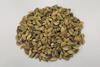
NewsCould cardamom seeds be a potential source of antiviral treatment?
Researchers have found that cardamom seed extract, as well as its main bioactive ingredient, 1,8-cineole, can have potent antiviral effects through its ability to enhance the production of antiviral molecules known as type I interferons via nucleic acid ‘sensors’ inside cells.
-
 News
NewsNew study reveals diverse threats from Avian E. coli
New research has determined why various strains of Avian Pathogenic E. coli behave so differently. The study analysed a colibacillosis outbreak in turkeys in the UK, and found a strain called ST-101 was the dominant cause of the outbreak, accounting for nearly 60% of cases.
-
 News
NewsCould targeted steroid use offer a universal complimentary treatment to fight TB?
Newly published research provides evidence that treating patients with steroids may enhance the function of their macrophages to kill the mycobacteria, while diminishing pathways of inflammatory damage.
-
 News
NewsTraditional Chinese medicine combined with peginterferon α-2b in chronic hepatitis B
A new study demonstrates that adjunctive Traditional Chinese Medicine significantly enhances the antiviral efficacy of peginterferon α-2b in HBeAg-positive chronic hepatitis B while concurrently mitigating treatment-limiting myelosuppression.
-
 News
NewsLake Tahoe algae experiment suggests seasonal shifts ahead
As the climate warms and nutrient inputs shift, algal communities in cool, clear mountain lakeswill likely experience seasonal changes, according to a new study. The effects of climate warming were especially pronounced in the colder months.
-
 News
NewsValorization of soybean-processing wastewater sludge via black soldier fly larvae: performance and bacterial community dynamics
A new study indicates that the valorization of soybean-processing-sourced sludge via black soldier fly larvae was achieved via functionally important BSFL intestinal microbiota, providing an efficient recycling approach for similar waste streams.
-
 News
NewsComparison of E. coli inactivation by UV222-ADPs and UV254-ADPs in water
A new study investigates advanced disinfection processes (ADPs) that use 222 and 254 nm far-ultraviolet radiation in conjunction with hydrogen peroxide (H2O2), sodium percarbonate (SPC), and persulfate (PDS) to inactivate E. coli in water.
-
 News
NewsScientists research potential anti-ulcer vaccine targeting Helicobacter pylori
Scientists are on the way to finding a vaccine to fight off the Helicobacter pylori bacterium, possibly preventing stomach ulcers and lowering the risk for stomach cancer. They used immunoinformatics to scan its genetic makeup and predict which parts can trigger a strong immune response.
-
 News
NewsRoot chemistry determines how antibiotic resistance spreads from manure to crops
Researchers found that the rhizosphere, the narrow soil zone surrounding plant roots, is a major hotspot for the accumulation of manure-derived ARGs. Across eight common crops, ARG abundance in rhizosphere soil was on average 1.24 times higher than in bulk soil.
-
 News
NewsScientists reveal role of paeoniflorin in mediating microbiota-gut-brain axis
Paeoniflorin treatment significantly reduced depression-like behaviours in stressed rats, while gut microbiota analysis revealed that the treatment corrected imbalances in key metabolites associated with brain function, a study shows.
-
 News
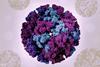
NewsCHIKVdb: A comprehensive genomic resource for chikungunya virus surveillance and outbreak response
Scientists have developed the Chikungunya Virus Database (CHIKVdb), a comprehensive genomic resource. CHIKVdb integrates 8,193 nucleotide sequences and 10,637 protein sequences from five major host categories across 99 countries, spanning 40 years.
-
 News
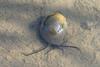
NewsFreshwater snails are an overlooked reservoir of AMR, study reveals
Freshwater snails across Africa and the UK carry bacteria containing a wide range of antimicrobial resistance (AMR) genes, including those predicted to confer resistance against last-resort antibiotics, according to a new study led by AMI members.
-
 News
NewsTracking infectious disease spread via commuting pattern data
Researchers have introduced a Commuter Metapopulation Model (CMPM) to simulate the spread of COVID-19 with actual commuting data provided by the country’s second-largest telecommunication network, revealing it could better capture spatial variety in outbreak patterns.
-
 News
NewsYeast survives Martian conditions, study shows
Life on Mars would have to contend with challenging conditions including shock waves from meteorite impacts and soil perchlorates. Scientists subjected Saccharomyces cerevisiae to these conditions, finding those that survived had assembled RNP condensates.
-
 News
NewsWhen faucets rest: hidden microbial risks emerge in hours
Stagnant water in building plumbing systems is a well-known driver of microbial growth and contamination, including L. pneumophila. A new study highlights a short “microbial safety window” of 2–4 hours, after which risks increase significantly.
-
 News
NewsData-guided bioelectrodes pave way for greener remediation
There is an urgent need to develop data-driven strategies that can accelerate and scale up microbial dechlorination for contaminated environments. Researchers report a new machine learning framework that integrates experimental features with microbial biofilm data to optimize bioelectrodechlorination.
-
 News
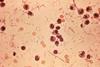
NewsWHO warns of widespread resistance to common antibiotics worldwide
One in six laboratory-confirmed bacterial infections causing common infections in people worldwide in 2023 were resistant to antibiotic treatments, according to a new World Health Organization (WHO) report.