
All Vaccinology articles – Page 16
-
 News
NewsResearchers pioneer nanoparticle approach to fight poultry disease
Researchers have demonstrated that a novel protein-based nanoparticle can make mRNA vaccines more effective to tackle a troublesome pathogen in chickens.
-
 News
NewsGlobal Virus Network issues scientific guidance on new COVID-19 variant NB.1.8.1 and vaccine protection
The Global Virus Network (GVN) is closely monitoring the emergence of a newly identified SARS-CoV-2 variant, NB.1.8.1, a sublineage of the Omicron family first identified in January 2025 and which has rapidly spread across Asia and into other regions.
-
 News
NewsGlobal study: COVID-19 and adenoviral vaccines tied to GBS risk, not mRNA vaccines
A large-scale study in a population covering more than 230 million people sheds light on the relationship between Guillain-Barré syndrome after COVID-19 vaccines or SARS-CoV-2 infection.
-
 News
NewsNew mRNA vaccine is more effective and less costly to develop, Pitt study finds
A new type of mRNA vaccine is more scalable and adaptable to continuously evolving viruses such as SARS-CoV-2 and H5N1, according to a study.
-
 News
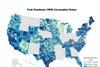
NewsNew data shows MMR vaccination rate decline across US
A new county-level dataset reveals a national decline in the measles-mumps-rubella (MMR) vaccination rate among U.S. children since the start of the COVID-19 pandemic.
-
 News
NewsEarlier measles vaccine could help curb global outbreak
The global measles outbreak must trigger an urgent debate into whether a vaccine should be recommended earlier to better protect against the highly contagious disease during infancy, a new review states.
-
 Careers
How structural imaging is revolutionising vaccines
Dr. Peijun Zhang, Director of the Electron Bio-Imaging Centre (eBIC) at the UK’s national synchrotron facility Diamond Light Source, reveals how Cryo-ET is powering some of the most important advances in vaccine research.
-
 News
NewsEngineered bacteria can deliver antiviral therapies and vaccines
New research demonstrates how specially engineered bacteria taken orally can operate as a delivery system for antiviral therapies and vaccines.
-
 News
NewsParticles carrying multiple vaccine doses could reduce the need for follow-up shots
Researchers are working to develop microparticles that can release their payload weeks or months after being injected. This could lead to vaccines that can be given just once, with several doses that would be released at different time points.
-
 News
NewsTwo HIV vaccine trials show proof of concept for pathway to broadly neutralizing antibodies
A new study combining data from two separate phase 1 clinical trials shows that a targeted vaccine strategy can successfully activate early immune responses relevant to HIV, and, in one trial, further advance them.
-
 News
NewsProof of concept for HIV vaccination that deploys germline-targeting
For a preventative HIV-vaccine to work it should induce broadly neutralising antibodies against all the diverse strains of the virus. The first in-human assessment of germline-targeting strategy with a trimer displays positive results.
-
 News
NewsYellow fever vaccination: how strong immune responses are triggered
Researchers have shown how specific immune cells are activated by the vaccine – an important starting point for the development of new vaccines.
-
 News
NewsNew study offers insights into designing safe, effective nasal vaccines
Researchers found that nasal vaccine boosters can trigger strong immune defenses in the respiratory tract, even without the help of immune-boosting ingredients known as adjuvants. The findings, researchers suggest, may offer critical insights into developing safer, more effective nasal vaccines in the future.
-
 News
NewsNew vaccine protects against swine, human and bird flu
Annual flu shots could become a thing of the past under a new vaccine strategy. A new study describes a vaccine that protects against H1N1 swine flu and can also protect against influenza in humans and birds.
-
 News
NewsResearchers pioneer novel, needle-free, live-attenuated influenza vaccines with broad protection
Researchers have achieved a significant breakthrough in developing broadly protective, live-attenuated influenza vaccines (LAIV).
-
 News
NewsPredictive AI model can help build vaccines for future versions of a virus
Researchers have created an AI tool called EVE-Vax that can predict and design viral proteins likely to emerge in the future. For SARS-CoV-2, panels of these “designer” proteins triggered similar immune responses as real-life viral proteins that emerged during the pandemic.
-
 News
NewsGlobal Virus Network meeting unites Caribbean and Latin America to tackle emerging viral threats
A two-day summit focused on collaborative strategies to bolster viral surveillance, diagnostics, vaccine research, and pandemic preparedness across Latin America and the Caribbean, challenges intensified by climate change and globalization.
-
 News
NewsResearchers valuate the safety and efficacy of a smallpox vaccine for preventing mpox
Researchers explored the viability and safety of LC16m8, an attenuated vaccinia virus vaccine, to prevent monkeypox. The study evaluated the immunogenicity and safety of LC16m8 across three animal species.
-
 News
NewsScientists launch intranasal albumin-based vaccine technology platform against respiratory virus
A new paper reports on a novel vaccine technology platform, in which the subunit antigen is genetically fused to albumin. The albumin-antigen fusion vaccines induced both systemic and mucosal antigen-specific antibody responses.
-
 News
NewsPlacebo-testing vaccines is unethical, ‘a waste of time and money,’ expert says
The proposal to require that all new vaccines undergo safety testing in placebo-controlled trials is ethically problematic and will slow testing down for no good reason, warn scientists.