
All Early Career Research Content – Page 26
-
 News
NewsResearchers expose the rules behind dengue’s invasion strategies
Scientists uncover fundamental rules for how dengue virus infects its mosquito and human hosts, providing hope for identifying therapeutic approaches.
-
 News
NewsUse of synthetic microbial communities has stalled - but we can get moving again
Use of synthetic microbial communities outside the lab is rare - but a more systematic approach could improve confidence in their long-term behaviour and address ethical considerations. Source: Sarah Keetch and Alex Fedorec That’s the message from a review of the field by scientists at University College ...
-
 News
NewsLlama nanobodies deliver breakthrough in building HIV immunity
Scientists have developed a new antibody therapy that can neutralize a wide variety of HIV-1 strains. They found success in an unlikely source — llamas.
-
 News
NewsPersistent proteins may influence metabolomics results
Scientists have identified more than 1,000 previously undetected proteins in common metabolite samples, which persist despite extraction methods designed to weed them out.
-
 Careers
Networking & communications advice for early career researchers
Professor Alan Walker shares some advice as part of a wider conversation with author Yang Yue.
-
 News
NewsHarnessing big data helps scientists hone in on new antimicrobials
Scientists have detailed a new method of identifying antimicrobial enzymes from large datasets of bacterial proteins, which could provide a solution to antibiotic resistance.
-
 News
NewsKenyan crop contamination outbreak inspires grad student to improve rice storage
A new study shows that proper rice storage conditions to reduce aflatoxin risk after harvest include a temperature below 20 degrees Celsius, or 68 degrees Fahrenheit, and relative humidity below 75 per cent.
-
 News
NewsUncovering ‘Blockbuster T cells’ in the gut wins major prize
Kazuki Nagashima developed a method with which to zero in on individual gut bacterium’s impacts on T cells. His work showed that – contrary to what has been thought – some T cells in the gut can interact with multiple bacteria.
-
 Careers
Connecting with microbiologists and presenting research: Oluwole Owoyemi reports back from ASM 2024
Medical microbiologist Oluwole Owoyemi of Achievers University Owo and Federal University of Technology, Akure, reports back from ASM MICROBE 2024 after being awarded a Scientific Event Travel Grant by Applied Microbiology International.
-
 News
NewsMidwest Center for AIDS Research to help end regional HIV epidemic
Researchers plan to establish the Midwest Developmental Center for AIDS Research. The center, slated to open in September, will aim to create a platform for researchers and public health workers to collaborate and coordinate their efforts to fight the HIV epidemic.
-
 Features
Infection, immunity and the One Health response in Indonesia
Infectious diseases (IDs) are a major health issue in Indonesia, as in many tropical low- and middle-income countries (LMICs), placing a significant economic burden on limited resources. Vaccination may have a critical role to play in the prevention of zoonotic infectious diseases.
-
 Features
Microbiology’s role in sustainable gastronomy
Designated on 21 December 2016 by the UN General Assembly, Sustainable Gastronomy Day is about the celebration of the food that sustains our lives regardless of culture and geology.
-
 News
NewsAlgae offer real potential as a renewable electricity source
Researchers have described extracting energy from the photosynthesis process of algae suspended in a specialized solution and housed in small power cells that can generate enough energy to power low- and ultra-low power devices.
-
 Careers
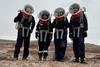
Scientists put Mars DNA sampling protocols to the test with help from AMI grant
Thanks to support from Applied MIcrobiology International, scientists testing sampling collection protocols in Mars analogue conditions have shown that non-scientists will be able to replicate the tests as long as they follow the methods.
-
 News
NewsLiposomes can target antibiotics right to where they’re needed in wounds
The antibiotic gentamicin can be encapsulated into liposomes, allowing for more accurate use in situations such as wound treatment, according to new research presented at the recent Letters in Applied Microbiology ECS Research Symposium.
-
 Features
Global food safety: prepare for the unexpected
The World Health Organisation (WHO) has reported that unsafe food causes 600 million cases of foodborne diseases and 420,000 deaths a year, worldwide. World Food Safety Day is just around the corner, the theme of which for this year, is “Food safety: prepare for the unexpected”.
-
 Careers
Remote yet tight-knit: how my internship with AMI changed my outlook
Third year PhD student Chuen Lee spent 12 weeks interning with AMI’s Communications and Marketing Team - here’s how it went.
-
 News
NewsProbiotic bacteria from fermented grain byproduct can battle E coli invasion in mouse gut
Probiotic bacteria isolated from corn steep liquor - a by-product of fermented maize - can prevent E coli invasion in the mouse gut, reveals new research presented at the recent Letters in Applied Microbiology ECS Research Symposium.
-
 News
NewsLate nights and long days in the lab - but today was a chance to shine
Biomedical MRes Vikas Nariapara reports back on the fascinating insights and intriguing research showcased at the Applied Microbiology International ECS Research symposium at the University of the West of England in Bristol.
-
 News
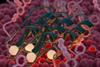
NewsAntibiotic ‘Velcro’ gives bacteria a sticky situation
A small antibiotic called plectasin uses an innovative mechanism to kill bacteria. By assembling into large structures, plectasin latches onto its target on the bacterial cell surface - scientists have now mapped how this bond is formed.