
All Asia & Oceania articles – Page 50
-
 News
NewsInvestigating regional-specific gut microbial distribution: an uncharted territory in disease therapeutics
A new perspective highlights the critical role of region-specific gut microbial distribution across intestinal segments (e.g., duodenum, colon) in regulating host metabolism and immunity, challenging traditional fecal-centric approaches.
-
 News
NewsRevealed: New vaccine target to block malaria transmission
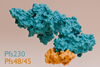
Researchers have visualised a key protein complex in malaria parasites for the first time, uncovering a new target for next-generation vaccines that could help stop the disease from spreading.
-
 News
NewsRNA immunity: A silent defender against viruses in mammals
Researchers propose that small RNA molecules play a direct and specific role in fighting viral infections in mammals. RNA immunity relies on the base-pairing precision of small RNA fragments, such as microRNAs, to recognize and suppress viral genetic material.
-
 News
NewsResearch probes the gut microbiome and its metabolite short-chain fatty acids in postmenopausal osteoporosis
Postmenopausal osteoporosis (PMOP) is framed as a systemic bone disease driven by estrogen withdrawal, but a new review positions gut dysbiosis and its fermentation products—short-chain fatty acids (SCFAs)—as equally influential regulators of skeletal fate.
-
 News
NewsAP2-domain transcription factor WRI5a-regulated MtABCB1 promotes arbuscule development in mycorrhizal symbiosis
A new study of arbuscular mycorrhizal (AM) symbiosis suggests that the MtABCB1 gene likely influences arbuscule development by modulating the distribution and homeostasis of auxin within symbiotic cells.
-
 News
NewsDancing against the current: Microbial survival strategy
In scalding hot water rushing through narrow channels, some bacteria have evolved a surprising survival technique: they cling to surfaces, stand upright, and sway rhythmically—like tiny street dancers fighting the flow.
-
 News
NewsAnti-neuroinflammatory natural products from isopod-related fungus now accessible via chemical synthesis
Herpotrichone is valued for its ability to suppress inflammation in the brain and protect nerve cells, but could only be obtained in minute quantities from fungi that are symbiotic with isopods. Researchers have succeeded in chemically synthesizing this rare natural product.
-
 News
NewsGreat Barrier Reef more volatile with sharp declines in coral cover
Hard coral cover across the Great Barrier Reef has declined substantially from the high levels of recent years back to near long-term average levels, underscoring a new level of volatility.
-
 News
NewsSmall protein, big impact: Insights into how bacteria stabilize a key outer membrane complex
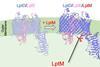
Researchers reveal that a remarkably small protein is essential for the maturation of a component of the lipopolysaccharide transport system.
-
 News
NewsAUN bacteria herald an immune-independent breakthrough
A joint research team has developed a groundbreaking immune-independent bacterial cancer therapy using a novel microbial consortium called AUN (阿吽), composed of two naturally occurring bacteria: a tumor-resident microbe and photosynthetic bacterium.
-
 News
NewsSmart wound monitor poised to improve chronic infection care
Researchers have developed a wearable wound monitoring device with integrated sensors that could reduce infection risks by minimising the need for frequent physical contact.
-
 News
NewsScientists discover how leukemia virus stays hidden in the body
A research team has discovered how the human T-cell leukemia virus type 1 (HTLV-1) silently persists in the body. Their findings identify a previously unknown genetic “silencer” element that keeps the virus in a dormant, undetectable state.
-
 News
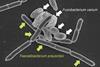
NewsHelping me, inhibiting you: Analysis of interactions between intestinal microbiota
Researchers have analyzed the interactions between two bacteria that make up intestinal microbiota. While Faecalibacterium prausnitzii inhibits the growth of Fusobacterium varium, F. varium promotes the growth of F. prausnitzii.
-
 News
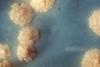
NewsSkin test reagent proves effective and safe for TB diagnosis in children
A new class of skin test reagents based on Mycobacterium tuberculosis (MTB)-specific antigens has been developed. A phase III clinical trial suggests that C-TST is an effective and safe option for diagnosing pediatric TBI.
-
 News
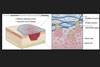
NewsResearchers develop bacterial cellulose-based dressing for advanced burn wound care
Scientists have developed an innovative bacterial cellulose (BC)-based hemostatic dressing that enables rapid and sustained bleeding control.
-
 News
NewsScientists pinpoint optimal dose of methylprednisolone for treating severe Mycoplasma pneumoniae pneumonia
Investigators have compared the efficacy of low- versus high-dose of methylprednisolone in preventing pulmonary lesions in children with severe Mycoplasma pneumoniae pneumonia.
-
 Careers
Meet the Global Ambassadors: our Q&A with Durgesh Kumar Jaiswal
The Microbiologist gets to know our Global Ambassador for India, Dr. Durgesh Kumar Jaiswal, who is Assistant Professor at the Department of Biosciences, Graphic Era University, Dehradun, specializing in microbial biotechnology and sustainable agriculture.
-
 News
NewsImmunoglobulin replacement therapy shows no reduction in serious infections for patients with CLL
In patients with chronic lymphocytic leukemia (CLL), regular treatment with immunoglobulin replacement therapy was not associated with a reduced risk of serious infections requiring hospitalization, according to a study published in Blood Advances.
-
 News
NewsGut microbiome transplants show promise for boosting cancer immunotherapy
A comprehensive new review examines the effects of transferring healthy gut bacteria to cancer patients receiving immune checkpoint inhibitors (ICIs).
-
 News
NewsEvaluating the effect of liquid-handling speed on yeast growth using robots
A new experiment indicated that the fastest pipetting speed on cells can be set without relying on thumb rules or guesswork, which is an important guideline for increasing the efficiency and reproducibility of robot-based experiments.