
All Asia & Oceania articles – Page 45
-
 News
NewsLong-term biochar use boosts soil health and soybean yields, study finds
A decade-long field study has revealed that biochar can significantly improve soil quality and boost soybean production in continuous cropping systems. The findings provide new evidence that biochar could be a powerful tool for making agriculture more sustainable.
-
 News
NewsPlant microbiota: War and peace under the surface
Scientists unveil the subtle alliances and rivalries that unfold between bacteria and roots, hidden beneath the soil. A new study probed how and when root exudates are released at the microscale relevant to microorganisms.
-
 News
NewsIndia could bear biggest impact from chikungunya, new maps suggest
Based on existing evidence of chikungunya transmission, an infectious disease model predicts 14.4 million people could be at risk of infections globally each year, with 5.1 million people at risk in India.
-
 News
NewsScientists uncover molecular mechanisms for bacterial lipid transport
Researchers have successfully applied cryo-electron microscopy (cryo-EM) to unveil the molecular structures of critical protein machines that transport lipids and maintain the outer membrane (OM) barrier of Gram-negative bacteria.
-
 News
NewsNew biochar technology promises breakthrough in soil clean-up and crop safety
Scientists have unveiled a pioneering method that could help farmers reclaim lands blighted by toxic metals and boost the safety of crops grown in contaminated soils. Phosphorus-modified biochar can reduce the threat posed by heavy metals in agricultural soils near mining areas.
-

-
 News
NewsPathogenic yeast strains found in urban air but not along the coast
A pilot study has found that urban air contained pathogenic strains of Candida yeast that were absent in coastal air samples, revealing a potential transmission method.
-
 News
NewsBrain imaging technique helps uncover the molecular basis of long COVID brain fog
A research team has made a significant breakthrough in understanding the cause of Long COVID brain fog. They hypothesized that patients with brain fog might exhibit disrupted expression of AMPA receptors (AMPARs)based on prior research into psychiatric and neurological disorders.
-
 News
NewsEmerging serum biomarkers for chronic hepatitis B: Focus on serum HBV RNA and HBcrAg
There is a pressing need for non-invasive biomarkers that can accurately reflect the activity of the hepatitis B viral reservoir and predict clinical outcomes. This review synthesizes the evidence for two such promising biomarkers: serum HBV RNA and hepatitis B core-related antigen (HBcrAg).
-
 News
NewsFungi set the stage for life on land hundreds of millions of years earlier than thought
New research indicates the diversification of fungi hundreds of millions of years before the emergence of land plants. It suggests a common ancestor of living fungi dating to roughly 1.4–0.9 billion years ago.
-
 News
News‘Alarming’ rise in newborn babies with antibiotic-resistant infections, researchers find
Researchers are calling for an urgent overhaul of diagnostic and treatment guidelines for infections in newborn babies, after a study revealed frontline treatments for sepsis are no longer effective to treat the majority of bacterial infections.
-
 News
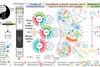
NewsBiogas slurry boosts biochar’s climate benefits by reshaping soil microbes
A new study finds that pairing biochar with biogas slurry, a nutrient-rich liquid fertilizer from biogas production, can reshape soil microbial communities and significantly alter emissions of carbon dioxide (CO₂), nitrous oxide (N₂O), and methane (CH₄).
-
 News
NewsScientists reveal functional RNA splitting mechanism behind origin of Type V CRISPR systems
Researchers have uncovered the molecular innovation that led to the origin of Type V CRISPR-Cas immune systems. Their findings show that the functional splitting of transposon-derived RNAs was the critical innovation driving the emergence of Type V CRISPR-Cas immunity.
-
 News
NewsHow the gut microbiome helps Japanese macaques eat with the seasons
A study shows that both the composition and fermentative ability of the Japanese macaque gut microbiome shift flexibly across seasons, while the latter in particular increased during the harsh winter when macaques relied on leaves.
-
 News
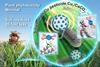
NewsAtom-precise agriculture: The future of eco-friendly crop protection
Researchers have created a novel single-atom copper pesticide that addresses the critical limitations of traditional copper-based pesticides, acting against the rice pathogen Pantoea ananatis.
-
 News
NewsVast gut microbiome diversity and antibiotic resistome across 14 mammal species on the Tibetan Plateau
A new study provides the most comprehensive genomic catalogue to date of mammalian gut microbiomes from the Tibetan Plateau.
-
 News
NewsNutrient storage and release in uninfected cells of soybean nodules support symbiotic nitrogen fixation in infected cells
A new study employed the symplastic movement tracer carboxyfluorescein diacetate (CFDA) to observe and model the transport and storage status of nutrients within nodules.
-
 News
NewsChristensenella tenuis inhibits gut-derived endotoxins to alleviate metabolic disorders
The gut probiotic Christensenella tenuis significantly alleviates endotoxemia and metabolic disorders by modulating gut bile acids (BAs) metabolism and suppressing lipopolysaccharide (LPS) translocation across the gut barrier, a new study finds.
-
 News
NewsAI tool enables accurate measurement of diseased spikelet rate of wheat Fusarium Head Blight from phone images
A new study proposes a deep learning algorithm that can automatically measure the diseased spikelet rate (DSR) trait from wheat spike images with complex backgrounds captured by mobile phones, providing a measurement tool for wheat Fusarium Head Blight (FHB) resistance breeding.
-
 News
NewsRevealed: How fungus-farming termites protect gardens from invaders
When harmful fungi invade their carefully cultivated crops, some fungus-farming termites fight back with the precision of skilled gardeners, a new study reveals, smothering them in soil clumps enriched with microbial allies that inhibit fungal growth.