
All Asia & Oceania articles – Page 44
-
 News
NewsFrom glucose to gourmet: engineered bacteria churn out key food additive
Researchers used E. coli as the chassis to produce inosinic acid (IMP), a popular umami enhancer. By reprogramming the metabolic flux network of E. coli and introducing amino acid mutations in the key enzymes in the synthesis pathway, the yield was significantly increased.
-
 News
NewsResearchers uncover hidden plant–microbe strategy that boosts crop growth under nutrient stress
Scientists discovered that when soil microbes compete with each other in the rhizosphere, they release a well-known compound called glutathione. This compound enhances plant growth under sulphur-deficient conditions.
-
 News
NewsChemobiological platform enables renewable conversion of sugars into core aromatic hydrocarbons of petroleum
Researchers have developed a chemobiological platform that converts renewable carbon sources such as glucose and glycerol into oxygenated precursors, which are deoxygenated in the same solvent system to yield benzene, toluene, ethylbenzene, and p-xylene (BTEX).
-
 News
NewsBiochar and plants join forces to clean up polluted soils and boost ecosystem recovery
A review explores how combining biochar with rhizoremediation, a nature-based process that uses plant roots and beneficial microbes to break down pollutants, can greatly enhance soil restoration. Biochar acts as both a catalyst and a habitat for microbes.
-
 News
NewsMore than a feeling: Could a healthier gut improve mental health?
A new review finds strong causal evidence that gut microbes can change brain chemistry, stress responses and behaviours in animal models; and evidence that probiotics, diet changes, and faecal microbiota transplants improve mood and anxiety.
-
 News
NewsSlime mold metabolites are a promising, eco-friendly repellent of root-knot nematodes
A team of researchers has discovered 14 compounds secreted by slime molds that repel root-knot nematodes (RKNs) - worm-like parasites of the genus Meloidogyne - and could be the source of new, non-toxic anti-RKN pesticides.
-
 News
NewsLittle-known strep bacteria behind growing number of severe infections
An under-recognised strep bacterium is causing a growing number of serious infections in Australia, with First Nations Australians disproportionately affected, according to new research.
-
 News
NewsResearch team with the latest Nobel Prize laureate reveals regulatory immune cell precursors disrupted in severe COVID-19
A research team joined by Professor Shimon Sakaguchi – the latest Nobel Laureate in Physiology or Medicine – has identified a subset of immune cells called precursor T follicular regulatory cells (preTfr) that play a critical role in preventing autoantibody production.
-
 News
NewsDeadwood-decomposing fungi feed germinating orchids
Deadwood-decomposing fungi feed germinating orchids, providing the carbon their tiny seeds don’t have. The finding not only closes a gap in our understanding of wild orchid ecology but also uncovers an important carbon flux in the ecosystem.
-
 News
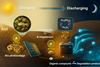
NewsSoil bacteria and minerals form a natural ‘battery’ that breaks down antibiotics in the dark
Researchers have unveiled a surprising new way that soil microbes can use sunlight energy. The team developed a “bio-photovoltage soil-microbe battery” that can capture, store, and release solar energy to power the breakdown of antibiotic pollutants in the dark.
-
 News
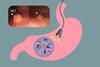
NewsChanges in gut microbiota influence which patients get AIG-related neuroendocrine tumors
Researchers have discovered how the balance of bacteria in the stomach affects the growth of neuroendocrine tumors (NETs). By identifying the specific bacteria involved and the biochemical reactions that cause tumor growth, they hope to detect which patients are most likely to develop cancer.
-
 News
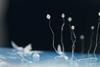
NewsCould slime mold microbes be a source of potent antimicrobials?
The cellular slime mold Dictyostelium discoideum is a soil microbe that produces diverse natural products with potential antibiotic activity. In this study, researchers optimized lab culture conditions of Dictyostelium cells to boost the levels of low-abundance chlorinated compounds and to characterize their antimicrobial properties.
-
 News
NewsBiodegradable microplastics rewire carbon storage in farm fields
A pioneering two-year field study has revealed that biodegradable microplastics, often hailed as eco-friendly alternatives to conventional plastics, are quietly reshaping the chemistry of farmland soils in unexpected and complex ways. They attracted a special group of microbes known as K-strategists—slow-growing, efficient decomposers.
-
 News
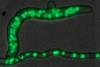
NewsIncrease in cell volume and nuclear number of the Koji fungus enhances enzyme production capacity
This study revealed cellular traits of the koji fungus Aspergillus oryzae linked to enzyme production through cell biological analysis. The authors found that, over time in culture, hyphae thicken, resulting in a tenfold increase in cell volume. Simultaneously, the number of nuclei per hyphal cell also rises tenfold, exceeding 200.
-
 News
NewsFinal Call: Submit your breakthrough for the 2025 ISM × RIKEN Microbiota Innovation Awards in Tokyo
Yakult, Meiji, Morinaga, Metagen and other industry pioneers join global scientists at Happo-en to celebrate microbiota-driven discoveries; nominations close October 7, 2025
-
 News
NewsMap of bacterial gene interactions reveals potential drug targets
Researchers have developed a new technique called Dual transposon sequencing (Dual Tn-seq), which allows for rapid identification of genetic interactions. It maps how bacterial genes work together, revealing vulnerabilities that could be targeted by future antibiotics.
-
 News
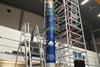
NewsRocket test proves bacteria survive space launch and re-entry unharmed
A world-first study has proven microbes essential for human health can survive the extreme forces of space launch. The study found the spores of Bacilus subtilis, a bacterium essential for human health, can survive rapid acceleration, short-duration microgravity and rapid deceleration.
-
 News
NewsMarine heatwaves have hidden impacts on ocean food webs and carbon cycling
A new study analyzing data from robotic floats and plankton records reveals how marine heatwaves reshape ocean food webs and slow transport of carbon to the deep sea.
-
 News
NewsVolcanic ash may enhance phytoplankton growth in the ocean over 100 km away
A research group has suggested that ash released from volcanic eruptions on Nishinoshima Island led to a temporary surge in phytoplankton levels in the seawater around Mukojima Island, 130 km northeast of Nishinoshima.
-
 News
NewsViruses help cut farm greenhouse gas emissions by targeting soil microbes
A new study reveals that soil viruses can reduce nitrous oxide (N2O) emissions by selectively infecting the microbes responsible for producing this potent greenhouse gas.