
All Asia & Oceania articles – Page 42
-
 News
NewsRhizosphere metabolites influence the spread of antibiotic resistance genes in soil-plant systems
A study sheds new light on the complex mechanisms by which plants and their associated microorganisms contribute to the migration of ARGs through the environment, offering important implications for food safety and public health.
-
 News
NewsReview explores roles, mechanisms and applications of intra-tumoral microbiota in cancers
A recent review provides an overview of the hallmarks, roles, molecular mechanisms, and clinical applications of intra-tumoral microbiota in multiple human cancers.
-
 News
NewsMarine algae use unique pigment to shield photosynthesis from excess light
Researchers have discovered that marine algae have evolved unique pigments not only to capture the green-blue light available underwater but also to enhance their resilience against excessive sunlight.
-
 News
NewsArtificial ocean carbon recycling system converts seawater CO2 into valuable chemicals
Researchers have developed an artificial ocean carbon recycling system that captures CO2 from seawater and uses microbes to directly convert it into succinic acid.
-
 News
NewsMosquito saliva may hold clues to fighting chikungunya inflammation
Scientists have uncovered a surprising mechanism showing how mosquito saliva can alter the human body’s immune response during chikungunya virus (CHIKV) infection - it not only transmits the virus but also influences how the body’s immune system responds.
-
 News
NewsCofactor engineering with phosphite dehydrogenase enables flexible regulation of lactate-based copolymer biosynthesis in E. coli
A new breakthrough enables higher yields of poly(3-hydroxybutyrate-co-lactate) [P(3HB-co-LA)] without disrupting bacterial growth, paving the way for more sustainable bioplastic manufacturing.
-
 News
NewsScientists turn algae and crop waste into valuable fuels and nanomaterials
Researchers have developed a clean and efficient process to transform microalgae and agricultural residues into a range of high-value products, including biofuels, bio-adsorbents, and fluorescent carbon nanodots.
-
 News
News’Footprint of Death’ gives new clues to cell life, spread of disease
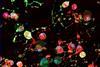
Scientists at La Trobe University have discovered a previously unknown way viruses could spread around the body, potentially paving the way for more effective drug development. Source: La Trobe University Dead cells after the self-destruction and fragmentation process. The large green areas are the “eat me” signals ...
-
 News
NewsNew antivirals could help prevent cold sores by changing cell structures
A class of antivirals called Pin1 inhibitors could reduce or stop outbreaks of herpes simplex virus 1 (HSV-1), the common infection behind oral herpes, according to new research.
-
 News
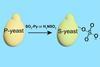
NewsSulfated yeast could help recover rare earth metals from waste liquids
Electronics, optical fibers, and superconducting materials heavily rely on rare earth metals, but innovative recycling solutions are lacking. Now researchers in Japan have successfully achieved selective recovery of metals with S-yeast, a sulfated yeast.
-
 News
NewsIn the midst of a global dengue epidemic, Wolbachia kept a Brazilian city safe
In the middle of the world’s worst global dengue epidemic, a city in Brazil was effectively protected by an innovative program that introduced the bacterium Wolbachia into the local mosquito population, lowering the rate of dengue by almost 90 per cent.
-
 News
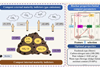
NewsGlobal analysis reveals how biochar supercharges composting and cuts greenhouse gases
By analyzing data from 125 studies across the world, researchers showed that adding biochar to composting systems significantly boosts compost quality while slashing harmful greenhouse gas emissions.
-
 News
News1000-litre ‘corn-to-carrier’ demo turns stover into 10.6 g L⁻¹ microbial lipids
Researchers have shown that last autumn’s corn stalks can be transformed into a palm-oil-like fat suitable for aviation biofuel or cosmetics without the energy-guzzling steps that have kept lignocellulosic biorefineries on the drawing board.
-
 News
NewsAll-in-one POM-based nanoreactor with oxidase-like activity for versatile detection and antibacterial action
A research team has developed a novel nanoreactor that enables dual-mode biomarker detection and effective antibacterial treatment.
-
 News
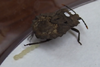
NewsStinkbug leg organ contains symbiotic fungi to shield eggs from parasitic wasps
What looked like a hearing organ on a tiny stinkbug’s leg turned out to be something far stranger: a fungal nursery that mother bugs use to coat their newly laid eggs in protective symbiotic hyphae, shielding their offspring from parasitic wasps.
-
 News
NewsWhat we know and what we need to know about Antarctic marine viruses
Antarctic marine viruses, while proven to be important players in the ecosystem, are not completely understood. In a new paper, researchers aim to fill in the gap between what is known and what is unknown, with a primary focus on RNA viruses, the influence of climate change and their implications.
-
 News
NewsA triple-threat iron supplement that also improves gut health
A new iron supplement combines iron, prebiotics and probiotics. In trials, the treatment successfully restored blood iron levels in anemic mice without initiating an inflammatory response or throwing off the balance of the gut microbiota.
-
 News
NewsDiscovery of hundreds of new human gut viruses provides a new approach to studying the gut microbiome
Hundreds of new viruses living inside bacteria within our gut have been discovered in an international study. These bacteriophages could eventually be used to reshape the gut microbiome, potentially influencing gut health and the progression of various disease states.
-
 News
NewsBreakthrough in coronavirus fight: scientists develop powerful bispecific inhibitor to combat a wide range of coronaviruses
Researchers have discovered a powerful bispecific inhibitor capable of combating all existing human-pathogenic coronaviruses, including those resistant to existing treatments like Paxlovid.
-
 News
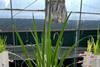
NewsWetland plant-fungus combo cleans up ‘forever chemicals’ in a pilot study
From a greenhouse study, researchers report that moisture-loving yellow flag irises and fungi on their roots are a promising combination for PFAS removal. As part of a constructed wetland, this pair could effectively treat contaminated wastewater.